Tag: SEC

  • BULLETIN: Darryle Douglas, Alleged Zeek Insider, Arrested

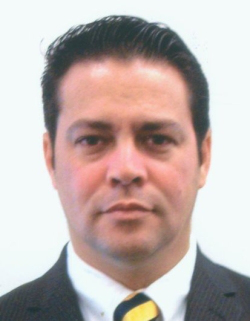
    BULLETIN: (4th update 9:11 p.m. ET U.S.A.) Alleged Zeek Rewards’ insider Darryle Douglas has been arrested in Riverside, Calif.

    Court filings docketed March 7 in the SEC’s civil case against Zeek say Douglas, whose age was not listed, was arrested March 2 by the U.S. Marshals Service.

    On Dec. 10, 2015, Senior U.S. District Judge Graham C. Mullen of the Western District of North Carolina ordered marshals to arrest Douglas for civil contempt of court. On Jan. 5, 2016, marshals said they had not located him and that Douglas was the subject of an ongoing investigation.

    He is believed to reside in Orange County, Calif., an area close to Riverside in the southern part of the state.

    Word of the arrest was received tonight. The warrant issued by Mullen in December specified that Douglas was to be brought to North Carolina. The PP Blog could not immediately determine this evening if a transport had taken place.

    Douglas, who allegedly had access to Zeek’s database and did not return it as ordered, may be involved with a nascent scheme known as Auction Attics, the PP Blog reported last year. Others have said Auction Attics was morphing into something called Auction Addicts.

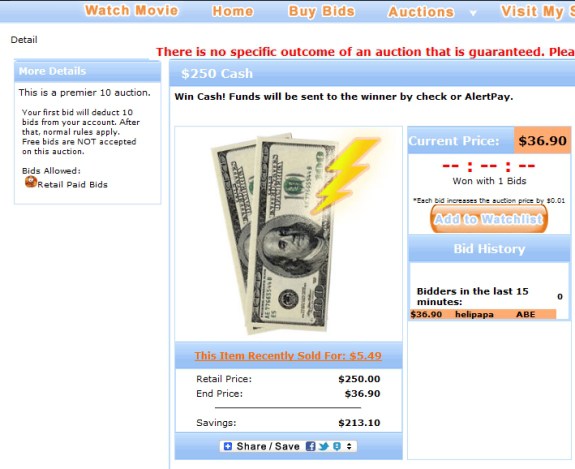
    Zeek was a penny-auction fraud that gathered on the order of $900 million, the SEC has said.

    NOTE: Our thanks to the ASD Updates Blog.


  • SEC: Binary Options Case Triggers Investor Alert

    breakingnews725Is there a double whammy in your MLM future — first being ripped off in a binary-options “program,” only to be ripped off a second time by scammers posing as government agencies and offering purported refunds for a fee?

    Naturally some MLMers have added binary options to their offerings, with some incredible solicitations and tales being told online. BehindMLM.com, for example, recently reported on the purported death of “Bob Roberts,” an asserted figure from a “program” known as Options Rider.

    In 2015, the PP Blog reported that Quebec’s securities regulator was concerned that binary-options scammers were steering people into reload schemes and posing as government entities. Meanwhile, there was the tale of SpotFN, a purported binary-options platform that reached across the oceans and plains to pluck investors in Missouri.

    At least one Missouri investor was told his money could be retrieved by paying a fee to a purported insurance company, authorities said.

    Binary-options “programs” also are appearing on the Ponzi boards, alongside HYIP, cycler and “advertising” scams.

    In 2013, the SEC brought an action against Cyprus-based Banc de Binary Ltd., its founder Oren Shabat Laurent and three affiliates alleging “that they failed to register the offering before soliciting U.S. customers through YouTube videos, spam e-mails, and other Internet advertising.”

    Banc de Binary has agreed to pay $11 million in a settlement, the SEC said today.

    This includes “$7.1 million in disgorgement and $1.95 million in penalties to the SEC as well as $2 million in penalties to the Commodity Futures Trading Commission (CFTC), which filed a parallel action,” the SEC said.

    “Banc de Binary and its affiliates completely disregarded U.S. laws and registration requirements, and as a result they must surrender millions of dollars and be suspended from the industry,” said Michele Layne, director of the SEC’s Los Angeles Regional Office.

    Harmed investors will receive a distribution from a Fair Fund administered by the National Futures Association, the SEC said.

    Although it is nice that money apparently is available to compensate Banc de Binary customers, that’s not always the case, perhaps particularly with cross-border schemes.

    The settlement wasn’t the only news the SEC announced today. Indeed, the agency announced an Investor Alert that warns of “impersonators” tag-teaming the Banc de Binary case.

    “The SEC has become aware of some impersonators claiming to be affiliated with the SEC or other government agencies who have contacted harmed investors in this Banc de Binary case and asked them to pay a fee to facilitate their settlement payout,” the SEC said.  “It’s important for all investors to know that the SEC never makes people pay to get their money back.”

    Read the Investor Alert. “Avoid becoming a victim twice,” the SEC urged.

    Read the CFTC’s statement, which says a U.S. federal court has imposed “a permanent ban on offering or trading any further off-exchange binary options to U.S. customers.”

    Read Banc de Binary restitution information from the National Futures Association.


  • At Chicago Symposium, SEC Highlights Pyramid Scheme Task Force And Notes ‘Whack-A-Mole’ Nature Of Online Scams

    “These frauds are easily duplicated, and at times, we find ourselves playing ‘whack-a-mole,’ chasing the same set of fraudsters who, after feeling a bit of heat, simply close down one scheme and quickly set up a new one under a different name.”Andrew Ceresney, SEC Enforcement Division director, March 2, 2016

    EDITOR’S NOTE: Type “whack-a-mole” into the PP Blog’s search box near the upper-right corner to find our stories that touch on frauds rising to replace other frauds. Examples include so-called “programs” that claim to be “advertising” companies or to have an “advertising” component — for example, Zeek Rewards, TelexFree, Banners Broker and AdSurfDaily. If you’re in an “advertising” program such as MyAdvertisingPays (MAPS) or TrafficMonsoon, you should asking some serious questions and thinking about whether serial fraudsters are whacking you.

    When one scheme collapses, another quickly rises to replace it. Many such schemes operate simultaneously, drafting the unwary into multiple miseries. Ill-gotten gains or losses pile up in the billions of dollars. Yes, billions.

    Of course, “whack-a-mole” is not limited to “advertising” schemes. There are “cycler” schemes such as “The Achieve Community” and its Ponzi-board equivalents. Meanwhile, there are HYIP schemes such as “Profitable Sunrise” and its Ponzi-board equivalents. MoneyMakerGroup and TalkGold are examples of Ponzi boards. The scammers now have added social media such as YouTube, Facebook and Twitter to their arsenal. Vulnerable people and population groups are constant targets.

    Scams such as WCM777 that claim to have a “product” also are part of “whack-a-mole.”

    **________________________________**

    cautionflagLet’s begin by encouraging you to read Andrew Ceresney’s opening remarks at a joint symposium today sponsored by the SEC and the University of Illinois at Chicago. (Link at bottom of story. Also see Twitter links.)

    UIC promoted the event on its website, titling it “How to Detect and Combat Fraudsters Who Target Our Immigrant Groups and Affinity Communities Through Pyramid and Ponzi Schemes.” The institution notes it is “one of the most ethnically and culturally diverse universities in the country,” so it was a perfect place to host such a confab.

    Ceresney is the SEC’s director of enforcement. One of the things the PP Blog noted while reading the text of his remarks is that it included a subhead titled “Pyramid Schemes and Multi-Level Marketing.”

    This reflected on ongoing effort by the SEC to educate the public that the presence of a “product” in a scheme does not necessarily mean no scam is under way. Many MLMers erroneously believe that a “product” (or purported one) offered for sale cures all ills. That is simply not the case. A year ago in Congressional testimony, the director spoke about a “coordinated effort” to disrupt pyramid schemes.

    Ceresney today provided more details on a new Task Force that is combating pyramid fraud. Here is part of his remarks (italics/bolding added):

    After seeing an increase in complaints regarding pyramid schemes and affinity fraud, the SEC formed a nationwide Pyramid Scheme Task Force in June 2014 to provide a disciplined approach to halting the momentum of illegal pyramid scheme activities in the United States. The goal of the Task Force is to target these schemes by aggressively enforcing existing securities laws and increasing public awareness of this activity.

    The Division is deploying resources to disrupt these schemes through a coordinated effort of timely, aggressive enforcement actions along with community outreach and investor education. More than fifty SEC staff members are part of the nationwide Task Force, which is enhancing its enforcement reach by collaborating with other agencies and law enforcement authorities. We are also using new analytic techniques to identify patterns and common threads, thereby permitting earlier detection of potential fraudulent schemes.

    Collaboration with other regulators, including criminal authorities, is an important goal of the Task Force. To advance this goal, the Task Force has hosted an interagency summit attended by over 200 representatives from other federal and state agencies and has presented at local trainings and agency-specific conferences. And, of course, we have partnered with other regulators and criminal authorities to bring high-impact actions in this space. For example, one month after we filed our enforcement action against the operators of the TelexFree pyramid scheme, two of TelexFree’s principals were charged by the criminal authorities.

    Will the “program” you’re currently pitching become the subject of a “high-impact action?” Time will tell.

    In 11 SEC actions since 2012 involving pyramid operators, the damage resulted in ill-gotten gains or losses totaling more than $4.2 billion, Ceresney said today.

    Read his opening remarks at today’s Chicago symposium.

  • SPECIAL REPORT: Zeek Money May Be In Collapsed Russian Bank

    From the PP Blog archives: April 2012.
    Funds from Zeek, which once auctioned sums of U.S. currency, may have ended up in a collapsed Russian bank. Graphic from the PP Blog archives: April 2012.

    EDITOR’S NOTE: For background, see Feb. 17 PP Blog story: RECEIVER: Payza And Payment World ‘Facilitated’ Zeek Ponzi Scheme; Whereabouts Of $13.1 Million An ‘Open Question’

    (Updated 11:14 a.m. ET U.S.A.) Money due victims of Zeek Rewards from transactions involving Payza and Payment World may have been transferred from VictoriaBank in Moldova to JSC TusarBank in Russia in violation of an asset freeze imposed in 2012 by a U.S. court, according to court filings by Zeek receiver Kenneth D. Bell.

    Meanwhile, OboPay’s name now has surfaced in filings by Bell. This is in the form of an October 2012 email from a Payment World official to a Payza official questioning Payza’s relationship with OboPay. The U.S. Justice Department last year announced a criminal investigation involving Payza and OboPay. The specific reason behind the probe and the targets are unknown.

    TusarBank collapsed in September 2015 and has been recommended for criminal investigation, according to the press office of Russia’s central bank. The bank’s website is beaming a “not available now” message.

    Senior U.S. District Judge Graham C. Mullen of the Western District of North Carolina last week lifted the seal on Bell’s 258-page filing in which Bell alleged Payza, Payment World and VictoriaBank enabled Zeek’s Ponzi scheme shut down by the SEC in 2012. The filing consisted of a 26-page motion and 232 pages of exhibits, including emails between Payza and Payment World. As noted above, one of the exhibits raises the name of OboPay.

    Mullen imposed the asset freeze in August 2012.

    Whether the possible transfer of Zeek-related funds from Moldova to Russia is part of the Russian probe is unclear.

    Adding to the international intrigue is that a second Russian bank that somehow might have been involved in the Payment World-related money flow reportedly collapsed in 2013. This institution is known as Master Bank and is described in Bell’s exhibits as a “sponsoring bank” of a Payment World entity in Hong Kong.

    A sponsoring bank provides processors access to Visa or MasterCard networks

    On Sept. 13, 2015, just prior to the collapse of TusarBank, the Moscow Times listed Master Bank as one of “Russia’s Biggest Banking Crashes of the Last 2 Years.” This crash occurred in 2013 and was notable for something beyond the 31.3-billion-ruble bailout.

    As the Moscow Times reported (italics added):

    Even having Igor Putin, a cousin of President Vladimir Putin, on the board of directors could not save Master Bank. The lender’s license was revoked in November 2013 with the Central Bank alleging the bank had violated money laundering legislation and processed large suspicious transactions.

    In 2012, just prior to the collapse of Zeek, Zeek figure Keith Laggos claimed he had helped Zeek move payment operations offshore, including to Hong Kong. Specific details of that asserted move are unknown. Zeek had about 15 financial vendors, according to court filings.

    Payza, under the leadership of Firoz Patel, has claimed it conducted due diligence on Zeek, according to Bell’s filings. Even if true, it somehow appears to have missed that Zeek was offering an outrageous and unusually consistent return averaging about 1.5 percent a day and also claimed “compounding” was possible.

    The SEC has described Zeek as a cross-border Ponzi scheme that gathered nearly $900 million while operating from North Carolina.

    From Bell’s filing (italics added):

    On August 29, 2010, Paul Burks [of Zeek] onboarded an account with Payza (then, known as AlertPay) in the name of Rex Venture Group LLC that was associated with two websites: www.zeekrewards.com and www.zeekler.com. Prior to the boarding of the account, Payza purportedly conducted due diligence, collecting and reviewing information about Paul Burks and the business. According to Payza, during the course of the relationship, it monitored and mitigated risk. Despite these procedures, Payza did not identify or address the red flags indicating that ZeekRewards was a Ponzi scheme and, instead, together with PaymentWorld and VictoriaBank [of Moldova], facilitated access and payment to and from ZeekRewards by numerous affiliates worldwide.

    Bell’s 258-page filing is available on the landing page of the receivership website. It is styled, “Memorandum in Support of the Receiver’s Motion for an Order Directing Payza, Payment World, and VictoriaBank to Turn Over Receivership Assets and/or Find Them in Contempt of the Court’s Order Freezing and Preserving Receivership Assets.”

    NOTE: Our thanks to the ASD Updates Blog.


  • TELEXFREE CLASS-ACTION: Judge Restrains Assets Of 2 Alleged Promoters, Including Scott Miller And ‘MyAdvertisingPays’ Pitchman Daniil Shoyfer

    ponzinews1Let’s begin by pointing out that Daniil Shoyfer and Scott Miller have not been charged by the SEC in its 2014 TelexFree action. There are asset freezes aplenty in that government-brought case, including freezes against alleged promoters Sann Rodrigues, Faith Sloan, Randy Crosby and Santiago De La Rosa.

    The asset restraints imposed yesterday by U.S. District Judge Timothy S. Hillman against Shoyfer (of New York) and Miller (of Indiana) flow from an altogether different case: a proposed class-action brought by plaintiffs last year.

    Indeed, private plaintiffs represented by private attorneys — as opposed to government plaintiffs represented by government attorneys — have now managed to persuade a judge to block the flow of funds alleged to be tainted by fraud.

    This is horrible news if you’re a serial promoter of MLM fraud schemes or Ponzi-board “programs” because it demonstrates that the government no longer is your singular worry. Put another way, even if the SEC or some other agency “misses” you, aggressive class-action attorneys may not.

    They even may be tracking you as you move from scheme to scheme — and, of course, agencies such as the SEC follow court filings in related actions closely.

    Even though the private lawyers did not get everything they sought in yesterday’s order by Hillman, they got enough to seriously complicate the lives of their targets. Although the judge did not restrain assets with no nexus to the alleged $3 billion TelexFree Ponzi- and pyramid scheme, both Shoyfer and Miller now must make monthly financial reports to the court.

    From the order:

    “Each Individual Defendant shall file a statement of accounting with the Court, under seal, on the last day of each month by 5:00 p.m. EST, setting forth all monetary expenditures and the sale and/or transfer of all assets made in the prior month . . . To the extent that any Individual Defendant seeks to expend money or to sell, transfer dissipate, assign, pledge, alienate, encumber, diminish in value, or otherwise dispose of any funds or other assets which they would not be permitted to do under the terms of this Order, such defendant may file a motion with the Court setting forth, in detail the nature of the transaction.”

    And, the judge continued, “The Individual Defendants may petition the Court to exempt from this Order any fund or other assets in any bank, brokerage or other financial institution accounts and any other assets held by of for the benefit of such defendant on the grounds that such assets are not traceable to monies received by him in connection with his involvement with TelexFree. The Individual Defendants shall submit detailed financial statements and/or other documentary evidence to establish the funds held or assets in question are funds or assets were acquired independently. The Individual Defendants shall also submit an accompanying affidavit signed under the pains and penalties of perjury attesting to the authenticity and truth of the evidence submitted in support of their motion to exempt. All filings made pursuant to this section shall be filed under seal. After reviewing the filing, the Court will determine whether notice to the Plaintiffs, discovery and/or a hearing will be required.”

    The class-action lawyers already have accused Shoyfer of promoting “MyAdvertisingPays” on the heels of TelexFree. They alleged MAPS, as it is known, is another Ponzi scheme.

    So, under the terms of the order, it would appear that, if Shoyfer wants to keep any MAPS income that flowed to him on the grounds it did not originate with TelexFree, he would have to petition the court to do so.

    Miller, known for telling a “Carlos Danger” joke to a TelexFree audience and pitching the program to Americans while it was under investigation in Brazil amid reports of threats against a judge and prosecutor, was part of an effort to solicit sums as high as $15,125 from TelexFree prospects. Viewers were told their $15,125 would return at least $1,100 a week for a year.

    In restraining the assets of Miller and Shoyfer, Hillman found that the plaintiffs likely would prevail on the merits. Unlike Shoyfer. Miller did not seek to block the preliminary injunction.

    But Hillman also cautioned the plaintiffs that more work was needed and that the “depiction of Shoyfer as a ‘Top Level Promoter’ who swindled TelexFree victims out of millions of dollars is, on the current record, nothing more than unsupported rhetoric.”

    NOTE: Our thanks to the ASD Updates Blog.


  • Is Profitable Sunrise Pyramid Case At Risk? SEC Declines Comment

    profitablesunriseimage1The SEC this afternoon declined comment on an order by a federal judge in Atlanta that could lead to the dismissal of the agency’s 2013 case against Profitable Sunrise, an alleged international pyramid scheme and offering fraud targeted at U.S. residents by one or more murky figures.

    Such a dismissal almost certainly would embolden overseas HYIP scammers who reach into the United States over the Internet to steal hundreds of millions of dollars. Profitable Sunrise targeted Christians.

    In April 2013, the PP Blog reported that the SEC alleged the “program” was using a “mail drop” in England and that “Profitable Sunrise operates for the benefit of unknown individuals and/or organizations doing businesses through companies formed in the Czech Republic and using bank accounts in the Czech Republic, Hungary, Latvia, and China, among other places.”

    Two days ago, on Jan. 19, Judge Thomas W. Thrash Jr. ordered the SEC to show cause within 21 days why the case should not be dismissed — apparently for lack of prosecution.

    “Decline comment beyond what we say in court filings,” the agency told the PP Blog today.

    How the agency would proceed in the next three weeks was unclear.

    Thrash’s order says there has been no action in the case since July 15, 2015, a period of more than six months.

    From the judge’s order (italics added):

    The above complaint was filed on April 4, 2013, on April 4, 2013 the Court granted plaintiff’s Motion for Temporary Restraining Order; on April 15, 2013 the Court granted plaintiff’s Motion for Preliminary Injunction; Clerk’s Entries of Default have been entered as to various defendants; on July 15, 2015 the Court directed the Clerk of Court to Receive Repatriated Funds. Since that date no further action has occurred; IS THEREFORE ORDERED that the plaintiff show cause in writing within twenty (21) days why the case should not be dismissed. The Clerk is DIRECTED to submit the case to the Court for further action at the expiration of the 21 days. SO ORDERED, this 19th day of January 2016.

    One of the claimed “plans” of Profitable Sunrise was bizarrely dubbed the “Long Haul” and purported to pay 2.7 percent a day. At least 34 U.S. states and provinces in Canada issued Investor Alerts or cease-and-desist orders against Profitable Sunrise.

    Among other things, the scheme demonstrated the dangers of doing business with exceptionally murky enterprises making claims that fabulous wealth would flow to investors. U.S. promoters working for commissions apparently believed the “program” was operated by “Roman Novak” and his brother “Radoslav,” a purported attorney.

    Whether the brothers actually exist is unclear. So is the final sum gathered by the “program,” which had a presence on well-known Ponzi-scheme forums such as TalkGold and MoneyMakerGroup.

    No receiver has been appointed to date in the Profitable Sunrise case. How victims would go about filing claims is unclear. So, too, is the amount of money available to victims from actions such as asset freezes.

    Hungary is reported to have suspected Profitable Sunrise of money-laundering.

    In May 2013, the PP Blog reported a Virginia man had petitioned the U.S. court for return of more than $57,000 wired to Profitable Sunrise. The SEC later objected to the petition, arguing it could open the floodgates to similar petitions while the agency was working to repatriate assets that one day could be distributed to victims.

    Christian author James Paris has said he feared for his safety and the safety of his family when writing about Profitable Sunrise. (See PP Blog October 2013 comment on the matter at the RealScam.com antiscam forum.)

    See PP Blog’s tag archive on references to Profitable Sunrise or use the Blog’s search function near the upper-right corner.

    NOTE: Our thanks to the ASD Updates Blog.


  • Full Statement Of SEC On Jailing Of Sann Rodrigues

    newtelexfreelogoEDITOR’S NOTE: As the PP Blog reported yesterday, TelexFree figure Sann Rodrigues has been jailed. The SEC today released a litigation statement on the matter and related developments. It is reproduced below in its entirety. 

    **__________________________**

    Florida Resident Ordered to Jail Based On Violating Court Orders Obtained by the SEC

    The Securities and Exchange Commission announced today that Sanderley Rodrigues de Vasconcelos (“Rodrigues”) of Davenport, Florida, who is charged with promoting a pyramid scheme, was ordered to jail for civil contempt arising from his repeated violations of court orders obtained by the Commission in its civil action filed in 2014 against Rodrigues.

    On April 15, 2014, the Commission filed an emergency civil action against TelexFree, Inc., Rodrigues and several other defendants and obtained from the U.S. District Court in Boston certain preliminary relief, including an order freezing the assets of Rodrigues. On June 10, 2015, Rodrigues consented to a court order requiring him to provide an accounting listing all assets and transactions over $500. On August 12, 2015, the Commission asked the court to hold Rodrigues in contempt, alleging that Rodrigues had transferred or disposed of assets and had failed to provide the court-ordered accounting. On December 18, 2015, the judge in the SEC’s civil case held Rodrigues in contempt for violating the terms of the court’s orders by: 1) transferring $233,473 out of his bank accounts; 2) selling a Mercedes Benz CLS; 3) selling a Ferrari F340; 4) transferring three Florida condominiums; and 4) failing to provide the court-ordered accounting. The court ordered Rodrigues to return all assets that he had transferred or disposed of in violation of the asset freeze, with a deadline of January 15, 2016. The court further warned Rodrigues that, if he failed to do so, he would be incarcerated for the contempt. On January 15, 2016, the Commission notified the court that Rodrigues had failed to comply with the December 18, 2015 order. On January 15, 2016, the court ordered Rodrigues held in jail until such time as he complies with the court’s December 18, 2015, order.

    In related proceedings, on November 25, 2015, the U.S. Bankruptcy Court in the District of Massachusetts ordered that the debtors in the TelexFree bankruptcy proceeding operated a Ponzi and pyramid scheme and are jointly and severally liable for the claims of victims.

    The SEC’s investigation was conducted by Scott R. Stanley, James Fay, Mark Albers, John McCann, Frank Huntington and Kevin Kelcourse of the SEC’s Boston Regional Office. The SEC’s litigation is being led by Mr. Huntington and Deena Bernstein.

    For further information, see Litigation Release Nos. 22974 (April 17, 2014)(SEC Halts Pyramid Scheme Targeting Dominican and Brazilian Immigrants) and 22992 (May 13, 2014) (Criminal Charges Filed Against Two Principals of Massachusetts-Based Telexfree)

    http://www.sec.gov/litigation/litreleases/2016/lr23450.htm

  • BULLETIN: Sann Rodrigues, TelexFree Figure, Ordered Jailed

    Sann Rodrigues.
    Sann Rodrigues.

    BULLETIN:  (2nd Update 10:46 P.M. ET U.S.A.) TelexFree figure Sann Rodrigues has been ordered jailed.

    The order, dated Jan. 15, was issued by U.S. District Judge Nathaniel M. Gorton of the District of Massachusetts. Gorton found Rodrigues in civil contempt last month for violating an asset freeze.

    Rodrigues did not purge the contempt by Jan. 15, so Gorton ordered the U.S. Marshals Service to incarcerate him, according to the order. The huckster was charged by the SEC in April 2014 with fraud.

    The SEC has described Rodrigues as a recidivist securities fraudster who claimed God invented MLM and “binary.” He also was charged criminally with immigration fraud. A separate judge in that case had threatened to revoke bail if Rodrigues did not comply with orders in the SEC’s civil case.

    Whether Rodrigues now faces a bail-revocation hearing in the criminal case was not immediately clear.

    TelexFree was a pyramid- and Ponzi scheme that generated about $3 billion in illicit economic activity, according to bankruptcy trustee Stephen B. Darr.

    The PP Blog reported today that Rodrigues, who claimed to have made $3 million in TelexFree, was not listed among the scheme’s top winners in recent lawsuits filed by Darr. TelexFree had billed Rodrigues as its “TOP PROMOTER.”

    NOTE: Our thanks to the ASD Updates Blog.


  • BULLETIN: ‘TeamVinh,’ A Ponzi-Board ‘Program,’ Charged By SEC

    teamvinhlogoBULLETIN: (8th Update 3:34 p.m. ET U.SA.) The SEC has gone to federal court in Minnesota, alleging that an enterprise known as “TeamVinh” that pushed something called “VPAKs” was operating a securities-fraud scheme targeted at MLMers.
    TeamVinh, which allegedly recruited more than 5,600 participants,  has a presence on the Ponzi boards, including MoneyMakerGroup and TalkGold. Recent chatter suggests the scheme may have been making selective payouts, a classic maneuver in HYIP Ponzi land. The scheme eventually morphed into a “purported commodities trading platform,” the SEC said.

    Morphing into a new scheme is another classic form of Ponzi fraud.

    “Defendants claimed that TeamVinh members are able to obtain the placement of individuals in their downline salesforce through purchasing what TeamVinh refers to as ‘VPAKs,’” the SEC charged. “Each VPAK is supposed to represent another individual who signed up for TeamVinh, and TeamVinh promises to ‘fulfill’ the VPAK by placing the person represented by the VPAK in the member’s downline at the third-party MLM company and in the member’s TeamVinh account. Defendants claim that, through the VPAKs, TeamVinh would ‘continuously SPILL in NEW Active Paying Members into [the existing member’s] Downline.’ Members could also earn funds by referring additional individuals to TeamVinh. ”

    Claims of tremendous spillover are common in MLM schemes.

    Charged were TeamVinh.com LLC and alleged operator Vu H. Le, also known as Vinh H. Le.

    Le, 39, lives in Minnesota and was convicted of forgery in Wisconsin in 1995. He spent two years in prison, the SEC said.

    By 2007, the SEC charged, “the States of Wisconsin and Minnesota barred Le from offering or selling securities in those states based on Le’s involvement in a real estate scam.”

    Le raised more than $3 million through TeamVinh, spending $2 million of it at “a single casino” in Las Vegas, the SEC charged. He allegedly also spent investor money at other casinos.

    Promises of “passive income” were part of the TeamVinh scheme, the SEC alleged. Earlier Ponzi-board scams such as Zeek Rewards and TelexFree made similar claims. So did “The Achieve Community.”

    Ponzi-board posts suggest TeamVinh was using a curious (and lengthy) acronym to sanitize the scheme: ACCESS WEW. This apparently stands for “A Crazily Cost Effective Self-Sustainable Wealth the Easier Way” system.

    A higher-priced scheme within the overall scheme was known as VET, which stood for “Vinh’s Elite Team,” the SEC said.

    The VET membership costs ranged “from $3,995 to $24,995.”

    TeamVinh buy-ins for as low as $40 also allegedly were offered, potentially making the business both a microscheme and a macroscheme.

    With TeamVinh already in trouble in 2014, “Le solicited additional investments from TeamVinh members in what he referred to as the ‘Platform.’ As new member and investor proceeds began to dwindle, Le told existing members and investors that he needed $200,000 to finalize TeamVinh’s launch of VodeOx,” the SEC charged. “Le claimed that an investor had committed the $200,000, but the investor’s bank would not clear the funds.”

    VodeOx purportedly was “TeamVinh’s own MLM company,” after TeamVinh earlier had operated as an apparent affiliate of other MLM firms.

    Read the SEC statement on TeamVinh. Read the complaint.


  • Watch The Trailer For ‘Madoff’ And Think About How You Could Have Avoided Schemes Such As Zeek And TelexFree

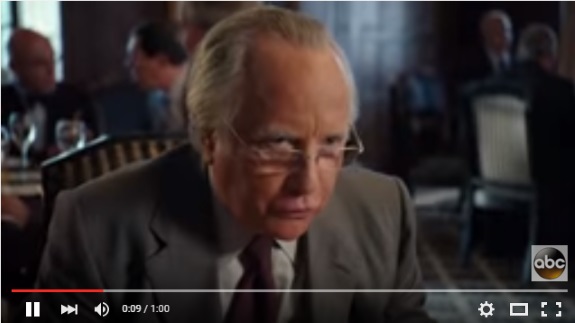
    Bernard Madoff, played by Richard Dreyfuss, tells investors "Look, it's a closed fund" in the ABC miniseries. Ponzi schemes often trade on suggestions of exclusivity.
    Bernard Madoff, played by Richard Dreyfuss, tells investors “Look, it’s a closed fund” in the ABC miniseries. Ponzi schemes often trade on suggestions of exclusivity.

    ABC has made available the first trailer for “Madoff,” a network miniseries debuting Feb. 3, 2016. Richard Dreyfuss plays the notorious Ponzi schemer, with Blythe Danner starring as Ruth Madoff.

    Bernard Madoff’s name first appeared on the PP Blog nearly seven years ago, on Dec. 13, 2008. It has appeared numerous times since then.

    Says Dreyfuss, as Madoff, in the trailer: “You want to know how to get people to trust you with their money? I’ll tell you right now: You present it as an exclusive thing.”

    Any number of the “programs” we have covered tried to sell Madoff-like exclusivity. One of them was Zeek Rewards, an alleged MLM fraud involving more than $850 million taken down by the SEC in 2012.

    Zeek Rewards, according to the SEC, called itself a “private, invitation-only, affiliate advertising division” for Zeekler, a penny-auction “opportunity.”

    Of course, the interest rate Zeek promised made Madoff look like an amateur.

    As the PP Blog reported on June 10, 2012, a couple of months prior to the SEC’s Zeek action (italics added):

    When Zeek’s story is compared to the tale of Madoff’s relatively modest (compared to Zeek) but unusually consistent returns of around 10 percent a year, Zeek is outperforming the notorious Ponzi swindler by a factor on the order of 30 to one. Zeek, though, insists it is not offering an investment. It also preemptively denies it is a “pyramid scheme” and plants the seed it will terminate any affiliate who suggests Zeek is offering an investment program.

    Lessons flowing from Madoff continue to go unheeded — things such as suggestions of exclusivity and unusually consistent returns.

    But with HYIPs, the danger signs may be even clearer: preposterous interest rates that dwarf Madoff’s “returns,” a presence of a scheme on the Ponzi boards such as TalkGold and MoneyMakerGroup, menacing behavior by a company or its affiliates, cult-like qualities (such as allegedly existed at TelexFree), bizarre antigovernment rhetoric suggesting the presence of “sovereign citizens” or political extremists.

    One of the classic refrains is that “it can’t be a scam because the company is registered.”

    TelexFree, which allegedly generated $3 billion in economic activity, was “registered.”

    So was Bernard L. Madoff Investment Securities LLC.

    As was the case at Zeek, the TelexFree interest rate dwarfed that of Madoff. From the SEC’s 2014 TelexFree complaint filed years after Madoff made “Ponzi” household word in 2008 (italics added):

    One version of the marketing presentation on the company website contained slides indicating that an AdCentral promoter could clear $2,296 per year on a $289 investment, that an Ad Central Family promoter could clear $11,599 per year on a $1,375 investment, and that a Team Builder promoter could receive as much as $39,600 per year.

    The “Madoff” trailer is below. It includes lots of lessons for the mind and soul in just one minute — and it’s not just about making people think they are becoming members of an exclusive club. The con man serving 150 years in federal prison also made appeals to naked greed.

    Your Ponzi-board sponsor may be doing the same thing to you right now.


  • URGENT >> BULLETIN >> MOVING: SEC Charges Alleged Zeek Promoter Trudy Gilmond

    breakingnews725URGENT >> BULLETIN >> MOVING: (5th Update 9:15 p.m. ET U.S.A.) The SEC has gone to federal court in the Western District of North Carolina and charged Zeek Rewards’ figure Trudy Gilmond with securities fraud, selling unregistered securities and failure to register as a broker-dealer.

    Among the allegations: Gilmond knew Zeek was under investigation in 2012 and cashed out without telling investors the “program’s” days likely were numbered. She also is accused of joining with Zeek’s principals in playing word games to sanitize the fraud.

    Gilmond, 45, of Vermont, is the first individual Zeek promoter charged in an alleged Ponzi- and pyramid scheme said to have gathered more than $850 million. She previously had been sued by court-appointed receiver Kenneth D. Bell as an alleged “winner” in the scheme.

    The Zeek receivership estate was awarded a judgment of more than $2.1 million against Gilmond, who previously promoted the collapsed Regenesis 2X2 scheme investigated by the U.S. Secret Service in 2009.

    In its complaint, the SEC said Gilmond is a “self-described network marketer who has participated in numerous MLM programs, operating under the trade name ‘Team Fired Up’ to attract followers and new recruits to join her ‘downline’  in those MLM programs (several of which ultimately collapsed in a fashion similar to ZeekRewards).”

    Zeek’s former COO Dawn Wright-Olivares, an SEC civil defendant who also has been charged criminally, recruited Gilmond, the SEC charged.

    Bell has raised the issue of MLMers or direct marketers moving from one fraud scheme to another. Gilmond now joins MLM promoter Matthew John Gagnon as a roving huckster pursued by both a receiver and the SEC. Gagnon also was pursued by criminal authorities.

    It perhaps never has been more dangerous for hucksters to move from scheme to scheme to scheme. Serial promoters Faith Sloan and Sann Rodrigues were charged by the SEC in the TelexFree Ponzi- and pyramid case and also are being pursued by class-action attorneys. Rodrigues, who once claimed God invented MLM and “binary,” also has been hit with criminal charges of immigration fraud.

    The SEC later tied Rodrigues to Daniel Fernandes Rojo Filho, an alleged fraudster from DFRF Enterprises who previously was tied to the infamous EMG/Finanzas Forex Ponzi scheme.

    With respect to Gilmond, the SEC described her as “one of the most successful and prolific promoters of ZeekRewards. From at least September 2011 until ZeekRewards was shut down in August 2012, Gilmond worked closely with the company founders and served as a senior ‘field liaison’ to promote the scheme, persuading scores of unsophisticated retail investors to buy ZeekRewards securities upon the promise of profit sharing. Gilmond reaped more than $1.7 million in transaction-based commissions and bogus profit-sharing for her recruiting efforts.”

    Some of the specific allegations against Gilmond in the SEC complaint (italics added/editing performed):

    Based on Gilmond’s efforts and the misstatements on the website, many of Gilmond’s team members ultimately purchased the ZeekRewards securities, earning Gilmond substantial commissions.

    As a field liaison, Gilmond had access to portions of ZeekRewards’ internal electronic investor database so that she could make adjustments to individual accounts to address her affiliates’ concerns or complaints. Among other things, Gilmond had the ability to adjust the number of “points” earned and could assign downline recruits to certain affiliates, both of which impacted the measure of profit sharing or commissions paid to those affiliates. In addition, Gilmond developed close ties with Wright-Olivares and other ZeekRewards insiders, which gave her unique access and insight not available to a typical investor.

    Having worked closely with the company founders and insiders to promote the scheme in her role as a senior field liaison, and given her prior experience with similar MLM programs that ultimately collapsed, Gilmond knew or should have known that the ZeekRewards scheme’s outsize returns (averaging 1.5% per day) were too good to be true and could not be sustained.

    Gilmond also helped conceal from investors and regulators the true nature of the ZeekRewards scheme. To that end, Wright-Olivares and others directed, and Gilmond helped implement, several superficial or nominal changes to certain ZeekRewards features. This included removing any references on the website to the terms “investment” and “ROI”; substituting a daily award percentage that in the aggregate approximated 125% every 90 days rather than “guaranteeing” a 125% return; and requiring investors to give away VIP bids to foster the illusion of contributing efforts to the enterprise.

    Aware that ZeekRewards was under investigation by several law enforcement agencies and that the business was in serious trouble in 2012, Gilmond and others withdrew substantial sums of money from the scheme before it was shut down, without advising investors that the scheme was likely to collapse.

    Read the SEC statement and complaint against Gilmond.

    NOTE: Our thanks to the ASD Updates Blog.