Tag: SEC

  • MYTH-SHATTERING CASE: Local Prosecutors Extradite Ronald Paul Shade From Thailand To Face Real-Estate Ponzi Charges; Shade Also Accused Of ‘Financial Elder Abuse’

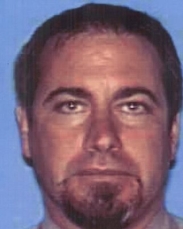
    Ronald Paul Shade: Source: Interpol

    EDITOR’S NOTE: The PP Blog has covered a number of stories in which U.S. residents living overseas were extradited to the United States to face Ponzi charges. The case against Ronald Paul Shade is another one — and it’s one that demonstrates that an extradition can occur even if a defendant is not charged with a federal offense.

    Indeed, the warrant for Shade’s arrest was issued by a state-level Superior Court judge in California, according to Interpol. Shade’s case is instructive because it defeats some of the myths propagated on Ponzi boards such as MoneyMakerGroup, ASAMonitor, TalkGold and MyCashForums. Among the myths is that “offshore” equals “safe” for both investors and Ponzi perpetrators.

    Don’t tell that to Shade, now jailed in California after being extradited from Bangkok by local — as opposed to federal — prosecutors in California. His bail was set at $3.9 million.

    And don’t tell it to Jeffrey Lane Mowen, extradited from Panama to face federal Ponzi charges in Utah and later indicted in an alleged murder-for-hire plot. Here’s a quick side note on the Mowen case: If you like the recruitment fees paid by HYIP, autosurf and corrupt MLM or commission-based investment programs and make claims about the “due diligence” you’ve performed and try to impress prospects with your insider knowledge, your willful blindness may put you at great risk.

    Mowen had three prior convictions in Utah for securities fraud and two for theft, according to records. Despite Mowen’s criminal record and history as a fraudster, promoters still did business with him. Their faith drained millions of dollars from investors, the SEC said. Using language apt to cause unease in the Ponzi-promoting world, the SEC said at least one promoter “either knew or was reckless in not knowing that Mowen had multiple recent felony convictions involving crimes of dishonesty.”

    Indeed, the SEC said, the promoter learned in approximately late June 2007 that Mowen had been convicted of securities fraud . . . [but] “continued to solicit new investor funds for several months while failing to disclose Mowen’s criminal history to any of the Promoters or their investors.” Downstream promoters who entrusted the promoter “conducted virtually no due diligence in connection with [his] purported investment opportunities, but transferred investor money to [him] without any documentation or limitation on his use of the funds,” the SEC said.

    Perhaps the biggest myth exposed by the Ronald Paul Shade case is that going offshore takes state attorneys general and local prosecutors totally out of play. Longtime PP Blog readers will remember that the “offshore” pitch was pivotal in promotions for AdViewGlobal, AdGateWorld, MegaLido and other autosurfs that surfaced in the aftermath of the seizure of tens of millions of dollars by the U.S. Secret Service in the AdSurfDaily Ponzi scheme case. Some ads claimed that the “offshore” surfs neutralized state-level investigators.

    Shade, however, was brought back to the United States at the request of the San Bernardino County District Attorney’s Office in California to face state charges filed by local investigators.

    Still promoting investment-fraud schemes on the Ponzi boards and supplementing your pitches with myths about “safety” and how the overseas schemes are insulated from prosecution? Perhaps this story on the dramatic extradition of Colombian national David Murcia to the United States will help you snap out of your delusion that Ponzi and pyramid businesses cause no harm and represent “freedom” of choice. Perhaps this story on Robert Hodgins, who goes to bed at night knowing he’s wanted by Interpol, will help you shape your thinking.

    The cases of John and Marian Morgan, U.S. residents extradited from Sri Lanka, also are instructive.

    Finally, it’s worth noting that, after the United States charged Canadian national Nicholas Smirnow in May with operating an HYIP Ponzi scheme, a MyCashForums poster was quick to claim that “the USA has no extridition (sic) agreement ion (sic) place with the Phillipines (sic) . . . “

    The claim was false. Federal prosecutors said they are seeking Smirnow’s extradition. He was accused of operating a $70 million, international fraud known as Pathway to Prosperity (P2P).

    Here, now, the story of Ronald Paul Shade’s extradition . . .

    A California man living in Thailand was extradited to the United States to face charges he ripped off senior citizens in a real-estate Ponzi scheme, authorities said.

    Ronald Paul Shade, 39, formerly of Riverside, was arrested by local detectives Friday at Los Angeles International Airport. He was charged by investigators from the San Bernardino District Attorney’s Office with 29 felonies, including financial elder abuse, filing forged documents with the County Recorder’s Office and grand theft.

    San Bernardino County District Attorney Michael A. Ramos, who also is the president of the California District Attorneys’ Association, led the probe.

    Among the detectives involved in the Shade probe was Michael Leibrich, a senior investigator with the DA’s office.

    “From 2006 to 2008, Shade solicited money from numerous investors for his company, Orange Crest Realty,” investigators said. “Investors were promised a high rate of return for a short-term investment. Elderly victims later discovered that their life’s savings were being used to further a Ponzi scheme.”

    Shade had been living in Thailand for about two years, investigators said.

    In 2008, the California Department of Corporations issued a “desist and refrain” order against Shade and his company after alleging that they were selling unregistered securities and recruiting prospects  by urging them to “Get 18% APR Today” through the company’s “wonderful” investment.

    Shade and the company used a now-defunct website known as OCRFunding.com to pitch the purported program, authorities said.

    Among the misleading claims made to investors, according to authorities, were these:

    • That Orange Crest Realty was founded in 1993. (Authorities said Orange Crest Realty was not incorporated until June 2004.)
    • That Orange Crest Realty is a “registered investment advisor.” (Authorities said neither Shade nor the company and its associates were registered.)
    • That each investment was secured by actual title to specific existing real property. (Authorities said that “each investment was not secured by real property.”)
    • That a Deed of Trust And Assignment of Rents in the Property would be recorded with the Office of the County Assessor/Recorder and the investor would be provided with the recorded deed.  (Authorities said a deed promised an investor who sent in $50,000 was not recorded and the “investor never received a recorded deed.”)
    • That the investor would receive regular monthly interest payments. (Authorities said “payments ceased shortly after the investment was purchased.”)

    San Bernardino County investigators were assisted in the extradition by the Southwest Regional Fugitive Taskforce of the U.S. Marshals Service.

    The scheme, which allegedly gathered $14 million, also fleeced investors who responded to newspaper ads, investigators said.


  • Now, A $145 Million Fraud Scheme in Utah; SEC Charges Travis Wright Amid ‘Sandwich In A Can’ Allegations

    A Utah man whose assets — including a taxidermy of a full-body African lion — was put on the action block amid Ponzi allegations earlier this year was selling unregistered securities and running a $145 million offering fraud, the SEC said today.

    Charged in the case was Travis L. Wright. The SEC said the scheme raised “nearly $145 million from approximately 175 investors” by providing investors promissory notes issued by Waterford Loan Fund LLC.

    The notes purportedly were secured by a lien on a trust that held all the assets of the fund, but Wright made “numerous” misrepresentations to investors, the SEC charged.

    Waterford was placed in bankruptcy last year, and Ponzi allegations emerged. The asset sale was billed in April as stemming from the proceeds of “one of the largest alleged Ponzi fraud cases in Utah.”

    Among the taxidermy items put up for bid were a “full body African lion,” Cape Horn buffalo, African antelope and hyena, wildebeest and other exotic animals. Forty-three firearms also were put up for auction, along with “beautiful, top-quality office furniture,” paintings, Persian and Oriental rugs, “fine home furnishings, antiques and more.”

    In June, the FBI said that recent Ponzi schemes and cases of investment fraud have cost Utah residents an estimated $1.4 billion. Some of the schemes were targeted at Mormons, the agency said.

    About 370 investigative “subjects” — defined as “potential perpetrators” in current cases — have been identified, and the agency and its law-enforcement partners have embarked on a public awareness and education campaign aimed at keeping Utahns safe from scammers.

    About 4,400 people have been affected by investment-fraud schemes in the state, the FBI said. The education campaign includes billboards and public-service messages.

    Among the allegations by the SEC against Wright was that he directed money to a company that planned to sell a product through vending machines. The product was described as a “sandwich in a can.”

    The SEC asserted that Wright told investors “that their funds would be used only to make loans secured by commercial real estate, when in fact he used their funds primarily for loans and investments having nothing to do with real estate.”

    Meanwhile, Wright told investors their promissory notes were secured by interests in a trust, “but no such trust existed” and “the notes were not secured,” the SEC said.

    Although Wright told investors that Waterford would never lend more than 50 percent of the value of its real estate holdings, he did not disclose “that he never obtained an appraisal or valuation of real estate before lending investor funds against it” and that “he was using investor funds to pay for a lavish lifestyle for himself and his friends and family,” the SEC charged.

  • BULLETIN: Another Florida Ponzi Scheme: SEC Sues Estate Of Dead Man, Saying Kenneth Wayne McLeod And His Companies Ripped Off Members Of ‘Law Enforcement’ And Operated Ponzi Scheme For Decades

    BULLETIN: The SEC has gone to court in Florida to obtain emergency relief against two companies and their late owner, alleging that Kenneth Wayne McLeod targeted government employees and members of law enforcement to invest in a government bond fund that did not exist.

    McLeod, 48, was found dead Tuesday in Jacksonville’s Mandarin Park. Local media outlets are reporting that the death is believed to be a suicide, but the SEC described the death only as “sudden.”

    In a dramatic emergency action, the SEC has sued McLeod’s estate and both of his businesses: Federal Employee Benefits Group Inc. (FEBG), a consulting firm, and F&S Asset Management Group Inc., a registered investment-advisory firm.

    U.S. District Judge Federico A. Moreno has frozen the assets of McLeod and the companies. The SEC said it was unclear who even was running the firms in the wake of McLeod’s death.

    Among the astonishing allegations was that McLeod had been operating a Ponzi scheme since at least 1988 and that the colossal fraud gathered “at least” $34 million from 260 investors across the country.

    “McLeod victimized law enforcement agents and other government employees who dedicated their lives to the service of this country,” said Eric I. Bustillo, director of the SEC’s Miami Regional Office. “The victims gave years of public service and McLeod stole their futures.”

    McLeod conducted investment seminars “at government agencies nationwide” to lure clients, the SEC said. The agencies paid “up to” $15,000 each for these seminars,” and FEBG held itself out as “dedicated to the complex issues surrounding special group employees, including Law Enforcement Officers, Firefighters and Air Traffic Controllers,”the SEC charged in the complaint.

    At least one investor was told the purported bond program was a special fund for family and friends, and families of “fallen agents,” the SEC charged.

    If the allegations are true, it means that McLeod was selling a Ponzi scheme dressed up as a secure retirement plan backed by government bonds right inside government offices — while earning a fee to make the pitch and plucking heartstrings by referring to people who had lost their lives in the line of duty.

  • BULLETIN: Another Ponzi Scheme In South Florida; SEC Alleges $28 Million Fraud Against Trade-LLC

    A Florida company — Trade-LLC — and its operators have been accused of running a $28 million Ponzi scheme that fleeced members of three investment clubs.

    Named defendants by the SEC were Trade-LLC and its managing members, Philip W. Milton and William Center. The scam operated in the Palm Beach Gardens area, and affected more than 800 members of the investment clubs, the SEC said.

    Investors were persuaded to “entrust Trade-LLC with money so that it could trade securities on the clubs’ behalf using its purported proprietary software trading program,” the SEC said.

    “With claims of a sophisticated trading program and extraordinary returns, Milton and Center persuaded the clubs and their members to increasingly invest millions with Trade-LLC,” said Eric I. Bustillo, director of the SEC’s Miami Regional Office. “They then blatantly lied to the clubs about the returns that were being achieved and hid the clubs’ losses by running a Ponzi scheme.”

    U.S. Attorney General Eric Holder gave a speech in the Palm Beach area in January, warning fraudsters that they were writing their own tickets to jail. Florida has been pounded by both Ponzi schemes and cases of real-estate and mortgage fraud.

    Milton already has agreed to settle the SEC charges against him, the SEC said.

    Trade-LLC will be placed in receivership and also “has also consented to pay a civil money penalty to be determined by the court,” the SEC said. Milton has been ordered to return $2.3 million and pay a civil penalty of $130,000.

    “Milton and Center used the clubs’ funds to pay themselves salaries of more than $2 million and $1 million, respectively, and to cover more than $1.3 million in business and other unrelated expenses,” the SEC said. “Milton and Center also transferred, without any legitimate basis, over $4.8 million of the clubs’ funds to three Florida companies they controlled.”

    The case against Center remains unresolved.

    Named relief defendants in the case were the three companies controlled by Milton and Center. They were identified by the agency as BD LLC, TWTT-LLC and CMJ Capital LLC. All of the companies have been placed in receivership and have agreed to a settlement and to disgorge ill-gotten gains, according to the SEC.

    Assisting in the probe were the CFTC and the Florida Office of Financial Regulation.

  • U.S., German, British, Canadian Provincial Regulators Cooperate In Probe Of Alleged ‘Oil And Gas’ Fraud Scheme Operating In Florida, Texas And Aruba; SEC Sues Justin Solomon And Affiliated Firms

    A Florida man selling “joint ventures” in oil-and-gas businesses in Texas to overseas clients through corporate arms in the United States and Aruba has been accused of fraud by the SEC.

    Named defendants in the case were Justin Solomon of Deerfield Beach, Fla., and three affiliated companies: Seisma Oil Research LLC of Boca Raton, Fla., Seisma Energy Research AVV and Permian Asset Management AVV of Aruba.

    Seisma Oil Research LLC also is known as Seisma Energy Research LLC, and Seisma Energy Research AVV also is known as Seisma Oil Research AVV, the SEC said.

    The case is notable for reasons beyond fraud allegations and the number of companies with similar-sounding names. Indeed, the SEC said the agency was assisted in the probe by the Financial Services Authority of the United Kingdom, the Federal Financial Supervisory Authority of Germany, the Ontario Securities Commission and the Nova Scotia Securities Commission.

    Also assisting internationally was the London Police Department. On the U.S. domestic front, the Division of Securities of the Florida Office of Financial Regulation also assisted.

    The defendants have consented to a preliminary injunction and to repatriate “any remaining investor assets” to the United States.

    Solomon and the companies raised “at least” $25 million in the scheme by using “high-pressure sales tactics” on “more than 400 non-U.S. investors,” drawing them into the scheme, the SEC said.

    “The ventures were supposed to purchase undivided working interest in oil and gas projects owned and operated by two unrelated Texas companies,” the SEC said.

    Investigators, though, said “Seisma never acquired any working interest for two of the six ventures and has expended only $9.5 million of the funds raised toward acquiring interests on behalf of the ventures.”

    At the same time, the SEC said, “Seisma misrepresented or omitted material facts about the profitability and prospects of the oil and gas opportunities.”

  • KABOOM! KABOOM! KABOOM! KABOOM! KABOOM! 5 Separate Federal Probes Lead To Dozens Of Fraud Arrests In Multiple States; 1 Case Alleges Nearly $2 Billion Scheme

    Lanny Breuer, assistant attorney general and head of the Criminal Division of the U.S. Department of Justice

    BULLETIN: The U.S. government has announced charges against at least 43 defendants in five separate financial-fraud schemes, the largest of which allegedly involved $1.9 billion and contributed to the collapse last year of a bank with 346 branches and a mortage-lending company in Florida.

    Smaller schemes in cases outlined by federal prosecutors today involved tens of millions of dollars, including a New Jersey real-estate Ponzi scheme that netted $45 million, a California mortgage-fraud scheme that netted at least $5.5 million, a second California scheme that netted an unknown amount and another real-estate fraud scheme in New Jersey that netted at least $5.5 million.

    The youngest defendant charged in the cases was 27; the oldest 77.

    Law-enforcement operations were centered in the states of Florida, New Jersey, Virginia and California, and involved multiple agencies working under the umbrella of the Financial Fraud Enforcement Task Force established by President Obama in November.

    Lee Bentley Farkas, former chairman of Taylor, Bean & Whitaker (TBW), was arrested last night in Ocala, Fla. Farkas was named in a 16-count indictment filed in Virginia that accused him of presiding over a $1.9 billion fraud scheme that contributed to the failures last year of Colonial Bank, one of the 50 largest banks in the United States, and TBW, one of the nation’s largest privately held mortgage-lending companies.

    “The fraud alleged here is truly stunning in its scale and complexity,” said Lanny Breuer, head of the Criminal Division of the U.S. Department of Justice.

    “According to the indictment, the fraud began as early as 2002 in an effort to conceal significant TBW operating losses,” Breuer said. “It then evolved over the course of seven years as Mr. Farkas and his co-conspirators sought to misappropriate hundreds of millions of dollars from Colonial Bank and Ocala Funding, a mortgage lending facility that was controlled by TBW and financed by large banks.”

    Farkas and unnamed coconspirators compounded the fraud by asking for bailout funds from the federal Troubled Asset Relief Program (TARP), prosecutors said.

    “That [TARP] application included materially false information, and no TARP funds were released,” said Breuer.

    The case was brought by the office of U.S. Attorney Neil MacBride of the Eastern District of Virginia.

    “Taxpayers have paid a hefty price for the crimes related to the current financial crisis, and investors in Colonial and Ocala Funding were among those directly affected by this conspiracy,” said MacBride.

    Neil Barofsky, the Special Inspector General of the TARP program (SIGTARP), said the banking scheme was unprecedented.

    “Due to the efforts of SIGTARP agents, our law-enforcement partners, and the SEC, this scheme was stopped dead in its tracks, taxpayers were protected, and Lee Farkas has joined the growing list of financial industry executives who have been charged with TARP-related frauds,” Barofsky said.

    In one of the separate alleged schemes in New Jersey, 28 people were charged. (See link below to read the names of the defendants in the cases, which involve at least $5.5 million.)

    “These cases demonstrate just how pervasive the mortgage fraud problem is in New Jersey,” said U.S. Attorney Paul J. Fishman.  “Mortgage fraud is not limited to people who steal millions at a time.  It is more insidious.  It is more pernicious.  And it is more prevalent. Mortgage fraud is often done at a retail level, and involves many different people playing many different roles.  No matter what your role, if you participate in this kind of scheme, you will be held accountable.”

    Among the 28 defendants are 12 real estate agents, four investors, four mortgage consultants, three individuals who allegedly created fraudulent documents, two accountants, a real-estate appraiser, a bank employee and a mortgage broker.

    A veteran FBI agent described the New Jersey cases as a battle in an ongoing war against fraud.

    “Today’s arrests do not signify the culmination of a single investigation, but rather serve as notice that law enforcement is aggressively pursuing mortgage fraud schemes in New Jersey,” said Michael B. Ward, special agent in charge.

    In the second New Jersey case, Antoinette Hodgson, 58, of Montclair, was arrested on charges of operating a $45 million Ponzi scheme involving false tales of property-flipping. (See earlier story.)

    Meanwhile, 13 people were charged in a California real-estate fraud cases. U.S. Attorney Benjamin B. Wagner announced the indictments of Hoda Samuel, 58, of Elk Grove, Calif.; Connie Devers, 40, of Elk Grove; Dana Faulkner, 43, of Oakland; Charles Robert Maness, 32, of Elk Grove; Tracy Painter, 50, of Lodi, Calif.; Sean Patrick Gjerde, 34, of Elk Grove; Ronald Burris, 36, of Elk Grove; Ygnacia Bradford, 34, of Oakland; Nicole Dawson, 40, of Oakland; and Daniel Harrison, 40, of San Diego.

    Gjerde is an attorney;  Samuel a licensed real estate broker and the head of Liberty Real Estate and Investment Co. and Liberty Mortgage Co. of Elk Grove .

    “From April 2006 through February 2007, Liberty was involved in approximately 30 residential real estate transactions in which the mortgage lenders were given false information as to the income of the purchasers and/or the value of the homes being purchased,” prosecutors said.

    “At least 28 of the properties have since gone into foreclosure, resulting in a loss to lenders of over $ 5.5 million,” prosecutors said.

    Also in California, Eric Ray Hernandez, 34, Monica Marie Hernandez, 29, and Evelyn Brigget Sanchez, 27 were indicted in a mortgage-fraud case. Each of the defendants lists an address in Bakersfield.

    Link to names of New Jersey defendants.

  • Richard Elkinson Ordered To Pay $29 Million In Ponzi Case; 77-Year-Schemer Still Jailed After Arrest At Mississippi Casino In January

    A 77-year-old man who fleeced clients by telling them he brokered contracts for a Japanese company that provided uniforms for the Winter Olympics, the Pan American games and the government has been ordered to pay $29 million in a civil case brought by the SEC.

    Richard Elkinson is jailed in Massachusetts after being arrested at a Mississippi casino in January. He is facing charges that effectively could lead to a life sentence, if convicted.

    Elkinson’s case drew headlines at the beginning of the year, after both state and federal investigators worked over the Christmas holiday in 2009 to expose the $28 million Ponzi scheme, according to records.

    “The investors received promissory notes signed by Elkinson, with terms that generally required payment within 300 to 330 days and with an interest rate that ranged from 9% to 13%,” the SEC said.  “Elkinson had no relationship with a Japanese uniform manufacturer, and there were no contracts to purchase uniforms.”

    It is possible that the scheme operated for at least 20 years before flaming out just prior to Christmas last year.

    The FBI was working the case on Christmas Eve, according to the criminal complaint. After securing purchase orders claiming the states of Connecticut and Georgia were among Elkinson’s customers, an agent called the phone numbers on the purported purchase orders.

    “In each instance, I encountered ‘disconnected’ messages,” the agent said.

    The investigation also revealed that Elkinson had an affinity for Las Vegas and claimed to have credit lines of $25,000 each at the Venetian, MGM Grand and Caesars Palace casinos.

    Elkinson, 76, of Framingham, was charged criminally with mail fraud. The Securities Division of the Massachusetts Secretary of State also is investigating Elkinson.

    Records in Las Vegas casinos show that Elkinson had “conducted a total of more than $3.7 million in transactions over $10,000″ since 1998, prosecutors said. The Ponzi scheme began to collapse last year, and Elkinson missed a meeting with investors in December, and stopped answering his phone.

    See earlier story.

  • Affiliate Links Show That Surf’s Up Mod And ASD Members Hold High Positions In Upstart Surf: Things To Consider If You Are Tempted To Join AdPayDaily

    Alfred E. Neuman: From Wikipedia.

    Dear Readers,

    We have received a few inquiries about a new surfing program called AdPayDaily (APD). Our initial take is that the program is a dressed-up version of AdSurfDaily, AdViewGlobal, BizAdSplash and AdGateWorld and that the operators are persuaded they’ve found a word combination and legal structure that will neutralize critics and law enforcement should concerns about the sale of unregistered securities and a Ponzi and pyramid scheme be raised.

    AVG, BAS and AGW were positioned by former ASD members as offshore “clones” of ASD. APD, like ASD, appears to be operating in the domestic United States.

    In our view, APD’s presentation raises numerous red flags. At a minimum, it is starting out as an MLM absurdity, if not a potential monstrosity. To get a flavor of the absurdity, imagine that Walmart was clueless enough to start an autosurf and provide a corporate-approved greeter who says, “Welcome to Walmart Pay Daily. We count all the money out of sight in the back room at midnight to determine how much you get, and keep 50 percent of the cash for ourselves. Don’t worry. We have excellent lawyers, and we’ve instructed the money-counter not to rip you off.”

    That’s effectively what APD is saying.

    Another red flag is the fax number listed on a document APD refers to on its website as “Ad Pay Daily’s Conference Registration Form For July 30th and 31st 2010.” The fax number is listed online as a number used by a Kansas real-estate flipping company billed as National Flips. Like APD, the National Flips domain registration is hidden behind a proxy, although the website says this: “To learn how to become a Hard Money Lender and earn 30+% per annum, call [a telephone number] . . .”

    Meanwhile, the invitation for the APD conference that uses the National Flips fax number says this — not once, but twice: “Any person who does not provide photographic proof of identity will not be permitted to attend this event, so don’t forget your photo ID.”

    Why a photo ID would be required to attend a sales pitch for an advertising company is left to the imagination. Undercover Secret Service agents have been known to attend such functions, however.

    Virtually every autosurf that has come along has used strange approaches or applied language tweaks designed to skirt securities laws, disarm critics and sanitize the “opportunities” for prospects. Serial autosurf promoters are infamous for telling prospects that a particular surf has found the magic pill that makes everything legal. Historically they rely on the surf operators to provide a legal cover. When things go south, they claim no one can blame them for promoting the schemes. After all, they relied on the assertions of the operators that everything was above-board and legal. They have been disingenuous in the same way that Alfred E. Neuman, Mad magazine’s fictional mascot, was disingenuous.

    “What, me worry?”

    Worry, however, appears to be front-and-center at APD, which is preemptively denying in multiple places that it is a Ponzi scheme. This strikes us as a big red flag. There are others.

    ASD, Surf’s Up Members Become APD Players

    During its early research into APD, the PP Blog has determined that a number of members of the alleged AdSurfDaily autosurf Ponzi scheme have high positions in the APD venture. Some of the former ASD members hold more than one position in the top 80 positions in APD, including a former Surf’s Up Mod who appears to hold positions 76 and 77. It is possible that another Surf’s Up Mod also is high up in the pecking order of APD affiliates at No. 56.

    The Blog determined the names of APD promoters by researching the method by which APD creates affiliate links. At least one ASD member who made himself part of the ASD Ponzi litigation by submitting pro se pleadings holds positions 9 and 10 in APD, according to the affiliate links.

    Surf promoters are not fond of pointing out the pain of previous prosecutions of autosurfs and the time-consuming and expensive litigation involving both the government and court-appointed receivers that may occur when a surf collapses. It is not uncommon for millions of dollars to go missing in a surf.

    ASD’s Andy Bowdoin has told members that he has spent more than $1 million in his legal defense. Nothing (other than GIGO passed along by promoters) suggests Bowdoin was a man of means prior to the Secret Service raid on ASD’s headquarters in August 2008. His money for his defense appears to have come from ASD members. On a side note, Bowdoin tried to persuade members in September 2009 that the million dollars he dropped to keep himself out of prison was for their benefit. At the same time, he claimed his fight with the government was inspired by a former Miss America.

    ASD gathered at least $65.8 million. When the sum seized in the Golden Panda Ad Builder action, which is part of the ASD litigation, is factored in, the number surges to more than $80 million. That’s a big number, of course — one that shows why others want to start surfs and just tweak and tweak and tweak in search of the elusive magic pill.

    APD’s website was registered on Nov. 18, 2008. That’s just one day before U.S. District Judge Rosemary Collyer ruled that ASD had not demonstrated it was a lawful business and not a Ponzi scheme. APD’s domain-registration date also coincides with a string of registration dates by the so-called ASD clones:

    • Aug. 18, 2008: Domain name for AdGateWorld registered. (About two weeks after the ASD raid by the U.S. Secret Service, which is working in concert with the IRS and federal prosecutors.)
    • Sept. 22, 2008: Domain name for AdViewGlobal registered. (AVG had very close ties to ASD.)
    • Nov. 7, 2008: Domain name for BizAdSplash registered. (ASD and Golden Panda figure Clarence Busby purportedly was both the “chief consultant” and owner of BAS.)

    APD’s domain was registered just 11 days after the BAS domain was registered and only a couple of weeks before ASD declared that the now-defunct Surf’s Up forum was its official organ for ASD news. Surf’s Up became infamous for shilling for Bowdoin, fracturing the facts of the ASD wire-fraud and money-laundering case and misinforming members.

    Each of the surfs in the bullet points above failed spectacularly. Each of them blamed members for their problems. Each of them had promoters and members in common with ASD. Each of them also offered various “bonuses” to join — something APD is doing at the moment.

  • SEC: Texas ‘Man Of God’ Ran Nigerian ‘Oil Tanker’ Scheme On Elderly Christians Who Believe He’ll Still Deliver; One Widow May Be Out More Than $1 Million

    EDITOR’S NOTE: The allegations against Samuel O. LeMaire are alarming. The case against him may prove to be one that demonstrates how vulnerable people of faith may be to affinity fraud while at once demonstrating how victims don’t want to believe they’ve been fleeced by a con artist even when the evidence is overwhelming.

    As many as 50 people have been fleeced in an international scheme in which they were told their investment money would be used in part to help needy children in Nigeria, the SEC said.

    Samuel O. LeMaire, a Nigerian living in Texas since the 1980s, told elderly Christians he was starting a “foundation” to help the children and that profits would come as soon as he raised enough money to pay taxes on crude oil from tankers situated “overseas,” the SEC said.

    The agency is treating the action against LeMaire as a case of “religious affinity fraud” because he positioned himself as a “minister” and “Man of God,” targeted investors who had no knowledge of the oil business and repeatedly asked them to give him money to finance the offloading of the oil to make profit distributions possible.

    No investors received any profits, the SEC said.

    Investigators said they believed there was no oil at all, despite the names of LeMaire’s companies — Petrogas Overseas Trading LP and Petroenergy Inc. — and despite LeMaire’s claims he was a former oil executive in Nigeria and well-connected in the oil business.

    LeMaire’s scheme had been operating for “at least” two years, and he was collecting money up until the bitter end by telling investors he needed to raise $90,000 to pay “excise taxes” on the oil before profits could be distributed, the SEC said.

    At various times, LeMaire told investors the deal was “done or almost done, the funds were in transit, the funds were in a bank account ready to be wired, or any number of similar stories,” the SEC said.

    In truth, “LeMaire used investor funds to finance his own lavish lifestyle and support friends and family in the U.S. and abroad,” the SEC said. Investor funds were used for travel and entertainment and to purchase clothing, jewelry and meals in high-end restaurants.

    When issued a subpoena, LeMaire asserted his 5th Amendment right not to incriminate himself and declined to answer questions about Petrogas, the SEC said.

    Investors were promised returns ranging from 300 percent to 1,000 percent, the SEC said, alleging that the scheme raised at least $2.3 million since 2007.

    “The mindset of all Petrogas investors was, and still is, that God wanted them to invest with LeMaire, and that ‘it will all work out in the end,’” the SEC said.

  • BULLETIN: Ponzi Suspect Alan Todd May, On Lam From Dallas And Wanted By U.S. Secret Service, Captured In San Francisco

    BULLETIN: Ponzi suspect Alan Todd May of Dallas has been captured by the U.S. Marshals Service in San Francisco.

    May, 45, was wanted by the U.S. Secret Service. In March, the SEC accused May of running an oil-and-gas Ponzi scheme through companies variously known as Prosper Oil & Gas Inc. and Prosper Energy Inc.

    May, who has a long criminal record and was described by the SEC as a “felon,” assumed “multiple identities to evade apprehension,” according to U.S. Marshal Federico Rocha.

    May pitched his scheme in ads in the Wall Street Journal, Barron’s, the Oklahoman, the Jewish Voice, the Abilene Reporter and on eBay, the SEC said in March.

    Records show that May was arrested 13 times between 1983 to 2002 for crimes such as theft, theft by check and credit card abuse. He also had been apprehended for probation violations and failure to appear in court.

    “These arrests resulted in at least 14 convictions, with dispositions ranging from probation to 20-years’ imprisonment,” the SEC said. “Most recently, he was released from prison in or about 2007.”

    In his latest scheme, the SEC said, May sold royalty interests in wells in to at least 99 investors, advertising returns of up to 38 percent.

    “May or other Prosper employees used investor funds for various lavish personal expenses, including approximately $611,000 for vehicle purchases and expenses (including purchases by May of a Ferrari, a BMW and a Mercedes), $400,000 in credit card payments, $430,000 for meals, entertainment and retail purchases, $324,000 in travel expenses, and $89,000 in cash withdrawals,” the SEC said in March.

    “In addition, during the scheme, May and Prosper acquired multiple houses and condominiums, including homes in Dallas, each valued at approximately $1.5 million. May also caused $611,000 in investor funds to be transferred to his personal bank accounts,” the SEC said.

    The Marshals Service said the scheme may involve $7 million.

    Records suggest May was booked into the Glenn E. Dyer Detention Facility in Alameda County without bail.

    “This arrest was a result of the combined efforts of the Dallas Fort Worth Fugitive Apprehension Strike Team, U.S. Secret Service and the Northern District of California Fugitive Task Force,” the Marshals Service said.

    NOTE: This story has been republished at a URL that is different than its original URL. Although this post reflects a date of June 13, it is not the original publication date. Click here to read why.

  • Head Of Justice Department’s Criminal Division Announces Guilty Plea Of Texas Man In Commodities Ponzi Case; Multiagency Crackdown Against Scammers Continues

    In yet another sign that U.S. policy is to turn up the heat on Ponzi and HYIP purveyors, the head of the Justice Department’s Criminal Division announced the guilty plea of a Texas man accused both criminally and civilly of running a Forex HYIP and Ponzi scheme.

    Ray M. White, 51, of Mansfield, faces up to 10 years in federal prison after pleading guilty yesterday to a criminal count of commodities fraud. The announcement was made by Assistant Attorney General Lanny A. Breuer, who was appointed to the post by President Obama in 2009.

    White also faces civil prosecutions by the SEC and CFTC.

    Breuer was joined in the announcement by U.S. Attorney James T. Jacks of the Northern District of Texas. Multiple news releases by the government yesterday in the White case referenced President Obama’s Financial Fraud Enforcement Task Force.

    The Obama administration has made Ponzi- and financial-fraud busting one of its top priorities. Ponzi schemes have drained tens of billions of dollars from the economy during a period in which the United States and much of the world are trying to rebound from a growth-killing recession.

    In January, U.S. Attorney General Eric Holder announced that fraudsters were writing their own tickets to jail.

    “White admitted that in July 2008 he contracted with an investor to sell $50,000 in commodities through CRW Management LP,” the Justice Department said. “[F]rom July 2008 until January 2009, he knowingly and willfully cheated and defrauded, made false statements to, and deceived the investor by making several misrepresentations in connection with the contract to sell commodities.”

    The scheme featured a claim “to the investor that his funds would be used to trade off-exchange foreign currency contracts and that CRW averaged 7 percent per week returns through off-exchange foreign currency trading,” the Justice Department said.

    Like many Ponzi schemes, “White provided written account statements showing purported returns, and represented to this investor that CRW would maintain separate bank accounts for each investor,” the Justice Department said. “White admitted that in fact, these account statements were false and that he did not maintain separate bank accounts for the investors.”

    Prosecutors said “the vast majority of the funds were never used to trade off-exchange foreign currency.”

    White, in fact, lost money in his trading scheme, despite his 7- percent- per-week profits claim, prosecutors said.

    White solicited at least $10.9 million from late 2006 until March 2009 from more than 250 investors,  according to the SEC and CFTC.

    “White used at most $93,900 of the $10.9 million he raised to trade in the foreign currency market,” prosecutors said. “The remaining approximately $10.8 million was either misappropriated or returned to CRW customers as part of the Ponzi scheme.”

    Prosecutors were quick to point out that White’s Ponzi meant pain for his family and others.

    “White used the funds to finance his son’s car-racing career, to purchase a company called Hurricane Motorsports LLC, in Arlington, Texas, and to purchase a home and other real property,” prosecutors said.

    He faces a maximum prison sentence of 10 years and a maximum fine of $1 million. U.S. District Judge Barbara M.G. Lynn is scheduled to sentence White on Sept. 17.

    NOTE: This story has been republished at a URL that is different than its original URL. Although this post reflects a date of June 13, it is not the original publication date. Click here to read why.