Author: PatrickPretty.com

  • Alleged Jeffrey Mowen Ponzi Creates Storage Problem For U.S. Marshals Service; Huge Auction Scheduled In Utah

    This 1986 Panther Kallista and at least 239 other vehicles are on the auction block in Utah.A Utah man arrested in Panama on Ponzi charges, brought back to the United States to stand trial and later implicated in a murder-for-hire plot owned so many cars and motorcycles that the U.S. Marshal’s Service has been given permission to sell them prior to the trial.

    Jeffrey Lane Mowen had acquired more than 200 vehicles through his Ponzi, real-estate and forex scheme, federal prosecutors said. The Salt Lake Tribune reported that the U.S. Marshal’s Service had been paying $20,000 a month just to store the seized assets and that a judge agreed that the storage costs were depleting the amount of money victims would receive.

    Mowen was indicted under seal in February 2009. When the indictment was unsealed April 21, authorities said Mowen was “living outside of the United States.”

    That changed quickly. He was arrested just three days later in Panama “by Panamanian authorities in conjunction with the FBI Legal Attache office,” the FBI said.

    Mowen was jailed in Davis County, Utah. In November, a new indictment was issued, charging him

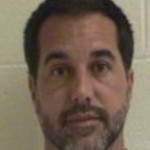
    Jeffrey Lane Mowen

    with wire fraud, solicitation to commit a crime of violence, witness tampering and retaliating against a witness.

    Prosecutors said Mowen, 47, of Lindon, Utah, hatched a plot while jailed to hire a fellow prisoner to kill four witnesses in the Ponzi scheme case upon the inmate’s release from prison.

    The Utah vehicle auction is billed by Erkelens & Olson Auctioneers as the “Largest collection of Muscle, Collector & Exotic vehicles ever [offered] in Utah! Over 240 Units to be sold in 2 auctions.”

    See a Nov. 19 story on Mowen.

    Visit the auctioneers’ website.

    Visit the Salt Lake Tribune.

  • POLL: As 2009 Draws To A Close, Cast Your Vote For The Most Interesting Figure In The AdSurfDaily Story

    EDITOR’S NOTE: Included in this post is a year-end poll to determine “The Most Interesting Figure” in the long-running AdSurfDaily story. Five of the seven choices are individuals who’ve been an intriguing part of the story. The remaining two choices are intriguing entities consisting of individuals.

    The individuals include Andy Bowdoin (the only individual in our ASD poll against whom prosecutors have asserted allegations of wrongdoing — and so far just civil allegations); Curtis Richmond; “Professor” Patrick Moriarty; Bob Guenther; and Poster “joe,” also known as “little joe.” The entities are the Pro-ASD Surf’s Up forum and a less public group we’ve deemed the “Conspiracy Theorists.”

    Brief memory-refreshers appear below the poll. Some readers perhaps will want to read the memory-refreshers before voting. You may make only one selection.

    Here, now, the story and the poll . . .

    From the date upon which federal prosecutors filed the first of two forfeiture complaints against Florida-based AdSurfDaily in August 2008, the ASD story and accompanying black comedy quickly became less about the Ponzi and more about the intriguing personalities.

    ASD President Andy Bowdoin has had two birthdays since then; he’s now 75 — and one of several U.S. senior citizens implicated in Ponzi schemes of national and international significance. On Aug. 1, 2008, the U.S. Secret Service filed a 37-page affidavit under seal in the case. The affidavit was accompanied by 57 pages of evidence — enough to persuade a federal magistrate judge to order more than a dozen bank accounts to be frozen.

    In its affidavit, the Secret Service said it feared Bowdoin had become aware of scrutiny into his business affairs and planned to flee the country.

    “I have not included every detail of every aspect of the investigation for this affidavit,” the agent who prepared the affidavit said. “Rather, it only includes the information necessary to prove that probable cause exists for a seizure warrant to be issued for property constituting proceeds of a wire fraud scheme.”

    U.S. Magistrate Judge Alan Kay agreed the Secret Service had made a compelling argument. Kay issued 13 orders directing the Secretary of the U.S. Department of Homeland Security “and any Authorized Officer of the United States” to seize 10 Bowdoin bank accounts and three accounts tied to Golden Panda Ad Builder, a closely-connected autosurf purportedly born on a Georgia fishing lake in April 2008 after Bowdoin had spent the day casting lines with Rev. Walter “Clarence” Busby Jr., who would later emerge as GP’s president.

    Aug. 1, 2008, was a Friday. Almost instantly ASD members spun the seizure of the bank accounts as a positive development, claiming the government would see the beauty of ASD’s business model after taking time to listen to the company’s story and that ASD would return quickly to the business of paying “advertisers” profits of 30 percent a month.

    Agents were planning a friendly “visit” in the days ahead, members claimed, again positioning the purported “visit” as a net plus because ASD’s business model was legally sound.

    What the vast, vast majority of the members making the initial claims did not know at the time was that the Secret Service had conducted surveillance in the case in multiple locations and gathered damning evidence from records and interviews with members.

    No criminal charges have been filed to date against Bowdoin or ASD, although the prosecution asserts in civil filings that ASD operated as a criminal enterprise.

    What had been positioned as a friendly “visit” in the earliest hours after the seizure proved to be the execution of search warrants at Bowdoin’s home and at ASD’s headquarters in a former floral shop in Quincy, Fla. The warrants were executed on Aug. 5, a Tuesday, four days after the Secret Service stopped the scheme from mushrooming any further by seizing the bank accounts.

    By Aug. 12, according to members, Bowdoin was comparing the actions of the Secret Service to the actions of the 9/11 terrorists who killed nearly 3,000 people, with Bowdoin saying “Satan” was at work. The allegations contained in the August forfeiture complaint, which was a public filing with several evidence exhibits attached, created a significant PR problem for Bowdoin in addition to the legal problem.

    The vast, vast majority of ASD members learned for the first time in the Aug. 5 civil filing by prosecutors that Bowdoin had been arrested in Alabama in the 1990s in a felony securities-fraud case and had entered guilty pleas. As a result of the filing, many members also learned for the first time that Rev. Busby had been implicated by the SEC in a prime-bank scheme in the 1990s and that Busby had declared bankruptcy.

    This information had been shielded from ASD and Golden Panda members as they were throwing money at the surfs, the Secret Service said. Agents went on to seize two more GP accounts. After reconciliations, the 15 accounts linked to ASD and Golden Panda contained just shy of $80 million, according to records.

    As strange as it sounds, a core group of ASD members pooh-poohed the allegations. Instead of considering that perhaps they had been conned by two individuals who previously had been central figures in serious securities litigation, the core group set out to demonize the government.

    In the months after the federal seizure — and in the months after Florida Attorney General Bill McCollum filed a fraud lawsuit against ASD — federal prosecutors released more information drip-by-drip. The information was part of follow-up filings in the August 2008 case. By December 2008, prosecutors had filed a second forfeiture complaint against ASD-connected assets.

    Several intriguing personalities have emerged since the initial filing in August 2008. Bowdoin, for example, initially contested the forfeiture. In January 2009, however, he submitted to it after meeting with prosecutors over a period of at least four days.

    But before February 2009 had come to a close, Bowdoin reentered the case — this time as a pro se litigant who’d purportedly fired his paid attorneys.

    Curtis Richmond, an ASD member, also emerged as a pro se litigant. He accused the prosecutors of crimes, suggesting a federal judge was operating a “Kangaroo Court” and was guilty of treason. For good measure, he accused a second federal judge of operating a “Kangaroo Court.” Dozens of pro se litigants would follow, some using a Richmond litigation blueprint and others using a blueprint that had been provided by an ASD upline.

    “Professor” Patrick Moriarty, who advanced Richmond’s theories of the case, embarked on a certified-mail campaign to discredit the prosecution. He also wrote a letter to Sen. Patrick Leahy, asserting that Leahy, the head of the Senate Judiciary Committee, should set the committee’s investigative sights on the prosecutors who brought the ASD case, not the alleged wrongdoers who operated ASD.

    Bob Guenther, de facto head of the ASD Members Business Association (ASDMBA), also emerged as an intriguing personality. Guenther led a campaign to raise money so ASD members could hire an attorney to protect their legal interests in the case, and was criticized for not providing transparent accounting of how the money was spent and for bullying members verbally.

    Among other things, Guenther also was criticized for not revealing he had pleaded guility to a felony count of bank fraud in the 1990s and for responding to his critics by asserting they were “wusses” or “liberals.” Some ASDMBA members now say they see the organization as an entity that collected money and dissipated it while taking no effective action.

    Poster “joe,” meanwhile, emerged as an intriguing personality when he rationalized the so-called autosurf “industry” as just another business pursuit akin to gambling. He blasted autosurf opponents, saying he did not care if autosurf Ponzi schemes were illegal as long as they paid.

    “joe,” who described himself as a former Vietnam Prisoner of War, apparently decided eventually that the best way to express his point of view was to become chronically disruptive and abusive. He then morphed from Ponzi promoter to cyberstalker, threatening to set “fires” to disrupt the PP Blog’s operations.

    Since the fall of 2008, Surf’s Up has been a constant presence — and an intriguing personality — in the ASD story. Among the forum’s notable contributions was an assertion that Bowdoin, despite his felonious history, was “too honest” to testify at a hearing ASD asked a federal judge to conduct. The “too honest” explanation came in response to Bowdoin’s decision to take the 5th Amendment at a proceeding his company specifically requested.

    Surf’s Up also has urged members to take part in various letter-writing campaigns in support of Bowdoin, including Moriarty’s campaign. Moriarty was indicted on federal tax charges about a month after his February 2009 campaign to Leahy had begun, although the Moriarty prosecution and the ASD prosecution do not appear to be related.

    Research showed, however, that Moriarty, who started a nonprofit company to advocate for ASD, also had started a nonprofit company in the name of a Missouri man who had been accused of murdering a woman in cold blood and shooting a police officer four times.

    Federal prosecutors alleged that Moriarty, who at one time advertised tax expertise, had under-reported his income by an unspecified amount for the tax year 2002; claimed a false deduction of $30,000 for “legal fees” for the tax year 2003; and claimed a false amount of $23,533 withheld for the tax year 2004 and a false amount of $23,433 withheld for the tax year 2005.

    No poll that did not include the ASD conspiracy theorists as a choice for the most interesting figure would be complete. We’re aware, of course, that there may be some crossover, as some of the other poll choices have shared one conspiracy theory after another and conflated one new reality after another in their zeal to lend support to Bowdoin.

    Readers inclined to select the “Conspiracy Theorists” option, however, should make an effort to divorce the other nominees from the theories. For the purpose of this poll, the “Conspiracy Theorists” are those intriguing ASD members who purport to believe that paper currency is a government plot, that President John F. Kennedy was assassinated because he was about to expose the overall government conspiracy pertaining to money and that U.S. lawmakers passed secret legislation in the 1990s in anticipation of a visit by reptilian aliens.

    The ASD Ponzi story is like none other. Will Bowdoin emerge as the most interesting personality? Will Moriarty, “joe,” Richmond, Surf’s Up or Guenther?

    Or will it be the “Conspiracy Theorists?”

  • REPORT: Feds Open Inquiry Into Allen Stanford’s Political Donations; Committee To Which Andy Bowdoin Donated Money Again Makes News In Ponzi Probe

    The Justice Department has opened a probe into the political donations of R. Allen Stanford, according to the Miami Herald.

    Stanford is jailed in Texas amid allegations he presided over a $7 billion Ponzi scheme on the Caribbean island nation of Antigua.

    Among the first names to surface were the names of the National Republican Congressional  Committee (NRCC) and its chairman, Rep. Pete Sessions, R-Texas. The names of Democratic politicians also have surfaced, according to the newspaper.

    NRCC is the organization to which AdSurfDaily President Andy Bowdoin — himself implicated in a Ponzi scheme by the Justice Department — donated money in 2007 and 2008 as the purported head of two companies and received the Congressional “Medal of Distinction.”

    Despite its important-sounding name, the medal is part of an NRCC marketing plan and signifies only an individual’s ability to write a check for what amounts to the purchase of banquet tickets.

    In a story apt to embarrass Sessions and others, the Miami newspaper reported yesterday that, on Feb. 17, the date Stanford was indicted, Sessions sent an email to Stanford.

    “I love you and believe in you,” the newspaper quoted Sessions as writing. “If you want my ear/voice — e-mail.”

    Today the newspaper reported that Rep. Gregory Meeks, D-N.Y., traveled to Venezuela in 2006 after Stanford asked him to carry a message to President Hugo Chávez.

    Stanford was concerned that a former employee in Venezuela who had been accused of fraud was questioning whether Stanford’s operation itself was a fraud, the newspaper reported. A year after Meeks carried the message to Chavez, the Stanford employee was indicted by Venezuelan prosecutors and charged with swindling money.

    The story raises questions about whether Meeks’ purported intercession with Chavez might have helped Stanford delay the inevitable exposure of the alleged Ponzi scheme and whether he was relying on politicians to run interference for him prior to the exposure of the scheme.

    Stanford’s empire, which prosecutors and regulators said was a Ponzi scheme propped up by Certificates of Deposit that paid above-market rates and lured investors into unsafe, uninsured offshore banking instruments, collapsed less than two months after the Bernard Madoff Ponzi collapsed in December 2008.

    Meeks traveled to Venezuela in April 2006, according to the newspaper.

    The extent of prosecutors’ interest in linking Ponzi money to politics and determining if corrupt money influenced votes and policy is unclear. At a minimum, however, prosecutors are known to have peeled back layers of the onion in Florida.

    In an announcement dripping with the word “co-conspirators” last month, Acting U.S. Attorney Jeffrey Sloman of the Southern District of Florida, the FBI and the IRS said that money from disbarred Florida attorney Scott Rothstein’s alleged Ponzi scheme was “used to make contributions to federal, state, and local political candidates.”

    In the Rothstein case, investigators are seeking to determine if the scheme existed in part as a means to evade campaign-finance laws. Rothstein Ponzi money also was used “to provide gratuities to high ranking members of police agencies,” officials said.

    In August 2008, prosecutors said that ASD’s Bowdoin had donated money to NRCC and that ASD members claimed the “Medal of Distinction” Bowdoin received for the donations was an important award from the White House.

    Federal Election Commission (FEC) records show that Bowdoin gave money to NRCC and claimed to be the owner of two companies: AdSurfDaily and AdSalesDaily.

    On Feb. 27, 2007, the Federal Election Commission recorded a $250 donation from “Mr. T. Bowdoin” in the name of “AdSalesDaily Inc.” The FEC recorded another $250 donation from “Mr. T. Bowdoin” in the name of “AdSalesDaily Inc.” on March 27, 2007.

    Screen shot of Federal Election Commission record showing 'Mr. T. Bowdoin' was the 'owner' of 'Adsalesdaily, Inc' and made a political donation under that name in 2007.

    Both 2007 donations were targeted to NRCC and used an address — 13 S. Calhoun Street, Quincy, FL 32351 — federal prosecutors later said was bogus.

    Although the donations listed Bowdoin as the “owner” of Florida-based AdSalesDaily Inc., the corporation appears not to have been registered in Florida. Records in Georgia list “Ad Sales Daily, Inc.” as a corporation that initially was registered in Georgia May 8, 2007, more than two months after Bowdoin identified himself as the owner in federal campaign records.

    The Georgia entity does not list Bowdoin as an owner, officer or filer for the corporation — or as a person involved in any capacity. Rather, “Ad Sales Daily, Inc.” is listed as a Delaware foreign corporation, with J. Heardy Myers listed as the corporate filer and Myers (of Marietta, Ga.) and Otis Whitcomb (also of Marietta) listed as officers.

    AdSalesDaily Inc. was incorporated in Delaware on March 22, 2007, about 24 days after Bowdoin made his initial NRCC donation, according to filings.

    FEC records show that Bowdoin — under the name of “Mr. T. Andy Bowdoin, Jr” and “AdSurfDaily Inc. and AdSurfsDaily Inc.” (the second “s” is an apparent typo)  — gave $5,000 to NRCC in 2008. Two donations of $2,500 were recorded — one on June 6, 2008, and another on July 7, 2008.

    Even as the FEC was recording the donation on July 7, undercover agents from an IRS/Secret Service task force based in Florida were beginning to scrutinize ASD.

    Bowdoin has a tie to a bank in Antigua, although it is unclear whether the tie is to a bank controlled by Stanford because Bowdoin has not identified the bank. Prosecutors, however, said ASD had $1 million on deposit in Antigua in an account under a different name.

    Records suggest that the alleged Bowdoin Ponzi scheme might have operated under as many as four names dating back to early 2006: DailyProSurf, AdSurfDaily, AdSalesDaily and ASDCashGenerator.

    Litigation surrounding tens of millions of dollars seized from ASD in August 2008 has turned into Theater of the Absurd, with dozens of pro-se litigants attempting to enter the legal skirmish between the Justice Department and Bowdoin.

    One of the great mysteries of the case is why Bowdoin suddenly started donating money to NRCC in 2007 — during a time in which the company was not making payments to members and said it needed to issue a stock offering in which shares would be sold for $10,000 to raise funds.

  • SPECIAL REPORT: Alleged Colorado Ponzi Schemer Had Criminal Record For Securities Fraud, Previous Bankruptcy Record; Allegations Reminiscent Of ASD/Golden Panda Cases

    EDITOR’S NOTE: This story is about securities and fraud allegations leveled in Colorado against Philip R. Lochmiller and others. The case was brought amid assertions Lochmiller was operating a real-estate Ponzi, although the backdrop of the story is similar to the backdrop of the story on the “advertising” Ponzi allegations against Florida-based AdSurfDaily. Some of allegations against Lochmiller are strikingly similar to the allegations against ASD President Andy Bowdoin. Part of the story backdrop also shares a common venue: Vernal, Utah.

    Lochmiller had a real-estate development in Vernal, which also was home base to the so-called “Arby’s Indians,” a sham “tribe” of which ASD mainstay Curtis Richmond was a member. The “tribe” used the address of a Vernal doughnut shop as the address of its “Supreme Court,” and became known as the “Arby’s Indians” because it held a meeting at an Arby’s restaurant in Provo, Utah, in 2003.

    There are no assertions that the Lochmiller, ASD and “Indian” cases are in any way related or that Lochmiller had any ties to ASD or “tribal” figures. However, ASD members — as well as members of AdViewGlobal (AVG) and Golden Panda Ad Builder (GP) — may find the similarities in the Lochmiller and ASD cases instructive.

    Here, now, the story . . .

    This Rolex watch is an auction item in the Lochmiller case.A Colorado man sentenced to prison in California in the 1980s on state charges of securities fraud was indicted Dec. 15 in Denver on federal charges of securities fraud. Philip R. Lochmiller, 61, of Mack, settled in Colorado after his release from prison and started a new company, prosecutors said.

    That Grand Junction-based company, which first was called Valley Mortgage in the 1990s and is known today as Valley Investments, now is at the center of a new firestorm in a complex Ponzi scheme case that includes spectacular allegations of forgery and real-estate fraud in Colorado, Idaho and Utah.

    Investor losses could exceed $30 million. Also indicted and arrested for multiple felonies in the Colorado case were Philip R. Lochmiller II, 38, of of Olathe, Kansas, and Shawnee N. Carver, 33, of Grand Junction. If convicted, the defendants face dozens of years in federal prison. Each is free on bond, awaiting court appearances and trial.

    Lochmiller II is Lochmiller’s son.

    Certain assets, including a Rolex watch and a vintage 1955 GMC 450 American fire truck, already are being auctioned by a court-appointed receiver to raise money for an estimated 400 fraud victims.

    Family Fraud Affairs

    Records show that Philip R. Lochmiller was sentenced to three years in a California state prison in the 1980s after he was charged with 60 counts of securities fraud and pleaded guilty to about half of them.

    Also sentenced to prison in the California case were Lochmiller’s mother and brother. Jo Alice Lochmiller, Lochmiller’s mother, pitched the California scheme involving a Vista-based company known as Lochmiller Mortgage Co. on TV. She was sentenced to three years.

    Lochmiller’s brother, Stephen Lochmiller, was sentenced to four years, according to news accounts at the time.

    The 1980s scheme operated in the Greater San Diego area and resulted in 1,600 investors being bilked out of a total of $5 million. Jo Alice Lochmiller, who pleaded guilty to 10 counts and was sentenced to three years on the most serious one and given concurrent three-year sentences on the other nine, appealed her sentence.

    Jo Alice Lochmiller argued her intent was not to fleece customers but to raise money for Lochmiller Mortgage. She further argued that she should not be punished for each separate sale of unregistered securities and that her sentence was unfair because it subjected her to double punishment.

    A California appeals court consisting of a three-judge panel unanimously rejected her claim.

    “Because each unlawful sale [of unregistered securities] occurred at different times for different amounts of money to different victims, punishment for each separate sale is not prohibited by Penal Code section 654. A single object, to obtain money, does not bar multiple punishment for separate crimes,” the panel wrote.

    “The situation here is analogous to that of the robber who commits several robberies and claims he had one objective, to gain money,” the panel wrote.

    Citing case law, the panel wrote, “[W]here there are consecutive robberies in several communities . . .  over a period of several hours, a defendant may not bootstrap himself into avoidance of additional penalties by claiming that the series of divisible acts, each of which had been committed with a separate identifiable intent and objective, composed an indivisible transaction.”

    Under Jo Alice Lochmiller’s logic, the panel wrote, a defendant could fleece millions of people and expect to be punished as though she had fleeced only one person.

    “Lochmiller, through her part in the unlawful scheme, took the life savings of a group of elderly citizens,” the panel wrote. “She did so by making separate sales to 11 individuals on 10 occasions over a 3-month period. This was not one act or one indivisible course of conduct. To accept her argument, she could have continued to take the savings of every citizen in San Diego County and be punished no more than if she had done so to one individual.”

    Parallels To ASD

    The Colorado Ponzi case against Philip Lochmiller, his son and Carver is drawing comparisons to the fraud case against Florida-based AdSurfDaily and Georgia-based Golden Panda Ad Builder, the so-called “Chinese” option for ASD members.

    Federal prosecutors said Philip Lochmiller did not disclose his previous felony conviction in a securities case to investors; prosecutors made the same assertion against Bowdoin, adding that Golden Panda President Clarence Busby did not reveal his previous run-in with the SEC in a securities case alleging that Busby was involved in a prime-bank scheme.

    At the same time, prosecutors in the Lochmiller case said both Lochmiller and Lochmiller II had bankruptcy filings that were not disclosed to investors. Busby also had a bankruptcy that was not disclosed to Golden Panda members, prosecutors in the ASD case said.

    At the same time, the AVG autosurf  — purportedly based in Uruguay and now collapsed –  appears to have close Bowdoin family ties and appears to have risen from the ashes of the alleged ASD Ponzi scheme. Prosecutors alleged Philip Lochmiller’s family scheme in Colorado surfaced after his previous scheme in California collapsed and that the Colorado scheme also collapsed.

    Company name changes also are present in both the alleged Lochmiller and ASD schemes, according to court records.

    Feds Outline The Lochmiller Colorado Scheme

    “Between November of 1999 through April 2008, Valley Investments acquired five properties purportedly to develop affordable housing subdivisions,” prosecutors said.  “To finance the properties, Lochmiller and Lochmiller II advertised and solicited investments from individuals by promising a short duration high percent interest rate to be paid monthly. The advertisements characterized the investment as a ‘solid security’ secured and recorded by a Deed of Trust in the investor’s name.”

    The properties were in Colorado, Idaho and Vernal, Utah. With respect to the Vernal property, prosecutors said, Lochmiller, Lochmiller II and Carver “secured at least 12 separate investments, all with purported first Deeds of Trust, on Lot 34, Country Living Park, a lot with a rental trailer.”

    Indeed, prosecutors said, the trio sold 12 “first” positions on the same Utah property. Similar shenanigans were pulled in Idaho and Colorado, and prosecutors alleged that some people bought “first” positions in properties that already had been sold.

    Despite the fact Lochmiller was warned in 2001 by the Colorado State Securites Commission to cease and desist from selling unregistered securities, the scheme continued unabated, prosecutors said.

    In January 2004, “[Philip] Lockmiller and others traveled by air to Cancun, Mexico,” prosecutors said. In February 2004, Philip Lochmiller “caused two wire transfers for $25,000.00 each, one from his Mesa National Bank account and one from his Community First Bank account, to be sent to a recipient in Mexico as a down payment on the purchase of a furnished condominium located in Puerto Aventuras, near Cancun, Mexico.”

    In April and May 2004, Philip Lochmiller made various wire transfers to pay for the condominium in the famous resort area of Cancun, prosecutors said, adding that Lochmiller and his son traveled to Mexico by air at least 18 times.

    “The Lochmillers and Carver continued to misrepresent to investors that the business was thriving, and did not disclose to new investors how their money was being used,” prosecutors said. “Also, because there were not sufficient funds, the defendants did not file all of the Trust Deeds on behalf of investors, and most of the filed Trust Deeds were not the first encumbrance of the properties named and were thus worthless.”

    Carver was charged with notarizing forged signatures of investors for fraudulent releases of Deeds of Trust.

    “Investors should always remember the old saying that if it looks too good to be true, it probably is,” said U.S. Attorney David Gaouette of the District of Colorado. “Unfortunately, there are many people out there who are unscrupulous and tempting potential investors with false claims. Law enforcement will investigate these criminals and our office will prosecute them, but the public needs to be wary and only invest after thoroughly checking out these claims of large profits.”

    A veteran FBI agent said the agency was pursuing financial fraudsters aggressively.

    “These arrests demonstrate the FBI’s continuing commitment to aggressively investigate complex financial crimes, especially when the targeted victims are vulnerable and elderly,” said James Davis, special-agent-in charge of the Denver FBI office.

    Davis lauded victims for their willingness to cooperate in getting to the bottom of the mess.

    “We are especially appreciative of the tremendous cooperation from the victims in this case. The success of this investigation to date is tribute to the combined efforts of our federal law enforcement partners, including the IRS-CID, U.S. Postal Inspection Service, and the U.S. Attorney’s Office in Grand Junction.”

    An IRS agent who specializes in financial crime said the agency was leaving no stone unturned in the case.

    “Money laundering creates an untaxed economy that uses legitimate businesses to conceal criminal activity,” said Christopher M. Sigerson, special-agent-in-charge of IRS Criminal Investigation Unit in Denver. “IRS-CI has the financial investigators and expertise to follow the money and deprive criminals of their gains.”

    He was backed by a colleague in the U.S. Postal Inspection Service.

    “Postal Inspectors partnered with fellow law enforcement agencies in this investigation to assure the arrest of individuals utilizing the U.S. Mail for fraudulent means,” said U.S. Postal Inspector In Charge Shawn Tiller. “This is an offense the Postal Inspection Service takes very seriously.”

    Philip R. Lochmiller faces one count of conspiracy to commit mail fraud and securities fraud, one count of conspiracy to commit money laundering, 20 counts of money laundering and 10 counts of mail fraud.

    Lochmiller II faces one count of conspiracy to commit mail fraud and securities fraud, one count of conspiracy to commit money laundering, eight counts of money laundering and 10 counts of mail fraud.

    Carver faces one count of conspiracy to commit mail fraud and securities fraud, one count of conspiracy to commit money laundering, and 10 counts of mail fraud.

  • Man Jailed For Ignoring Court Order In Puerto Rico-Based Envelope-Stuffing Scheme Targeting Spanish-Speaking Customers; Translators, Postal Inspectors Assisted In FTC Probe

    ponziblotterA man has been jailed for ignoring a court order in a civil case and continuing to operate an envelope-stuffing scheme from the area of Rio Grande, Puerto Rico, the Federal Trade Commission announced Dec. 23.

    Zoilo Cruz, also known as Zoilo Cruz Carrion, conducts business as International Marketing and Universal Wealth. The case was brought in San Juan by the FTC in U.S. District Court for the District of Puerto Rico in August 2008.

    Because the scheme involved both the Spanish and English languages,  a professional translation firm assisted in the probe. The U.S. Postal Inspection Service also assisted because the scheme involved mail.

    Among the allegations were that Cruz told prospects that they could make substantial sums of money by stuffing envelopes at home and that his company would provide stamped, addressed envelopes for them to stuff.

    Cruz charged a fee of $37 for customers to enter the program, according to court filings.

    Customers were deceived into paying the $37 by ads that suggested they could make between $690 and $2,760 a week, according to court filings.

    zoilocruzinternationalmarketing

    After customers paid the fee, International Marketing sent them a sales pamphlet, titled ‘Incredible Home Mailing Program (IHMP),’” the FTC said. The program was advertised in Spanish, but the pamphlet received by customers was in English-only.

    But language was not the only barrier customers encountered, the FTC said.

    Only after receiving the pamphlet were customers told that, “instead of receiving
    envelopes and payment from International Marketing for stuffing envelopes, consumers must engage in one of two marketing schemes, both of which involve publishing advertisements to sell the IHMP itself,” the FTC said. “In other words, each scheme aims to have consumers publish advertisements to sell the same pamphlet [Cruz] sent them (i.e., the IHMP) to other consumers.”

    Investigators said Cruz “kept up the scam despite a December 2008 court order that barred him from deceiving consumers and required him to close the post office boxes he used for taking orders.”

    In December 2008, U.S. Senior District Judge Jaime Pieras Jr. enjoined Cruz from breaking the law, finding that he had engaged in false and misleading business practices.

    “The pamphlet instructs consumers to advertise a work-at-home opportunity and provides consumers with sample advertisements that contain false and misleading earnings claims,” Pieras ruled.

    “[It] also instructs consumers to place a toll-free telephone number in the advertisement to receive inquiries,” Pieras continued. “The pamphlet provides consumers a script to use in recording a voicemail message. The script falsely states that one can earn money for stuffing envelopes and that the consumer leaving the message has been successful in earning money before he or she has earned any money at all.”

    As the investigation proceeded, the FTC determined that Cruz had made at least $64,496.51 from the scheme and used an account at Eurobank to deposit the proceeds.

    In June 2009, Pieras issued a judgment in the FTC’s favor for that amount, further ordering the restitution “immediately due and payable” from Cruz.

    “A federal court has jailed [Cruz],” the FTC said Wednesday.

    Here is an ad for the scheme that appeared in a Spanish-language newspaper:

    TRABAJE EN CASA – Le dedico mas
    tiempo a mis hijos todo los dias!
    Gane Dinero extra $500-$1,500.
    PO Box 43001 Dept. 486 Rio
    Grande PR 00745-6600 o a
    internationalmarketing123.com

    And here is the English-language translation:

    WORK AT HOME – I devote more
    time to my children every day!
    Earn Extra Money. $500 – $1,500.
    PO Box 43001 Dept. 486 Rio
    Grande PR 00745-6600 or at
    internationalmarketing123.com

    The translation service also translated the Spanish-language website to English, according to court filings.

  • PP HOLIDAY READING: AdViewGlobal Stories Dominated Reader Interest In 2009; ASDMBA And ADV4U Coverage, Bowdoin Proffer, Guest Columnists Commanded Attention

    PPtop10UPDATED 1:25 P.M. ET (U.S.A.) AdViewGlobal-related stories comprised eight of the 10 “Most Popular” posts on the PatrickPretty.com Blog in 2009, as determined by a software scoring system that measures a range of data. The result suggests that readers were intensely interested in coverage of the controversial autosurf.

    The finding also suggests that AVG members were worried about the future of AVG and their participation in it. At the same time, the data suggest that AVG members were turning to the PP Blog to monitor AVG developments because they were not satisfied with the information provided by AVG and sought a “Big Picture” analysis, as opposed to relying exclusively on AVG to form their opinions.

    AVG-related stories and conversations dominated reader interest, largely beginning in the second quarter of the year. The most popular PP story of 2009 — weighing a range of factors beyond the single metric of post views — was an AVG story published June 3, under the headline, “AdViewGlobal Promoter Says Prospects Can Bypass Company And Purchase Ad-Packs Directly From Sponsors To Ensure They Get Credited With 200 Percent Match Before Deadline.”

    The June 3 story, however, was not the PP story that attracted the most readers, using “Single Post Views” as the only factor weighed by the software. That honor, if it can be called that, belonged to a March 24 post titled, “BREAKING NEWS: AVG Loses Banking Privileges.”

    The only two posts in the “overall” Top 10 — as weighed by several factors — that were not largely or exclusively about AVG were an April 18 column by guest writer Roxy Lewis and an Aug. 28 article about a claim by the AdVentures4U (ADV4U) autosurf that it was suspending cashouts amid reports that its purported owner, Steve Smith, had been threatened.

    Lewis’ column, titled “GUEST COLUMNIST: ‘Shocked’ And ‘Scared’ To See Her Name In Friedman Lawsuit Paperwork; Says She Was Told To ‘Examine Your Finances’; Sees Move By Dallas Lawyer As ‘Intimidation Tactic’ And Says She Won’t ‘Roll Over’ — was the 9th Most Popular post overall, as weighed by several factors.

    PatrickPretty.com has published 521 posts in the past year.

    In the Lewis guest column, the self-described member of the AARP generation told her story about various email interactions concerning her attempt to get a refund for her contribution to ASDMBA, an organization whose de facto head is ASD story mainstay Bob Guenther. Some ASDMBA members complained about obnoxious behavior by Guenther in their interactions with him, saying ASDMBA provided accounting that was less than transparent and bullied members who questioned its operation.

    ADV4U’s announcement, meanwhile, put the Ponzi forums in an uproar — and provided yet another compelling example of the “wink-nod” nature of autosurfs. On one hand, people throw money at the surfs to collect surfing “earnings” and sales commissions, and deny they are illegal. On the other hand, they become paranoid when a surf begins to show signs of trouble and then demand refunds or flock to Ponzi forums to complain, even though no autosurf has ever passed the test of time and demonstrated legality and mathematical sustainability.

    The story about the ADV4U announcement was the 2nd Most Popular Post, as weighed by several factors. Because ADV4U was known to be popular among members of AVG and AdSurfDaily — and because autosurfs in general are known to have common promoters — the data suggest that many people raced from one autosurf disaster to another in 2009.

    In the bizarre world of the autosurf, the people who entice others into joining one disaster after another — and pocket commissions for doing so — are known as the “leaders.”

    The Top 10 ‘Overall’ Posts As Measured By A Range Of Factors

    Here, in reverse order of popularity, is a list of the Top 10 Overall Posts on the PP Blog since December 2008, as measured by a range of factors, as opposed to the lone one of “Single Post Views.” To give you an idea of how the software works, consider that Tiger Woods may not lead the PGA Tour in all statistical categories, but may be the “overall” statistical leader when a range of variables are considered and averaged. Readers should view these results as a somewhat reliable estimate, as opposed to a scientifically pure one.

    No. 10: (July 1, 2009): AdViewGlobal Withdraws Announcement Of New Payment Plan; Initial Announcement Baffled Members

    No. 9: (April 18, 2009): GUEST COLUMNIST: ‘Shocked’ And ‘Scared’ To See Her Name In Friedman Lawsuit Paperwork; Says She Was Told To ‘Examine Your Finances’; Sees Move By Dallas Lawyer As ‘Intimidation Tactic’ And Says She Won’t ‘Roll Over’

    No. 8: (Aug. 5, 2009): DID SURF FIRM JUST MAKE HISTORY? AdViewGlobal Says It Filed State, Federal Complaints About $2.7 Million Theft; Surf Wants New CFO, Compliance Officer, Department Managers; Asks Members To Keep Surfing

    No: 7: (June 25, 2009): AdViewGlobal ‘Surf’ Firm Suspends Member Cash-Outs, Threatens Media With Copyright-Infringement Lawsuits

    No: 6: (July 10, 2009): AdViewGlobal’s June 1 News Release Had Typo That Directed Traffic Away From Website Firm Was Showcasing

    No. 5: (Aug. 7, 2009): And The Ponzis Will Die As One . . .

    No. 4: (June 30, 2009): BREAKING NEWS: AdViewGlobal Cited As Extension Of AdSurfDaily In RICO Complaint Against Andy Bowdoin

    No. 3: (June 23, 2009): Members Say AdViewGlobal Problems Are Mounting

    No. 2: (Aug. 28, 2009): BREAKING NEWS: AdVentures4U, New Darling Of Surf World, Says It Was Threatened; Note Says Cashouts Will Be Suspended Soon And Members Will Have To Make Do With Their ‘Advertising’ Purchases; Ponzi Forums In Uproar

    No. 1: (June 3, 2009): AdViewGlobal Promoter Says Prospects Can Bypass Company And Purchase Ad-Packs Directly From Sponsors To Ensure They Get Credited With 200 Percent Match Before Deadline

    ** Finishing just out of the Top 10 overall — in 11th Place — was this story about a dramatic announcement by the government in the AdSurfDaily Ponzi forfeiture case, published April 24, 2009: PROSECUTION BOMBSHELL: Bowdoin Signed Proffer Letter Prior To Submitting To Forfeiture And Told Investigators That Government’s Material Allegations Were ‘All True’

    *** No. 12 went to this post, published May 19, 2009: Patrick Pretty ‘Poof’ Penalty Plagues Portal Posters

    **** It is possible that the Bowdoin story now in 11th Place could eke its way into the Top 10 by the end of the year, as it currently is in a virtual tie for the No. 10 spot. Adjustments involving other stories also could occur.

    Sampling Of Top 10 Stories Scored By ‘Single Post Views’ Since December 2008

    No. 1: (March 24, 2009): BREAKING NEWS: AVG Loses Banking Privileges

    No. 2: (Sept. 23, 2009): WHO’S IN CHARGE? AdViewGlobal Surf Domain Now Resolves To GoDaddy; Registration Appears To Have Expired

    No. 6: (Dec. 13, 2008): Giant Wall Street ‘Ponzi Scheme’ Collapses; Potential Losses In Madoff Fraud Pegged at $50 Billion Amid ‘One Big Lie’

    No. 8: (Dec. 13, 2008): Two Friday Bank Failures Will Cost FDIC $212.5 Million

    No. 9: (Dec. 14, 2008): Judge Orders Freeze Of Madoff’s Assets; Investigators Will Try To Determine If Funds Were Co-Mingled In Ponzi Scheme

    No. 10: (Dec. 15, 2008): Madoff Victims Include Foundations, Business And Entertainment Icons, Mom And Pop

    ** Four of the other Top 10 stories measured by Post Views since December 2008 were updates instructing readers about our progress in switching to the WordPress publishing platform. It seems readers missed us when we were offline or down for maintenance. :-)

    *** The Most Popular Story in the past 90 days is this one, published on Sept. 30, 2009: ASD Mainstay Bob Guenther Lectures Federal Prosecutor, Says He’ll Call On ‘Political Connections’ To Embarrass Justice Department; Claims Maricopa County Sheriff Joe Arpaio Not Tough Enough On Crime

    **** The 2nd Most Popular Post in the past 90 days is this one, published on Oct. 1, 2009: Guenther Softens Comment That ‘Sheriff Joe’ Arpaio Was Soft On Crime; Says Recent Email Lecturing Veteran Federal Prosecutor Was Sent At Behest Of Crime Victims

    ***** The 3rd Most Popular Post in the past 90 days is this one, published on Oct. 12, 2009: Site That Used ASD’s Name And Made Odd Claims While Bowdoin Was Negotiating With Prosecutors Goes Offline

    ****** The 4th Most Popular Post in the past 90 days was this one, published on Oct. 14, 2009: EDITORIAL: Our Best Wishes To ‘Gomer Pyle,’ AUSA

    ******* The 5th Most Popular Post in the past 90 days was this one, published Sept. 29, 2009: OBSTRUCTION? ASD Spokeswoman Whose Name Appeared In Secret Service Filing Says She Instructed Members NOT To Fill Out Government Form; Now Appears To Be Advising Members To Clam Up If Contacted By Agents

    ******** This post, published on Sept. 28, 2009, is in a virtual tie for the 5th Most Popular Post in the past 90 days: BREAKING NEWS: Prosecutors Go Back To Court, Provide Judge Copy Of Transcript From Bowdoin’s Call Last Week

    ********* This Jan. 3, 2009, post by guest columnist “Entertained” scored very well overall for the year and finished in the Top 20 overall posts for the year: ‘Black Box’ Method Exposes ASD Sustainability Myth

    ********** This July 9, 2009, post by guest columnist Gregg Evans also scored very well overall for the year, finishing in the Top 30: GUEST COLUMN: Payment Processors That Give Refunds Unilaterally Help Surf ‘Industry’ Live To See Another Day

  • Michigan Men Who Urged Victims Not To Cooperate With FBI Sentenced To Prison In Oil-And-Gas Ponzi Scheme

    ponziblotterTwo Michigan brothers who urged investors in their oil-and-gas Ponzi scheme not to cooperate with the FBI have been sentenced to prison.

    Eric Riley Merkle, 55, and Jay Vernon Merkle, 53, both of Williamston, Mich., were sentenced to 10 years in federal prison for conspiracy, securities fraud, mail fraud and wire fraud. They also were ordered to pay their victims nearly $21.6 million in restitution.

    U.S. District Judge Robert Holmes Bell said the crime was deplorable because the Merkles traded on faith to recruit church members into their scheme.

    Prosecutors said they created a firm known as Platinum Business Industries (PBI), telling investors PBI would use their money to fund oil and gas exploration in Oklahoma. The company advertised returns of 6 percent a month or 300 percent over three to five years.

    Despite their claims that the money would be invested in oil and gas exploration, the Merkles instead “put the investors’ money in high-risk schemes unrelated to oil and gas in the United States and overseas, and lost it,” prosecutors said.

    A substantial amount of the funds was used “to pay off their previous investors in another oil-and-gas Ponzi scheme involving more than a dozen fraudulent shell corporations,” prosecutors said. “The Merkles perpetuated the illusion that their sham corporations were profitable by using new investors’ funds to pay ‘earnings’ to earlier investors.”

    The scheme ensnared more than 600 victims, many of whom lost their life savings, prosecutors said.

    Even after state and federal investigators opened a probe into the business affairs of the brothers, the Merkles “continued to raise money under false pretenses,” prosecutors said.

    The brothers then blamed the government for their predicament, lying to investors by telling them their money “was being ‘held up’ by U.S. and foreign government agencies,” prosecutors said.

    That’s when an already-underhanded scheme turned took a turn for the worse, with the Merkles instructing investors to “wire a total of over $1 million to Nigeria, Ghana, and other countries for ‘fees’ associated with releasing their money,” prosecutors said.

    Investors then were urged not to cooperate with the FBI, with the Merkles “suggesting that such cooperation would jeopardize their repayment,” prosecutors said.

    “Judge Bell noted that the crime was especially serious in that the Merkle brothers abused their affinity with church members and extended family to gain their confidence,” prosecutors said.

    U.S. Attorney Donald A. Davis said the FBI and the U.S. Postal Inspection Service played important roles in the case.

  • Belize, Israel, Switzerland, Canada And United States Cooperate In Case That Leads To Judgment Against Florida-Based Company Posing As ‘Offshore’ Investment Firm

    EDITOR’S NOTE: Members of Florida-based AdSurfDaily and a closely connected autosurf firm, AdViewGlobal, purportedly based in Uruguay, may find this story particularly eye-opening.

    Play the autosurf or “offshore” HYIP investment games? Buy into the hype that overseas “registration” provides “shelter?” Pose as an “expert” on the Ponzi and HYIP boards and tell your downline members or recruits that new entities you’re promoting learned from the mistakes of companies “stupid” enough to have conducted business from the United States?

    Position yourself as uniquely knowledgeable and use phrases such as “due diligence,” perhaps adding that “offshore” programs are “safe” — unlike those U.S.-based programs that are only asking for trouble?

    You’re going to need some new lines to disarm the doubting customers you’re trying to recruit into your scams so you can pocket commissions based on their misery.

    Indeed, this is a story about a spinoff company that purportedly opened “offshore” after a previous company controlled by the husband of the operator got caught ripping off customers on U.S. domestic soil. Like the U.S.-based company that got caught fleecing clients, the new, “offshore” firm also got caught — and investigators say it was not “offshore” at all.

    In fact, it was operated right from sunny Florida. Both the domestic company and the “offshore” spinoff walked off with the money, investigators said.

    ponziblotterThe U.S. Commodity Futures Trading Commission (CFTC) has announced that it worked proactively with Belize, Canada, Switzerland and Israel in a case that resulted in a judgment against a Belize-registered company operating a commodity-options scam from Hollywood, Fla.

    The company simply vanished one day, taking clients’ money with it, investigators said.

    U.S. District Judge Paul C. Huck of the Southern District of Florida ordered defendants Zurich Futures and Options Inc. and Michele LaBruce — both of Hollywood — to pay more than $5.4 million in restitution and penalties.

    Huck gave them 10 days to do so, saying post-judgment interest will begin to accrue on the 11th day.

    Specifically, Huck found that Zurich Futures was not headquartered in Switzerland and did not have a satellite office in Toronto, as it had claimed. Rather, the company used a “mail drop” and “virtual offices” to reroute mail and telephone calls to southern Florida.

    “At least” 60 individuals sent a total of “at least” $1.45 million to the firm, according to Huck, who entered the findings of fact and conclusions of law when the defendants didn’t even bother to enter a defense.

    “Almost all of the Defendants’ customers lost their money trading through Zurich, while Zurich collected at least $1,357,299 in commissions and fees,” Huck said.

    Despite a claim that Zurich had been in business for a decade and employed only registered and licensed traders, Zurich had been operating for less than a year and had lied about its credentials, Huck ruled.

    In fact, the judge ruled, LaBruce “directed the transfer of funds totaling at least $1,071,199 from Zurich’s bank accounts to herself.”

    CFTC minced no words in describing the Zurich Futures scam.

    “Zurich was nothing more than a Hollywood, Fla.-based sham operation,” the agency said.

    Moreover, the agency added, LaBruce is the wife of Adam Leon, against whom CFTC won a judgment and penalties totaling $2.5 million in a foreign-currency trading scheme known as “Presidential FX Inc.”

    The Presidential FX scam was exposed in 2005. Leon was one of seven people charged criminally in September 2008. The others were Phillip Eric Mickelberg, Mitchell Goldberg, Joseph Marchiano, Donnetta Bass, Danielle Williamson, and Melody Marks.

    Other companies involved in the Presidential FX scam included Emerging FX; Infinity FX; and Noble4X, federal prosecutors said. All of the companies operated from Hollywood.

    During a seven-month stretch between December 2003 and June 2004, CFTC said, 99.1 percent of customers who invested money with Presidential FX lost it.

    Presidential FX was charged civilly by CFTC in August 2005. While the case was still in the courts in January 2006, Leon failed to respond to an order compelling discovery and an order to be deposed. The deadline to respond was Jan. 17, 2006. On that very same day, Zurich Futures was incorporated in Belize, according to court records. On the next day, Jan. 18, 2006, LaBruce was appointed “Attorney-in-Fact” for Zurich Futures.

    On Feb. 17, 2006, Leon stipulated to default through counsel in the Presidential FX case, meaning he abandoned the case.

    Court records suggest Zurich Futures, with Leon’s wife Michele LaBruce in charge, commenced operations in April 2006, just two months after Leon’s default in the Presidential FX case. LaBruce also is named in court documents as a one-time principal in Presidential FX.

    CFTC thanked the international regulatory community for assisting in the Zurich Futures probe.

    “The CFTC gratefully acknowledges the assistance of the Belize Financial Intelligence Unit, the Ontario Securities Commission, the Swiss Federal Market Supervisory Authority and the Israel Securities Authority in investigating this matter,” CFTC said.

  • SEC Moves Against Triton Financial After Woman With Gun Showed Up At Firm’s Texas Office To Demand Refund; Alleged Fraud Scheme Embarrasses NFL, Heisman Trophy Winners, PGA Champions Tour

    A case in Texas may provide the clearest sign yet that securities fraud in the United States is separating people from their senses — not that law enforcement missed the important clues provided by an earlier case in California in which investors who were purportedly fleeced allegedly posed as federal agents and attempted an armed coup at the company that allegedly ripped them off.

    Now comes word that fleeced Texas investor Christine Cayton became so angry at being hoodwinked out of her retirement savings that she got drunk on wine earlier this month, took an unloaded gun to the headquarters of Triton Financial LLC and demanded a refund from Triton principal Kurt B. Barton.

    Visit KXAN to watch Christine Cayton video

    Cayton did not shoot anyone, but was said to be fumbling for bullets in her purse. She was arrested on a felony weapons charge, and since has posted bond. She explained her state of mind to NBC affiliate KXAN. (See KXAN video. )

    Triton, according to Sports Illustrated, initially responded to Cayton’s arrest by issuing a brief statement questioning her mental health,  but now the SEC and the Texas State Securities Board (TSSB) — both of which had been investigating Triton and Barton — have filed actions that raise troubling concerns about Triton’s corporate mental health and whether professional athletes will push any product for a fee.

    First, the answer to the question PP readers may have about why Triton became fodder for a Sports Illustrated story is that Triton used former National Football League players and former Heisman Trophy winners in sales and marketing promotions, and also sponsored a golf event on the PGA Champions Tour.

    None of the athletes has been accused of wrongdoing.

    Triton appears to have defaulted on its PGA contract during the very first year — at the same time the golf world finds itself suddenly confronting a PR disaster caused by the Tiger Woods scandal and residual fallout from a PR disaster caused by alleged Ponzi schemer Allen Stanford, whose company sponsored a signature PGA Tour event.

    Questions about Triton’s corporate mental health came to the fore when investigators discovered the company was promoting investment returns as high as 32 percent and a complex scheme that involved an insurance company, a diverted offering, promissory notes and the unauthorized pooling of funds.

    “Since at least 2004, Triton has sponsored more than 40 limited partnerships and limited liability companies, raising over $50 million for these ventures,” the SEC said.

    An entity known as Triton Insurance issued a Confidential Investment Memorandum (CIM) that outlined a $12 million offering of 240 investor units at $50,000 per unit. The offering pertained to yet another Triton company — Triton Holdings — whose purpose “was to acquire and turn around underperforming insurance companies,” the SEC said.

    Triton identified National States Insurance Co. (NSIC) as a company it intended to acquire through the offering, the SEC said.

    But unbeknown to Triton Insurance investors, “Barton had put the NSIC acquisition on indefinite hold around October 2008” and Triton “did not return the funds raised to investors or hold them for future acquisitions.

    “Instead, Barton and Triton Insurance misapplied the funds to pay the expenses and obligations of Triton and its affiliates,” the SEC said.

    Proceeds gathered from investors for the NSIC acquisition were combined with proceeds from other Triton entities and promissory notes to acquire a Nebraska company known as Axis Capital, an equipment-leasing firm, contrary to the purpose of the Triton Insurance offering, the SEC said.

    “After the Axis acquisition, Defendants continued to sell Triton Insurance investor units, raising over $2 million, using the Original CIM,” the SEC said. “The CIM nowhere disclosed the Axis purchase, but instead described only the NSIC acquisition. Investors also were not told that Triton continued to divert offering proceeds.”

    One former NFL player purportedly sent an email “to numerous NFL alumni ‘updating’ them on Triton’s activities and touting Triton’s returns on its investments,” the SEC said in fraud allegations filed against Triton and Barton yesterday.

    The word “Ponzi” has not been used yet, but some of the behavior attributed to Triton by the SEC and the TSSB is creating plenty of bad press for the NFL and the PGA Tour.

    Professional sports has been no stranger to headlines about financial fraud in recent months. In November, former Denver Broncos quarterback John Elway, a member of the Pro Football Hall of Fame, got some embarrassing ink for speaking at events hosted by Speed of Wealth LLC, which was implicated  in an alleged $30 million Ponzi scheme.

    In February, PGA Tour Commissioner Tim Finchem found himself in the position of having to tackle his first sudden PR nightmare of the year: the Ponzi allegations against Allen Stanford, sponsor of the Stanford St. Jude Championship, which raises millions of dollars for the St Jude Children’s Research Hospital in Memphis.

    Stanford is jailed in Texas, awaiting trial. So ruinous was Stanford’s name — and so important was the tournament to the hospital, the Memphis region in general and the PGA’s rich history — that the PGA Tour proceeded with the event despite having no title sponsor.

    After Triton got up a head of PR steam by recruiting famous football players such as Tony Dorsett, Jeff Blake, Ty Detmer and Chris Weinke as pitchmen, providers of testimonials or employees, it then expanded into sponsoring a PGA Champions Tour event in Texas, sucking the golf world into its alleged scheme.

    Sports Illustrated broke the Triton story in March, but it gained little media attention elsewhere. Yesterday, however, both the SEC and the TSSB announced dramatic legal actions — and those actions put both the NFL and the Champions Tour in the difficult position of seeing their famous brands associated with a large-scale fraud scheme.

    Read the SEC complaint.

    Read a TSSB filing that alleges Triton tried to thwart a state investigation into its business practices by providing bogus and altered documents.

  • Virginia Attorney Whose License Was Revoked After Firm Wrote Bad Checks For Huge Sums Convicted In Ponzi Scheme; Troy Titus Faces Up To 590 Years In Prison

    ponziblotterThese are some trying times for the legal profession. Disbarred Florida attorney Scott Rothstein is implicated in an alleged $1.2 billion Ponzi fraud in which prosecutors said attorneys from his shuttered, 70-attorney firm in Fort Lauderdale were getting paid from Ponzi proceeds that flowed from bogus “settlements” in cases involving sexual harassment or sexual infidelity.

    And now a federal jury in Virginia has found former attorney Troy A. Titus, 43, guilty of running a real-estate Ponzi scheme and other fraud schemes that fleeced clients out of more than $7 million.

    Titus was found guilty of 33 charges. He faces up to 590 years in prison. Sentencing is scheduled April 15 before U.S. District Judge Raymond A. Jackson.

    “[A] jury found Troy Titus stole millions from people who trusted him to protect their investments,” said U.S. Attorney Neil H. MacBride of the Eastern District of Virginia. “[His] conviction is a testament to the ability of our law enforcement partners to tackle complicated investment and mortgage fraud cases. Especially in the light of the recent economic crisis, we are even more determined to work together to aggressively fight financial fraud in this district.”

    A veteran FBI agent said enough is enough.

    “[W]e will continue to target those who, motivated by greed, prey on honest investors and damage our country’s financial confidence,” said A.J. Turner, special-agent-in-charge of the FBI’s Norfolk field office.

    Titus’ law license was revoked by the Virginia State Bar in 2005 after an investigation revealed a continuing pattern of writing bad checks for tremendous sums. Between November 2002 and May 2005, according to records, Sun Trust Bank and Monarch Bank notified both Titus and the Virginia Bar about 15 overdrafts on accounts Titus had the responsibility of maintaining.

    The Virginia Bar, which initially gave Titus an opportunity to right the ship after he explained that his accounting systems lacked controls and that he had taken corrective measures and hired a CPA, later determined he had engaged in a continuing pattern of “ethical misconduct” when more bad checks surfaced.

    Even after the CPA produced evidence and showed Titus in August 2004 that statements reflected that a key Titus account had a balance of $2.177 million, that checks totaling $4.746 million had been written on the account and that the account had an adjusted negative balance of $2.569 million, Titus pooh-poohed the situation and continued to overdraft the account by tremendous sums.

    Titus eventually was charged criminally. In March 2009, a superseding indictment was issued by a grand jury, accusing Titus of dozens of counts of fraud, including Ponzi fraud.

    “Titus approached clients or seminar participants and induced them into investing money with him to purchase and rehabilitate real estate, promising to return the money at a later date with a high rate of interest,” prosecutors said. “However, Titus obtained many of the real properties involved through fraud or transferring the properties into trusts controlled by him. Instead of using the funds as promised, Titus directed the investment income toward paying business or personal expenses, backfill investment losses, and at times to make token payments or repay previous investors.”

    The disgraced lawyer also took advantage of “elderly or incapacitated clients who provided him with income intended to be held in trust and took steps to conceal those uses from those who inquired about the management of the trust,” prosecutors said.

    Trial evidence and testimony “showed that Titus failed to make payments for the trust clients’ basic medical and housing needs,” prosecutors said. “Titus engaged in a similar scheme to defraud involving real estate closing funds he held in trust.”

  • Senior Citizen Guilty In Michigan Ponzi Scheme; Feds Say Richard Taft Johnson Sold ‘Charitable’ Program To Fellow Seniors, Duping Them Into Ruin

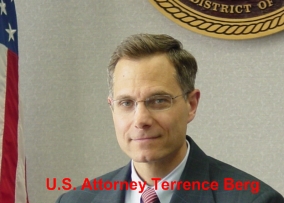
    U.S. Attorney Terrence Berg
    U.S. Attorney Terrence Berg

    Both state and federal prosecutors in Michigan have been attacking Ponzi schemers and affinity fraudsters. Yesterday the office of Michigan Attorney General Mike Cox charged three men with racketeering for their roles in an alleged time-share Ponzi scheme targeted at senior citizens.

    In a separate Michigan case, federal prosecutors have announced the guilty plea of Richard Taft Johnson, 67, of Orchard Lake. Johnson is a member of an ever-lengthening list of senior citizens implicated in Ponzi schemes. The list includes names such as Bernard Madoff, 71, (New York/Florida); Richard Piccoli, 83, (New York); Andy Bowdoin, 75, (Florida); Julia Ann Schmidt, 68, (Texas); Judith Zabalaoui, 71, (Louisiana); Arthur Nadel, 77, (Florida/NewYork); Ronald Keith Owens, 73, (Texas); James Blackman Roberts, 71, (Arkansas); and Larry Atkins, 65, (North Dakota).

    bowdoinmadoffnadel

    Johnson pleaded guilty to mail fraud for devising a Ponzi scheme known as the “American Charitable Program,” which led investors to believe “investments would benefit
    charitable organizations such as universities or other educational institutions,” prosecutors said.

    But the purported charitable program was a fraud that promised returns of 10 percent per quarter — and the fraud was magnified by bogus “periodic statements showing the purported increasing value of their investment accounts,” prosecutors said.

    “This was an insidious Ponzi scheme because investors were told it was a safe, secure investment that would ultimately help charities,” said U.S. Attorney Terrence Berg of the Eastern District of Michigan.

    “Like most Ponzi schemes, it went undetected for a number of years, allowing some investors to reap a profit on their investments, and encouraging others to invest,” Berg said.

    He added that Ponzi perpetrators often recruit others to spread the word about exciting investment programs, which later prove to be Ponzi schemes that cause embarrassment and ill-will among family and friends.

    “It can be very disturbing for a victim to discover that he has innocently caused friends or relatives financial ruin,” Berg said. “In the end, a number of the [Johnson] investors, some quite elderly, lost everything because their monies were used to keep the scheme going until the inevitable collapse.”

    The Johnson probe is ongoing, despite the plea. “In the course of this investigation, we will be attempting to help ascertain what, if anything, the victims’ might be able to salvage of their financial worth,” Berg said.

    Assisting in the probe are the FBI, the State of Michigan Office of Financial Insurance Regulation and the State of Florida Division of Insurance Fraud. Berg said the agencies have “worked very hard to investigate and compile the information about Mr. Johnson’s fraudulent activities.”

    Johnson faces up to 20 years in prison and a fine of up to $250,000. He conducted business in Bloomfield Hills, Mich., as Investor Planning Services.

    “As in all Ponzi schemes, Mr. Johnson would pay out earlier investors, or investors who demanded a return of their money, with newer investors’ monies,” prosecutors said. “But he also diverted significant funds to his personal use.”

    The Johnson scheme began to collapse in 2008.