UPDATED 7:10 A.M. EDT APRIL 18 U.S.A. A year has passed since the U.S. Securities and Exchange Commission announced the prosecution of TelexFree. Here’s the lede from the PP Blog’s story on April 17, 2014:
The U.S. Securities and Exchange Commission (SEC) has filed charges against the alleged TelexFree pyramid scheme and a federal judge has granted an asset freeze.
TelexFree was a sham to mask an investment scheme known as “AdCentral” in which affiliates were told they could earn money without selling anything as long as they placed “meaningless ads” for the the program’s VOIP product on the Internet “and recruit[ed] others to do the same,” the SEC charged.
The TelexFree “program” was targeted mainly at “Dominican and Brazilian immigrants in the U.S.,” the SEC alleged.
We learned later that TelexFree had been under investigation since at least October 2013 by the U.S. Department of Homeland Security. This probe was part of an undercover operation. A criminal complaint was filed against alleged TelexFree principals James Merrill and Carlos Wanzeler in May 2014. They were indicted in July 2014.
Merrill is free on bail and is awaiting trial. U.S. prosecutors say Wanzeler ducked out of the United States via Canada in April 2014 and boarded a flight to Brazil. They describe him as a fugitive.
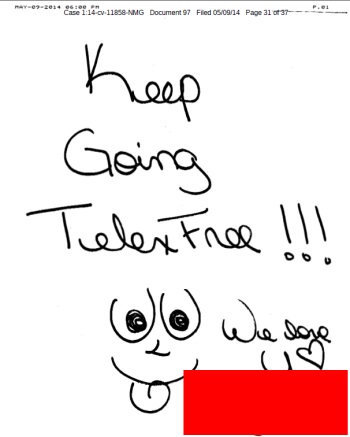
Some TelexFree members sent doodles to the federal judge presiding over the SEC’s fraud case. Redaction by PP Blog.
Carlos Costa, a TelexFree figure in Brazil, tried to turn the tables on investigators by running for a seat in Brazil’s Congress. This occurred alongside claims by U.S. prosecutors that TelexFree “has a disturbingly cult-like quality.”
In a February 2015 filing in the TelexFree bankruptcy case, trustee Stephen B. Darr called TelexFree a “pyramid scheme” that may have involved 1 million or more participants globally and gathered as much as $1.8 billion in about two years of cross-border operation.
If the numbers hold up, it would mean that TelexFree has surpassed the Zeek Rewards scheme in both victims’ count and haul. Zeek is estimated to have created about 800,000 victims, while gathering about $897 million. Zeek was shut down by the SEC in August 2012. Zeek also operated for about two years.
Prior to Darr’s February 2015 observations about TelexFree, the SEC — in January 2015 — tweeted that its April 14, 2014, announcement about the TelexFree prosecution was the “#1 most-viewed news” item on the agency’s website last year.
Regardless, any number of American MLMers appear to have ignored important lessons that could be learned from the TelexFree and Zeek cases. “Programs” such as “Achieve Community” and “Wings Network” and “UFunClub” rose to the fore.
The SEC has brought charges against Achieve and Wings. UFunClub is under investigation in Thailand. There have been reports about arrests and suspects fleeing. Early reports put the U.S. dollar sum involved at $307 million.
BULLETIN: The SEC has gone to federal court in Atlanta, charging the alleged operator of CashFlowBot (DollarMonster) with operating a Ponzi scheme. The “program” had a presence on Ponzi-scheme forums such as TalkGold and MoneyMakerGroup.
James A. Evans, 33, of Villa Rica, Ga., has been charged with selling unregistered securities and securities fraud. The SEC accused him of making misrepresentations to investors and operating CashFlowBot as a Ponzi scheme dating back at least to 2012.
CashFlowBot, according to the SEC complaint, used the SolidTrustPay payment processor.
The underlying mechanics of the DollarMonster scheme were simple: investors deposited funds into their Solid Trust accounts and then transferred those funds to a Solid Trust account controlled by Defendant Evans. Defendant Evans then transferred a portion of the funds to his personal bank account, and also redistributed funds to investors’ Solid Trust accounts as purported investment returns.
Investors were able to log into their DollarMonster accounts, which included the purported dollar value of their accounts (without identifying any underlying securities or ownership interests), including purported earnings.
The DollarMonster website did not contain language limiting investors to accredited or sophisticated investors, nor did the process of registration or creating an account require information indicating whether investors were sophisticated or accredited.
The scam gathered about $1.15 million, the SEC alleged. The agency’s action is the second this year against a Ponzi-board scheme that, relatively speaking, appears not to have collected a tremendous sum of money. (Not that $1.15 million is anything to sneeze at.)
In February, the SEC sued Achieve Community, alleged to have gathered about $3.8 million. The actions against Achieve and CashFlowBot may demonstrate that the agency is tracking schemes large and small, something that could cause fitful sleep in the HYIP sphere.
Some schemes such as TelexFree (2014/$1.8 billion) and ZeekRewards (2012/$897 million) gathered tremendous sums of money before interventions by law enforcement.
After he was subpoenaed in July 2014, Evans appeared to be hatching a new scheme at TheInvestorsExchange.com, the SEC said.
“Theinvestorsexchange.com purports to match investors looking for an investment return with individuals and companies that need capital,” the SEC alleged. “Theinvestorsexchange.com website also lists various advertisements for purported investment opportunities, with links to email addresses that potential investors can contact for further information.”
4th Update 1:15 p.m. EDT U.S.A. “Daily-Earnings,” yet another Ponzi-board scheme pushed by Achieve Community huckster Rodney Blackburn, appears to have met its demise. The “https” dotcom for Daily-Earnings is publishing a “Your web space is ready to go!” message, suggesting front-page content has been moved from the site.
Not all pages of the site, however, are offline. An FAQ page, for instance, is publishing ads for “programs” called SecretSocietySystem and “ILuvBanners.” There’s also an ad at Daily-Earnings for Intellashares, a “program” that collapsed earlier this year but now is trying a relaunch.
Ads for these “programs” also are being published at Daily-Earnings:
MassiveWealthCycler. (“4daily position $17 only per sub prelaunch JOIN NOW.”)
V Stream TV. (“FREE Cable TV Sign Up for FREE No Monthly Fees Join NOW.”)
Demonstrating the interconnectivity of certain types of MLM schemes, the ILuvBanners’ site is publishing ads for:
10In20Back. (NEW! 10in20back..ONLY $10 PER SHARE. PAYZA & STP.”)
PassiveIncomeADay. (Claim of “Daily Passive I . . . PASSIVE INCOME A DAY! Turn $5 into $7.5 150%,” but dotcom currently is generating a server error.)
Blackburn pushed Achieve Community, which the SEC described in court filings on Feb. 12 as a combined Ponzi- and pyramid scheme. He also has been associated with “Trinity Lines,” a collapsed “program” trading on the name of God, and Automatic Mobile Cash, which appears to have collapsed in March.
The huckster also created a combined ad for Achieve Community, TrinityLines and UnisonWealth. The SEC declined to comment on the promo.
At one point, the MooreFund and RockfellerBiz “programs” came into the fold, with Blackburn blessing both of them.
His promo for “Daily-Earnings” appears to have been published on Feb. 28, a little more than two weeks after the SEC’s Achieve Community action.
At the time, the actual Daily Earnings site was displaying ads for other scams while hawking “AdPacks.” The “program” possibly operated from Istanbul, Turkey.
UPDATED 9:10 A.M. EDT U.S.A. It’s whack-a-mole via MLM or network marketing — again.
There are reports in Thai media about a major pyramid/Ponzi bust involving a cross-border “program” known as “UFunClub.” (See links below.)
No American suspects appear to have been arrested or named so far, but Americans have promoted UFunClub. One of them, according to BehindMLM.com, is Jamison Palmer.
On Feb. 19, 2015, the PP Blog contacted the Alabama Securities Commission for comment after it observed a promo online for “UFunClub” attributed to Melton McClanahan, an American implicated in the cross-border “Profitable Sunrise” scheme broken up by state regulators and the U.S. Securities and Exchange Commission in 2013.
ASC did not respond to the request for comment on UFunClub and Unison Wealth, and it is unclear whether they are under investigation in the United States. What is clear is that McClanahan was issued a cease-and-desist order by ASC for his alleged role in pushing Profitable Sunrise. He also was subpoenaed by the SEC in the Profitable Sunrise case.
It’s also clear that some network marketers are moving from scheme to scheme to scheme in an ongoing and insidious environment of whack-a-mole. Schemes using a common network of promoters are feeding off each other.
Deputy Prime Minister Prawit Wongsuwon instructed police to investigate the case and quickly hunt down and arrest the suspects.
Police have been working alongside the Consumer Protection Police Division, the Office of The Consumer Protection Board and the Anti-Money Laundering Office in the investigation. The company’s operating licence was revoked.
Like other schemes, UFunClub spread in part on social media, according to a report at Nationmultimedia.com (italics added):
OCPB secretary-general Amphon Wongsiri said the U-Fun group mobilised investments through the website www.u-fun-u-token.com, www.youtube.com and many other avenues including via direct contact by its agents.
Recent whack-a-mole schemes include TelexFree, Wings Network, Zeek Rewards, eAdGear, iFreeX and EmGoldEx.
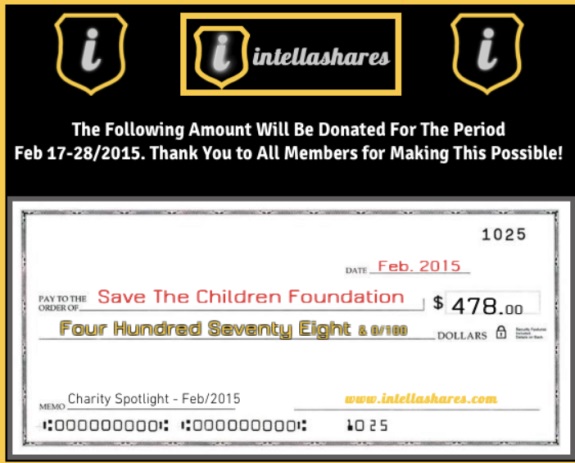
IntellaShares reportedly is threatening members who file disputes — all while trading on the name of Save The Children. Photo source: 4/1/2015 screen shot from website of IntellaShares.
UPDATED 11:31 A.M. EDT U.S.A. In 2010, the Federal Trade Commission took action against an online venture known as iWorks. This allegation appeared on Page 7 of the FTC’s Dec. 21, 2010 complaint:
“They have also attempted to drive down their chargeback rates by threatening to report consumers who seek chargebacks to an Internet consumer blacklist they operate called ‘BadCustomer.com’ that will ‘result in member merchants blocking [the consumer] from making future purchases online!’”
BehindMLM.com is reporting today that a “program” known as “IntellaShares” appears to be threatening participants with entry on a “BLACKLIST.”
IntellaShares appears to have launched earlier this year and then experienced a prompt collapse. Despite this, the “program” claims on its website that it has or will donate $478 to the “Save The Children Foundation.”
It is unclear if IntellaShares actually was referring to Save the Children Federation Inc., the internationally prominent Connecticut charity that operates at SaveTheChildren.org.
BehindMLM has described IntellaShares as a “$2.50 micro Ponzi investment scheme.”
The “program” has a presence on well-known Ponzi-scheme forums such as MoneyMakerGroup. There are assertions of an imminent “relaunch.”
Such scams may use social media such as forums, YouTube, Twitter and Facebook to target marks. Some may imply they are linked to a charity or perform good deeds with money sent in by participants.
In 2009, for instance, a Ponzi scheme known as AdViewGlobal purported to be involved in an effort to preserve the rain forest. AdViewGlobal, which was a knockoff of the 2008 AdSurfDaily Ponzi scheme, later disappeared.
Like IntellaShares, AdViewGlobal purported to be in the “advertising” business. It also had a presence on the Ponzi boards.
In 2011, a Ponzi-board “program” known as “Club Asteria” promised weekly payouts of up to 8 percent while trading on the name of the American Red Cross. During the same year, a TalkGoldPonzi forum promoter pitching both Club Asteria and a separate scam known as JSSTripler/JustBeenPaid (730 percent a year) claimed that filing disputes with payment processors meant that “all members will suffer.”
IntellaShares may be operating out of New York.
The SEC this morning declined to comment on IntellaShares. The FTC did not immediately respond to a request for comment.
Update 11:31 a.m. The FTC said this morning that it “hasn’t brought any enforcement actions involving IntellaShares.”
Whether it would remains an open question. The agency has an aggressive enforcement history when consumers end up on the receiving end of threats or are duped into joining work-at-home “programs.”
“The staff also has recently seen what appears to be an increase in pyramid schemes . . . under the guise of ‘multi-level marketing’ and ‘network marketing’ opportunities . . . These schemes often target the most vulnerable investors, and social media has expanded their reach. The Division is deploying resources to disrupt these schemes through a coordinated effort of timely, aggressive enforcement actions along with community outreach and investor education. We are also using new analytic techniques to identify patterns and common threads, thereby permitting earlier detection of potential fraudulent schemes.” — Andrew Ceresney, SEC Enforcement Division director, March 19, 2015
3RD UPDATE 6:09 P.M. EDT U.S.A. Bad news for “program” scammers and their willfully blind enablers: Andrew Ceresney, the director of the SEC’s Divison of Enforcement, told lawmakers on Capitol Hill today that scams using an MLM or network-marketing business model are on the radar.
In fact, according to written testimony Ceresney delivered to the House Capital Markets and Government Sponsored Enterprises subcommittee, they are enforcement “priorities” — right up there with insider trading, microcap fraud and other forms of securities fraud.
“The Division is deploying resources to disrupt these schemes through a coordinated effort of timely, aggressive enforcement actions along with community outreach and investor education,” Ceresney told the panel.
New Jersey Republican Rep. Scott Garrett chairs the panel. Rep. Carolyn B. Maloney, a New York Democrat, is ranking member.
Ceresney didn’t reference the task force in his prepared remarks today. However, the agency already has filed two actions against MLM or network-marketing schemes this year. In February, the agency sued the “Achieve Community,” alleging it was a Ponzi- and pyramid scheme that had gathered about $3.8 million and had spread on social media. One or more criminal probes related to the SEC’s Achieve investigation are believed to be under way, amid concerns Achieve was funneling scam proceeds offshore.
Also in February, the SEC sued a “program” known as Wings Network, alleging it was targeting Latino communities and that its promoters “used Facebook to publicize ‘business meetings’ that took place at hotels and other locations in Connecticut, California, Florida, Massachusetts, Pennsylvania, Texas, Georgia, and Utah.
“The promoters also set up storefronts or ‘training centers’ to lure investors into attending Wings Network presentations,” the agency charged. “For example, one promoter used a storefront in downtown Philadelphia to make presentations to prospective investors, and another promoter rented office space in Pompano Beach, Fla., and spread the word in the local Latino community to attract prospective investors to come in and hear presentations.”
Wings appears to have gathered at least $23.5 million.
In addition to targeting vulnerable population groups, Wings Network tried to sanitize itself by falsely trading on the name of the Direct Selling Association, the SEC said in court filings. Wings has been tied to two companies that used the name Tropikgadget.
Both ostensibly operated from Portugal through business entities set up in Madeira, a Portuguese island in the North Atlantic, and through Sharjah, a city in the United Arab Emirates, the SEC alleged.
Court records suggest Wings had a strong presence in Marlborough, Mass., the town from which the TelexFree MLM scheme was based. In April 2014, the SEC described TelexFree as a massive Ponzi- and pyramid scheme largely targeting immigrant populations. A court-appointed trustee says TelexFree may have gathered $1.8 billion through its pyramid scheme in about two years.
Participants hailed from dozen of countries. A partial list of U.S. participants shows many names that appear to be Latino. Trustee Stephen B. Darr said in court filings that the full list of worldwide participants “contains 1,894,940” names and spans “35,110 pages.”
A list of alleged “winners” in the 2012 Zeek Rewards scheme broken up the SEC and the U.S. Secret Service also appears to include a disproportionate share of Latino names or names from other vulnerable population groups. Zeek is estimated to have rounded up $897 million in less than two years and to have affected on the order of 800,000 victims.
Zeek’s name (through parent Rex Venture Group LLC) was referenced in a footnote and related link in today’s written testimony by Ceresney.
So was the name of CKB168, a “program” that allegedly targeted members of Asian-American communities in New York and California and was taken down by the SEC in 2013. The alleged haul was pegged at at least $20 million.
The footnote pointed to an SEC investor alert dated Oct. 1, 2013, and titled, “Beware of Pyramid Schemes Posing as Multi-Level Marketing Programs.” The alert, which has been translated into Chinese, Spanish, Portuguese, Vietnamese and Creole, has been updated to include information on “programs” such as TelexFree and Wings Network.
Though not referenced specifically in the October 2013 alert, “programs” such as eAdGear, Zhunrize and WCM777 also have encountered SEC actions. All three appear to have affected Asian population groups. WCM777 also clearly affected Latino groups and has emerged as one of the strangest MLM schemes of all time.
Some WCM777 promoters had claimed that $14,000 sent to the California-based “program” returned $500,000 in 52 weeks. WCM777 appears to have gathered more than $80 million in about a year, with the proceeds from the MLM “program” diverted to purchase golf courses, real estate and more. Tens of millions of dollars appear to have been diverted to Hong Kong.
Today’s Congressional testimony took place against the backdrop of continuing clashes between Herbalife and activist investor Bill Ackman, an Herbalife short-seller who has accused the MLM program of being a pyramid scheme that targets Latinos.
Herbalife, which was not referenced in today’s testimony, denies it is a pyramid scheme and says it is proud of its appeal to Latinos and serves the community honorably. (Ackman also isn’t mentioned in the testimony.)
Responding on web forums such as Seeking Alpha, fans of Herbalife have accused Ackman of pandering to enforcement agencies, members of Congress and Latino groups as part of a scheme to inspire investigations that would line his pockets by driving down Herbalife’s stock price.
In media accounts, Ackman has said he won’t keep personal profits if his Herbalife short pays off. At the same time, he asserts he is pursuing profit for his hedge-fund investors through a strategy that also delivers social justice.
Perhaps the only thing clear right now is that MLM, no stranger to controversy, never before has been under a light this intense.
The Capital Markets and Government Sponsored Enterprises subcommittee is under the House Financial Services Committee. The committee is chaired by Rep. Jeb Hensarling, a Texas Republican. Rep. Maxine Waters, a California Democrat, is ranking member.
It turns out that a hackneyed expression currently in play within MyAdvertisingPays (MAPS) is a lightly remixed version of one used in the collapsed Zeek Rewards and Achieve Community schemes.
Will this thrice-vomited bromide become a kiss of death for MAPS?
On Twitter, a promoter of the emerging MAPS scheme is prospecting for recruits with a similar line. “If you want something you’ve never had, then you’ve got to do something you’ve never done!”
The PP Blog reported on March 9 that the name of MAPS appears in a TelexFree-related class-action lawsuit originally filed in federal court in New York and later transferred to Massachusetts. Even though MAPS isn’t named a defendant, it is clear that both private lawyers and government lawyers are aware of MAPS.
With an alleged haul of more than $1.8 billion, TelexFree likely is the largest MLM HYIP fraud of all time. Zeek, the previous title-holder in terms of its alleged haul, probably now is second. Both schemes may have created hundreds of thousands of victims.
Zeek’s receiver currently is involved in an international paper chase to round up assets for victims. Some of the money allegedly was routed to the Cook Islands (South Pacific) through a California company and then used to buy property in the Turks and Caicos (North Atlantic).
MAPS, which appears to have a paper presence on the Caribbean island of Anguilla but likely operates from the United States, recently claimed to have “110676+ Users.” Given its business model and the presence of serial promoters of fraud schemes in its membership ranks, MAPS very well could be a litigation target-in-the-making.
Regardless, many MLM HYIP Ponzi promoters will pretend that the membership should not be concerned — as they did with Zeek and Achieve Community.
“Automatic Mobile Cash,” pushed on YouTube by “Achieve Community” hucksters Rodney Blackburn and Mike Chitty, has tanked, according to chatter on the MoneyMakerGroup Ponzi forum.
MMG poster “im the man,” citing information from SolidTrustPay, claimed yesterday that SolidTrustPay had blocked AMC’s ability “to accept deposits or make withdraws.” Other information in the 16-page, 226-post MMG thread suggests AMC was making selective payouts through SolidTrustPay and Payza at the beginning of March.
Blackburn and Chitty were representatives of something called the “Legendary Income Solutions Team” or LIST, often mixing promos for Achieve Community with appeals for viewers to get on board the LIST train and enroll in various HYIP schemes. YouTube appears to have banned Chitty. Blackburn deleted a number of his pitches for HYIP fraud schemes, and now is suggesting he’s returned to his roots in traditional MLM.
The PP Blog reported last week that Blackburn was touting a “tea” known as “laso,” amid claims it “mitigates” HIV, the virus that causes AIDS.
On Feb. 18, the SEC described Achieve Community as a pyramid- and Ponzi scheme that had gathered more than $3.8 million. A federal judge granted an asset freeze. Criminal investigations into Achieve Community reportedly also are under way.
Chitty claimed AMC paid a “dividend.” Blackburn claimed his good friend Chitty was making “3,000 a month” from AMC.
In January, Blackburn dared the SEC to investigate Achieve Community and other programs he was pushing. Whether he’ll dare the Federal Trade Commission or the Food and Drug Administration to investigate the laso health claims was not immediately clear.
The laso tea is one of the offerings of an MLM “program” known as “Total Life Changes.”
After Blackburn’s SEC dare, a “program” known as “TrinityLines” that traded on the name of God and allusions to Scripture went missing.
Blackburn also was promoting “MooreFund,” an obvious fraud purportedly operating from the United Kingdom. He also threw in with “Rockfeller,” an obvious fraud trading on the name of the famous Rockefeller family.
“BRING THE BACON HOME” and “Unison Wealth” also were in the stable. The “bacon” program now has carded at least its second failed launch, and reportedly has a plan to launch again tomorrow. Unison Wealth, meanwhile, appears to have developed problems.
From an Achieve promo playing on YouTube. Masking by PP Blog.
Two domains linked to the alleged “Achieve Community” pyramid- and Ponzi scheme appear to have been disconnected. On Feb. 17, the PP Blog reported that the domains — ReadyToAchieve.com and TheAchieveCommunity.com — were displaying “Account Suspended” messages.
ReadyToAchieve appears still to have DNS servers, but now displays nothing and will not return a ping. TheAchieveCommunity, meanwhile, displays a “no nameserver” message in registration data.
In a complaint filed under seal in U.S. District Court for the District of Colorado on Feb. 12, the SEC described Achieve as a pyramid- and Ponzi scheme operated by Kristine L. Johnson of Colorado and Troy A. Barnes of Michigan. The agency announced the case on Feb. 18, after the seal was lifted.
Both Johnson and Barnes have asserted their Fifth Amendment rights not to incriminate themselves in the SEC case. Barnes reportedly has claimed he’s under criminal investigation, although it is unclear where and by whom. Both ASD Updates and BehindMLM.com have reported Johnson is the subject of a criminal investigation by the office of U.S. Attorney Anne M. Tompkins of the Western District of North Carolina.
Tompkins is leaving her post today, after nearly five years on the job. North Carolina is a banking center, and Tompkins has become known for her role in bringing cases involving multimillion-dollar investment schemes, securities fraud and mortgage-fraud conspiracies.
One such case was the criminal prosecution of three figures associated with Zeek Rewards, an alleged Ponzi scheme said to have gathered on the order of $897 million. Why Johnson, a Colorado resident charged civilly by the SEC in Colorado federal court last month in the Achieve case, is under criminal investigation in North Carolina is unclear.
Zeek receiver Kenneth D. Bell has raised concerns about network marketers proceeding from one fraud scheme to another. At least one filing in the Achieve case in Colorado suggests Zeek and Achieve had promoters in common, given that the woman who filed the document asking for her Achieve money back also is listed by Bell as a “winner” in the Zeek scheme broken up by the SEC and the U.S. Secret Service in 2012.
As the PP Blog reported on Aug. 17, 2012, the date news of the Achieve probe became public (italics added):
The Secret Service leads a multiagency electronic crimes Task Force in Charlotte, N.C. The Charlotte Task Force is known by the acronym CMECTF.
One promo for Achieve claimed its members had the “God given universal right” to spend their money however they pleased and were choosing “not to sell out to the banking system.” Among other things, Achieve claimed $50 turned into $400.
In court filings, the SEC said it has examined at least five Achieve-related bank accounts. The filings also suggest Achieve polluted the commerce stream at at least least nine points of contact: three banks, one credit union, four payment processors and one brokerage firm.
Johnson is alleged to have provided $10,000 to a church. One or more churches sent money to Zeek Rewards, according to court filings.
Because an untold number of Achieve members received debit cards that could be used at ATMs to offload “earnings,” fraudulent proceeds had the potential to flow through many hundreds of towns and cities, effectively turning local banks into dispensaries for Ponzi schemes or warehouses for them. Achieve is said to have had between 9,000 and 14,000 members.
Ads for other fraud schemes were displayed when Achieve members accessed the “program’s” private forum, contributing to concerns that fraudulent proceeds are circulating between and among scams.
Inset from a video promoting TLC’s “laso” tea by Rodney Blackburn on YouTube.
UPDATED 3:08 P.M. ET U.S.A. Fresh from the alleged “Achieve Community” pyramid- and Ponzi scheme, the apparent collapse of “Trinity Lines” and potential debacles involving “BRING THE BACON HOME,” “Unison Wealth” and others, Rodney Blackburn now is promoting a “tea” purported to mitigate HIV.
HIV is the virus that causes AIDS.
The tea, called “laso,” is offered by an MLM “program” known as “Total Life Changes” or TLC, Blackburn says.
Laso also “prevents colds and flu,” “prevents cardiovascular diseases” and reduces cancer risks, according to footage from Blackburn’s TLC promo on YouTube.
At the same time, according to the 11:48 Blackburn promo titled “Total Life Changes – Rodney’s Review,” the tea tackles weight loss, combats aging, “helps in Herpes treatment,” “prevents high blood pressure,” “prevents wrinkles,” “alleviates asthma,” “removes intestinal sludge,” “removes parasites” and plenty more.
The tea, according to Blackburn’s promo, also is “good for reducing diabetes” and even participates in the battle against tooth decay,
On Feb. 12 in a sealed court filing, the SEC described “Achieve Community” as a scheme engaged in securities fraud. A federal judge approved an asset freeze, and one or more Achieve-related criminal investigations are under way. “Trinity Lines” then went missing, and so did a bunch of Blackburn promos for other schemes.
A Blackburn sales video for TLC, however, appeared yesterday. Blackburn suggests in the production that he’s interested in returning to his MLM roots after taking HYIPs out for a ride. He previously claimed that 97 percent of people lose money in MLMs — this in a video in which he was touting multiple HYIP schemes and practically daring the SEC to investigate.
Earlier this year Blackburn was touting something called “Military Medical Relief 21,” or MMR21, a “program” aimed at military personnel. Those promos also disappeared.
“Mitigates HIV,” Blackburn says of the tea, after narrating other purported claims about its medicinal power.
“I mean, strengthens your memory — all sorts of things,” the huckster continues. “They have twenty-six different benefits.”
Read the definition of “mitigate” at dictionary.reference.com. (One of the meanings is “tomakelesssevere.”)
Whether an MLM tea can make HIV “less severe” and do all the other things advertised in Blackburn’s video is an open question.
From a YouTube pitch for TLC’s “laso” tea by Rodney Blackburn.
EDITOR’S NOTE: The MLM “program” known as Wings Network is alleged to have operated through two business entities that used the name “Tropikgadget.” The SEC’s case, announced Friday, is filed in U.S. District Court for the District of Massachusetts. That’s the same venue in which the agency’s epic TelexFree case was filed last year.
There can be no doubt — zero, none — that vulnerable immigrant populations in Massachusetts are being targeted in one MLM scheme after another. Speakers of Spanish or Portuguese may be particularly at risk. It’s also apparent that Asian, Haitian and African population groups are being targeted and that the risk is not unique to Massachusetts residents. The WCM777 “program,” for example, brushed through Massachusetts, where it was aimed at speakers of Portuguese and was stopped by the Massachusetts Securities Division in late 2013.
MSD also has squared off against a “program” known as EmGoldEx. In this scam, investors were promised returns of up to 1,105% and photos of children “getting paid” were used as lures to drive dollars.
One of the Tropikgadget entities — Tropikgadget Unipessoal LDA — allegedly was set up in the Madeira Free Trade Zone in November 2013 and later abandoned. Madeira, whose largest city is Funchal, is a North Atlantic Portuguese archipelago slightly closer to continental Africa than continental Europe. It is worth pointing out that the SEC publicly thanked both Portugal’s securities regulator (Comissão do Mercado de Valores Mobiliários) and the office of Portugal’s Attorney General (Procuradoria-Geral da República of Portugal) for assistance in the American probe.
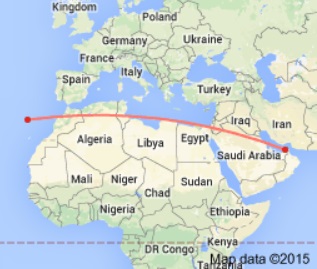
The other Tropikgadget entity — Tropikgadget FZE — appears to have been set up in Sharjah, United Arab Emirates, also in November 2013. Sharjah, on the Persian Gulf, is the UAE’s third most populous city, behind Dubai and Abu Dhabi, according to WikiPedia. The paper presence of these companies at geographic points on the North Atlantic and the Persian Gulf more than 4,300 miles away from each other and how they enlisted Massachusetts residents to do their bidding probably is a story unto itself, but it is a story for another day. What’s news today is that Wings Network was operating in Massachusetts at Ground Zero for TelexFree after the TelexFree action and, like TelexFree, is accused of fleecing vulnerable immigrant populations.
At least seven of the 12 charged Wings Network promoters had addresses in Marlborough, Mass. This is potentially important because TelexFree’s U.S. operations were based in Marlborough. TelexFree operated through various U.S. entities and a Brazilian entity known as Ympactus. Brazil-based TelexFree/Ympactus figure Carlos Costa has TelexFree business partners in Massachusetts, waved the flags of Madeira and Portugal in a 2013 TelexFree promo and invoked God in appeals to support TelexFree. Sann Rodrigues, a charged TelexFree promoter associated with an MLM entity known as iFreeX that also operated in Massachusetts and has come under scrutiny, has claimed “God” invented MLM and “binary.” Rodrigues, according to the SEC, is a recidivist pyramid-schemer.
There’s also evidence that the Zeek Rewards “program” taken down by the SEC in 2012 targeted vulnerable people.
**____________________**
Funchal, Madeira, to Sharjah, UAE. Source: Google Maps.
UPDATED 11:32 A.M. ET U.S.A. The SEC’s “Wings Network” case announced Friday is the latest example of the MLM world’s intolerable capacity to deceive. Though the facts alleged by the SEC are alarming, the action against two companies, three officers and 12 promoters is not an indictment of the trade. Indeed, the agency worked with the Direct Selling Association to expose one of the most mind-numbing lies.
But you still have to wonder if MLM and network marketing in general are on the road to perdition. This is because the horrifying abuses and thematic lies that propped up Wings Network are so common across the larger MLM trade that one can be forgiven for wondering if targeting vulnerable population groups and institutionalizing prevarication is Rule No. 1.
How DSA Got Involved In The Wings Network Case
Adolfo Franco, the trade association’s executive vice president and chief operating officer, sits at the intersection of commerce and government affairs. He’s an old political hand and has worked as a Republican strategist and assistant administrator for Latin America and the Caribbean for the U.S. Agency for International Development (USAID). Franco wants the MLM industry to prosper, and he wants to make sure he has a wholesome story to tell in government corridors.
Wings Network didn’t give him one, to be sure.
You see, Wings Network is accused by the SEC of using the DSA’s name to sugarcoat a creeping, cross-border fraud scheme that ultimately gathered at least $23.5 million. What actually happened, according to the SEC and an affidavit prepared by Franco, is that DSA received an “e-mailed request” for a DSA membership “application.” It then sent out the application, which was never returned. Not only was the application not returned, according to the affidavit, DSA never even heard back from Wings Network.
What allegedly happened next will surprise no one who follows the bizarre dramas MLM has been serving up for the past several years. This simple request for a membership application was conflated by Wings Network and affiliates as an endorsement by DSA of Wings Network.
By April 2014, according to the SEC, DSA became aware of this ribald deception. The association reacted by sending Wings Network a cease-and-desist letter, directing Wings Network and affiliates to stop claiming membership in DSA and stating point-blank that “any indication that Wings Network is a member of the DSA is fraudulent.”
Multiple Layers Of Deception
Could it get worse? Sure. Wings Network hucksters also are accused of duping participants into believing the “program,” which advertised guaranteed income, had the additional benefit of insuring them against loss.
Anyone who’s been following the unbelievably noxious example of TelexFree can tell you that the same thing allegedly happened there. The same thing currently is happening in a “program” known as “MooreFund,” and it previously happened in the AdSurfDaily Ponzi scheme in 2008 broken up by the U.S. Secret Service.
The MLM scammers look for a tiny kernel of truth and then wrap a lie around it: A “program” may have a bank account, for example. Money in the account may be insured by the FDIC in the event of a bank collapse.
From this, the “programs” themselves and affiliates conflate a fantastically malignant construction by which no one can lose money because of the “insurance.” It is just a contemptible lie. It’s also one that has been bettered by new versions of the lie. These versions — as is the case with Wings Network, TelexFree and MooreFund — hold that private insurers or even software companies such as Symantec have the companies’ backs and that these private insurers never would do business with a fraud scheme.
Supplementing this lie are companion lies — advanced by Wings Network, TelexFree and others — that a business registration with a Secretary of State or equivalent agency domestically or overseas is proof that there is no underlying scam. (One need only to look at Bernard L. Madoff Investment Securities LLC to understand just how preposterous this type of lie is.)
Here’s the thing: The type of lies advanced by Wings Network are not unusual for “opportunities” using an MLM or network-marketing business model. DSA happened to be the victim of brand-leeching and runaway disingenuousness in this case, but other cases show it’s hardly alone. Even the names of the U.S. government and various U.S. agencies have been dropped in this fashion.
Not even the “brands” of God and Jesus Christ are off-limits in the MLM sphere. Sometimes an asserted endorsement by a deity is supplemented by suggestions that living legends of entertainment and business have piled aboard a “program” train.
This is a short summary of these tactics as employed by recent MLM or network-marketing schemes that either cratered on their own or collapsed after regulatory intervention. (Note: Some background information also appears in the summary):
WCM777. Operated by Ming Xu. Targeted people who spoke Spanish, Portuguese, English and Asian languages. Dropped names of God, “Yahweh,” Jesus Christ, Al Gore, Steve Wozniak, Sylvester Stallone, “Rocky,” Eric Garcetti, Siemens, Goldman Sachs, the Denny’s restaurant chain and many, many more famous companies. (As many as 700.) Basic sales message: Send us money. Get rich. Estimated haul: $80 million in less than a year. Estimated number of victims: tens to hundreds of thousands.
TelexFree. Operated by James Merrill, Carlos Wanzeler and Carlos Costa. Largely targeted people in the United States and internationally who spoke Spanish, Portuguese and English. Global penetration at an almost unfathomable level. Appears to have created black market and back-alley economy in Massachusetts. Became subject of undercover investigation by the U.S. Department of Homeland Security. Dropped names of God, Jesus Christ, MLM Attorney Gerald Nehra, President Obama, Massachusetts Commonwealth Secretary William Galvin, the SEC, the U.S. Attorney General. Basic sales message: Send us money. Get rich. Estimated haul: $1.82 billion in about two years. Estimated number of victims: hundreds of thousands to more than 1.8 million.
Zeek Rewards. Operated by Paul R. Burks. Targeted people who spoke Spanish, Portuguese, English and Asian languages. Global penetration at an almost unfathomable level. Affiliates targeted Christians. Dropped names of the Association of Network Marketing Professionals, MLM attorneys Gerald Nehra and Kevin Grimes, plus MLM consultants Keith Laggos and Troy Dooly. Basic sales message: Send us money. Get rich. Estimated haul: $897 million in less than two years. Estimated number of victims: hundreds of thousands. “Clawback” cases to return alleged ill-gotten gains may affect 10,000 or more affiliates.
eAdGear. Operated by Charles Wang and Francis Yuen. “Primarily” targeted “investors in the U.S., China, and Taiwan,” according to the SEC. Dropped names of Google, Yahoo, Target Corp., Lbrands (Victoria’s Secret), Avon, Sears, Nordstrom, eBay, QVC, HSN, J.C. Penney, Banana Republic, Dillard’s, Kohl’s, Macy’s, Amazon.com, Men’s Wearhouse, Kmart, New York magazine and many, many more. (As many as 253 brands were abused.) Basic sales message: Send us money. Get rich. Estimated haul: $129 million. Estimated number of victims: tens of thousands.)
Wings Network now stands accused of targeting “many members of the Brazilian and Dominican immigrant communities in Massachusetts” in a combined pyramid- and Ponzi scheme that raised at least $23.5 million.
If that sounds familiar, perhaps it is because the TelexFree “program” was accused last year by the SEC of doing the same thing in the same place. Like Wings Network, TelexFree reached across national borders to plunder investors. Recent filings by the court-appointed trustee in the TelexFree bankruptcy case — and these filings are subject to amendment in part because there are more than 1 trillion disparate data points involved in the reverse-engineering of TelexFree — list the “nature” of the company’s business as “pyramid scheme.”
Other filings by Stephen B. Darr, the trustee, suggest that TelexFree gathered more than $1.8 billion in about two years of operation through a series of entities in the United States and an affiliate in Brazil known as Ympactus. The dollar volume alone is simply mind-boggling, more so when one considers the records so far denote “1,894,940 Participant names, spanning 35,110 pages.”
Some readers who sift through the TelexFree material will need a name-pronunciation guide and a world atlas. TelexFree didn’t just mow down Americans. The records suggest, for example, that the “Embassy Of Nigeria P O Box 1019 Addis Ababa Ethiopia” has contacted Darr. One document lists “Baker Island,” which WikiPedia says is an uninhabited Pacific atoll tended to by the U.S. Fish and Wildlife Service, as the “country” of an investor.
It is clear that TelexFree had investors (at least) in Argentina, Australia, Belarus, Belgium, Bolivia, Cambodia, Canada, Chile, China, Colombia, Croatia, Cyprus, Dominican Republic, Ecuador, Egypt, El Salvador, France, French Polynesia, Germany, Ghana, Guatemala, Honduras, Hong Kong, Hungary, India, Indonesia, Ireland, Italy, Japan, Jordan, Kenya, Lebanon, Luxembourg, Malaysia, Mexico, Moldova, Netherlands, New Zealand, Nigeria, Norway, Paraguay, Peru, Philippines, Poland, Portugal, Puerto Rico, Qatar, Romania, Russia, Rwanda, San Marino, Serbia, Singapore, South Africa, Spain, Sweden, Switzerland, Taiwan, Tanzania, Thailand, Togo, Turks and Caicos, U.S. Virgin Islands, Uganda, Ukraine, United Arab Emirates, United Kingdom, United States, “Unknown” country, Uruguay, Uzbekistan and Venezuela.
MLM in this form is “fraud creep” running wild. It is posing dangers to individual participants, including those who can ill afford to take a financial hit. Beyond that, it is posing a danger to the U.S. financial infrastructure.
Economic security is national security, friends. These MLM HYIP “programs” pose an untenable security threat. Many of them are shrouded in multiple layers of mystery.
DSA Needs To Do More
It is good to see that the DSA worked with the SEC on the Wings Network case. It would be better yet if the organization studied why so many MLM HYIPers appear to move from fraud scheme to fraud scheme to fraud scheme.
Where did these people start their “MLM journeys?” Did they start at, say, Herbalife or Amway after buying into the dream and the attendant hype? And did they get churned by those “traditional” MLMs, only to become shark bait for the HYIPs?
With so many of the scams selling the message that it’s nearly impossible to make money in “traditional” MLMs and that 97 percent of people who latch onto the MLM dream of riches emerge as losers or highly vulnerable treaders of water in rough seas, isn’t it time for those traditional MLMs to question whether they are creating the refugees and providing the training for the targeting?
Herbalife is not an HYIP. But it sells a dream and has a high burn rate. The most recent scheme to sell against traditional MLM is “Achieve Community,” taken down by the SEC last month.
Whether or not “the 97 percent” claim is precisely true is immaterial. What’s material is the ready availability of vulnerable population groups and refugees from “traditional” MLMs.
TelexFree even may have channeled Herbalife, calling its cheerleading sessions “extravaganzas” and latching onto the sport of soccer.
Stemming this hurtful tide should be a top priority at DSA. The wave of scams is not docile. It very well might be eroding protective shores in violent fashion and creeping up on the road to perdition.