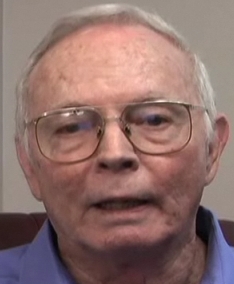
"ProfitClicking" claims it has acquired JSS/JBP and that Frederick Mann has retired.
Just days ago Frederick Mann — the purported operator of the JSS Tripler/JustBeenPaid “program” — was hinting that his fraud scheme that advertised a return of 60 percent a month needed a new name because critics were being entirely too negative. Like the now defunct Zeek Rewards “program,” which last week was described by the SEC as a $600 million Ponzi and pyramid scheme that was selling unregistered securities as investment contracts, JSS/JBP had served up one public-relations disaster after another.
There was the little matter of an ad for JSS/JBP that appeared on a website known as Vatican Assassins, for instance. And there was “Ping,” a woman who’d claimed she had heart problems, was managing multiple JSS/JBP accounts, that her sister’s home was in trouble — and that JSS/JBP ignored her support tickets for weeks.
Mann speculated that the company could come under attack by American cruise missiles.
JSS/JBP found itself wrestling another PR flap in the past 24 hours, amid Ponzi-forum reports that Mann suddenly had “retired” and that the JSS/JBP “program” had been acquired and wrapped into an upstart autosurf known as ProfitClicking.
A quick analysis of the shell of the ProfitClicking website suggests that the emerging “opportunity” plans to be every bit as disingenuous as the five-alarm fraud scheme it apparently has swallowed. Ponzi-forum pretentiousness on places such as MoneyMakerGroup can be paraphrased as such:
I didn’t sign up for no stinkin’ autosurf. Where the hell is the money I gave the JSS/JBP scammers to see if I could profit from the scam?
Give these honest scammers a chance to see if they can pull off their new scam.
Be patient with the new scammers and don’t make too much noise. Remember, we have to pretend they’re not scammers and we’re not scammers to maximize the effectiveness of the scam.
Perhaps to make its “sovereign citizen” clientele feel at home, ProfitClicking has adopted all or part of the former JSS/JBP terms, which makes members affirm they are not with the “government.”
Like the collapsed AdViewGlobal autosurf Ponzi scheme that now has been linked to the collapsed AdSurfDaily Ponzi scheme, ProfitClicking is calling itself a “private association.”
Similar to the collapsed Zeek scheme, ProfitClicking says it has a “Legal Compliance Department.”
Like many online fraud schemes these days, ProfitClicking appears to have a plan to scam the public through social-networking sites such as Google +, Twitter and Facebook. And Profit Clicking says it is using at least two of the same offshore payment processors Zeek chose: Payza and SolidTrustPay.
Mann was a former pitchman for the ASD Ponzi scheme. Zeek and JSS/JBP are known to have members in common.
One graphic on the current landing page for ProfitClicking features a cartoon image of a bird. The bizarre headline is “Polly Wants A Profit.”
Naturally, there’s also a picture of a waterfront mansion.
On Aug. 17, the SEC filed spectacular allegations of Ponzi- and pyramid-scheme fraud against Zeek Rewards, which claimed it was not selling securities and members were not making an investment. Zeek operator Paul R. Burks was charged with selling unregistered securities as investment contracts.
Zeek abused the power of the Internet and raised $600 million from more than 1 million participants, the SEC charged
In August 2008, the U.S. Secret Service filed similar allegations against AdSurfDaily, a company with a 1-percent-a-day “program” similar to Zeek. Like Zeek, ASD claimed it was not selling securities and members were not making an investment. ASD operator Andy Bowdoin was indicted in November 2010 on charges of selling unregistered securities, securities fraud and wire fraud.
Bowdoin later acknowledged he was presiding over a Ponzi scheme that had gathered at least $110 million.
On Aug. 16 — just one day before the SEC went to court to halt the operations of Zeek — a “program” known as JSS Tripler/JustBeenPaid was clinging to its Zeek- and ASD-like cover story that it was not selling securities and members were not making an investment. JSS/JBP effectively has advertised a return of 2 percent a day: 730 percent a year.
“I just want to know — in the amount of money that I do invest . . . use to buy positions, is that . . . the investment that I’m doing?” a caller quizzed Frederick Mann, JSS/JBP’s purported operator.
“Dale,” JSS/JBP’s female conference-call host, then sought to set the caller straight on the wordplay of JSS/JBP.
“Well, first of all, we’re not investing here. We’re purchasing and we’re repurchasing. So, you need to get that verbiage clear.”
The SEC moved against Zeek the very next day. The U.S. Secret Service also is investigating Zeek.
Mann was a former pitchman for ASD’s scheme. Any number of Zeek members also promoted JSS/JBP.
Bowdoin pleaded guilty to wire fraud in May 2012. He is scheduled to be sentenced Aug. 29.
Like Zeek, JSS/JBP says it has more than 1 million members. Like Legisi, another HYIP scam broken up by the SEC and the Secret Service, JSS/JBP makes members affirm they are not with the government.
Legisi operator Gregory McKnight pleaded guilty to wire fraud earlier this year. He faces sentencing Sept. 11.
DISCLOSURE: Gregg Evans, a longtime member of the antiscam community, is a longtime PP Blog contributor. He was not compensated for this column, and his views are not necessarily the views of the PP Blog.
Who are these “Experts” anyway?
By Gregg Evans
Troy Dooly is the latest “expert” to look like an utter fool in the wake of the Zeek Rewards collapse. For months the apparently respected MLM guru has been defending Zeek against all logic, common sense or demonstrated knowledge of mathematics.
It turns out that — even though in Troy’s “expert opinion” and based upon his “inside knowledge” that he couldn’t share because he wanted to respect a “non disclosure agreement” — Zeek, Zeekler and Rex Venture Group was just another garden-variety Ponzi scheme.
This one added up to $600 million if you’re keeping score. And you should be. That’s more than half a billion dollars.
A few years ago, I decided to not actively hide my identity, but not advertise it either when 12DailyPro collapsed in a heap of scandal based solely on the figures being tossed around about how much money Charis Johnson had drawn in. It occurred to me at the time that there are people out there who will in fact kill you for that kind of coin, and more than a few of them I knew were involved in the scam. I had never received a death threat before, or at least not one I took seriously.
Here we have again a figure that frankly boggles the mind being funneled into a rather transparent Ponzi scheme by a collection of ref whores, financial illiterates and flat-out criminals posting with glee “I got paid” at all the familiar places these kind of folks hang out. As the late Everett Dirksen once said, “A billion here, a billion there, and soon you’re talking real money.”
And here again we have a list of supposed “experts” whose opinion proved that “this time, it’s legit.” I just have to ask, by what standard are these people experts at anything, beyond herding the suckers to the spend button?
I, modestly, consider myself an expert in matters of investing, accounting and how money and banking work. Not just because I think so, mind you, I have an earned PhD in International Business, a MSci in Economics, an MBA and a BBA in Finance (with a shared major in Mathematics, btw).
But honestly, if you’re taking my word for it advice-wise, you’re still a sucker, because anyone can try to impress you with what they say, you have to at least look at the motivation. My motivation is to perhaps save a few people who don’t have my background from falling for the siren song of the pimps like Ken Russo, Troy Dooly and others.
Longtime HYIP huckster "Ken Russo," also known as "DRdave," helped lead the "I Got Paid" cheers for Zeek on the TalkGold Ponzi forum.
You see, I’m not asking you to spend your hard-earned money on anything. I’m not encouraging you to inform your friends, relatives and co-workers about the latest sure-fire-get-rich-with-passive-income scheme. I’m just asking you to think a bit, and trying to explain how real money and business works. I happen to some pretty spiffy credentials, but it’s more important that I’m just making common sense.
You see, some people with credentials as good as or better than mine are blinded by the easy pickings to be had if they sell out their fancy titles and initials after the name. Gerald Nehra is licensed attorney and all indications I have seen are he’s not a bad lawyer, as lawyers go. Gerry’s problem, and potentially yours, is that he’ll suspend his common sense, legal knowledge and objectivity if the check clears
Hey, I hate to judge the man, and everyone deserves good legal representation, but Mr. Nehra has not impressed me so far. I am only familiar with two companies with which he has been publicly associated with in the last few years: ASD Cash Generator and Zeek. The operator of one is in jail waiting to find out he’s going to serve what is likely going to be a life sentence based upon his age, the other one just got their offices locked up by some combination of the Secret Service, the Securities and Exchange Commission and the North Carolina Attorney General.
Our “expert” lawyer, one of the best reputations in MLM law around, testified that ASD wasn’t a Ponzi, and from the looks of it told Zeek that if you tell the suckers not to call it an investment, it’s Okie Dokie legally speaking. Good advice there.
Do I think Gerald Nehra believes this? Well, as much as any lawyer believes the legal theory he’s pursuing he may, but I doubt he had a lot invested in Zeek, if you get my drift. He had, over the years built a reputation, and whether he deserved it or not (and I think not) when ASD needed to show a Federal Judge that paying old investors with new investors money wasn’t a Ponzi scheme, Nehra was right there, willing to lend his expert opinion in a Federal Court that black was white, up was down and Andy Bowdoin of ASD was a business visionary who could somehow pay 1% a day legally.
If he’s trying to represent a defendant in a court of law, that’s his job and I have no problem with that, but if he believes it, well, a friend I once had used to say it was never a good idea to believe your own bar stories or “smoke your own dope” as he put it.
ASD was a cheap Ponzi scheme and anyone not blinded by greed with had enough sense to tie his own laces could see that. A few “MLM Experts” and the “All Star Team of Stupid” ASD cheerleaders, sovereign citizen nutcases and Arby’s Indians couldn’t, but that’s just the kind of people loose on the streets since they changed the laws about involuntary mental patient commitment. The Indians, Sovereigns and pimps I won’t comment on here, but the lawyers did it mostly because it paid pretty well. And Ken Russo isn’t doing it because he likes people either, for what it’s worth, he just lacks the credentials to sound like much more than a crooked used car salesman. People like Troy Dooly should know better, and I suspect they do, but they have no trouble overlooking their own knowledge as long as the check clears.
URGENT >> BULLETIN >> MOVING: (UPDATED 6:25 P.M. EDT (U.S.A.) The SEC has filed an emergency action in federal court in Charlotte, N.C., that alleges Zeek Rewards is a $600 million Ponzi and pyramid scheme.
“The obligations to investors drastically exceed the company’s cash on hand, which is why we need to step in quickly, salvage whatever funds remain and ensure an orderly and fair payout to investors,” said Stephen Cohen, an associate director in the SEC’s Division of Enforcement. “ZeekRewards misused the power of the Internet and lured investors by making them believe they were getting an opportunity to cash in on the next big thing. In reality, their cash was just going to the earlier investor.”
In its emergency filing, the SEC described Zeek as a classic Ponzi scheme. The agency charged that “approximately 98% of ZeekRewards’ total revenues, and correspondingly the purported share of ‘net profits’ paid to current investors, are comprised of funds received from new investors.”
Records show that the AdSurfDaily Ponzi scheme which, like Zeek, suggested that investors would receive a return on the order of 1 percent a day, also received only about 2 percent of its revenue from sources other than members. Zeek had members in common with ASD.
Zeek, the SEC alleged, “is teetering on collapse.”
Zeek CEO Paul R. Burks has been charged with selling unregistered securities as investment contracts, the SEC said. Burks presided over Rex Venture Group LLC, Zeek’s purported parent company. Rex Venture also has been charged. The SEC said it was aided in the probe by the Quebec Autorite des Marches Financiers and the Ontario Securities Commission.
Burks’ program holds “approximately $225 million in investor funds in approximately 15 foreign and domestic financial institutions, and those funds are at risk of imminent dissipation and depletion,” the SEC charged, noting that the Ponzi potentially could affect more than 1 million people globally.
A federal judge has ordered an emergency asset freeze and a receiver will the appointed, the SEC said.
“Through the ZeekRewards program, Defendants offer affiliates several ways to earn money, two of which involve the offer and sale of securities in the form of investment contracts: the ““Retail Profit Pool” and the “Matrix,” the SEC charged.
And, the agency said, the “compounding” effect has created a condition under which 3 billion Zeek “Profit Points” are outstanding.
“Based on the ZeekRewards current outstanding Profit Point balance, the company would be obligated to pay out approximately $45 million per day if all Qualified Affiliates elected to receive their daily award in cash,” the agency charged.
Amid Zeek claims that it paid out 50 percent of its daily net and that its business model was “proprietary,” investigators discovered that Zeek delivered an unusually consistent return of about 1.5 percent a day.
“In fact, the dividend bears no relation to the company’s net profits,” the SEC charged. “Instead, Burks unilaterally and arbitrarily determines the daily dividend rate so that it averages approximately 1.5% per day, giving investors the false impression that the business is profitable.
Similar allegations were made in 2008 against ASD operator Andy Bowdoin.
Zeek’s fabled Zeekler “bids” were described by the SEC as smoke-and-mirrors. From the complaint (italics added):
Despite encouraging affiliates to purchase and give away VIP Bids to promote and drive traffic to the Zeekler penny auction website, Defendants fail to disclose that almost none of the VIP Bids given away by Qualified investors are actually used on the Zeekler penny auction website. Of approximately 10 billion VIP Bids purchased by or awarded to investors, less than one-quarter of one percent have been actually used in auctions on the Zeekler penny auction website. Thus, the VIP Bids do little or nothing to actually promote the retail business.
Zeek operator Burks, meanwhile, “has withdrawn approximately $11 million while operating Rex Venture and ZeekRewards, of which approximately $4 million remains in his possession, custody or control.
Burks “distributed approximately $1 million of the funds garnered from ZeekRewards to family members,” the SEC said.
Amid high drama and confusing website reports from Zeek yesterday, including the virtual abandonment of its office in Lexington, N.C., and petition drives by Zeek affiliates to demand the return of Zeek, it turns out that “Burks has agreed to settle the SEC’s charges against him without admitting or denying the allegations, and agreed to cooperate with a court-appointed receiver,” the SEC said.
The U.S. Secret Service also is investigating Zeek, as is the office of North Carolina Attorney General Roy Cooper.
URGENT >> BULLETIN >> MOVING: Zeek Rewards, the multilevel marketing program married to the penny-auction site Zeekler, is under investigation by the U.S. Secret Service and the Securities and Exchange Commission, the Secret Service confirmed at 4:14 p.m. EDT today.
“There will be no further comment,” said Max Milien, a spokesman for the U.S. Secret Service in Washington.
The Secret Service leads a multiagency electronic crimes Task Force in Charlotte, N.C. The Charlotte Task Force is known by the acronym CMECTF.
Zeek, part of Rex Venture Group LLC, is based in Lexington, N.C. Paul R. Burks is Zeek’s chief executive officer.
The Zeek probe is not the first investigation of its sort in which the Secret Service and the SEC looked into the business practices of online schemes that suggest or promise outsize investment returns. A probe of the Legisi HYIP began in 2007 with an undercover investigation by the Secret Service and state securities regulators in Michigan.
That probe later led to civil charges brought by the SEC and criminal charges brought by the Secret Service.
Legisi operator Gregory McKnight pleaded guilty to wire fraud earlier this year. He is scheduled to be sentenced next month. Legisi gathered more than $72 million.
The Secret Service also led the AdSurfDaily Ponzi probe. ASD President Andy Bowdoin is scheduled to be sentenced Aug. 29.
ASD was a 1-percent-a-day Ponzi scheme that gathered at least $110 million. Zeek Rewards has a similar business model.
With a headline of “Red Carpet Wednesday – URGENT,” the Zeek Blog is reporting that a Red Carpet event scheduled Aug. 22 has been canceled.
Zeek, the operator of the Zeek Rewards MLM “program” and the Zeekler penny auction, provided no explanation for calling off the event. Zeek is a purported arm of Rex Venture Group LLC.
The office of North Carolina Attorney General Roy Cooper said last week that it had opened an “examination” into Zeek’s business practices.
Earlier this week, some members of the AdSurfDaily Ponzi scheme announced a plan to “flood” a federal judge with letters of support for former ASD President Andy Bowdoin, who pleaded guilty to wire fraud in May in the ASD Ponzi case. An email circulating among ASD members that called for the judge to be flooded included two ads for Zeek.
Some Zeek promoters also are known to have promoted ASD, a 1-percent-a-day Ponzi scheme. Two Zeek promoters — Todd Disner and Dwight Owen Schweitzer — sued the United States in November 2011. As part of the lawsuit, Disner and Schweitzer presented a federal judge an opinion from Laggos that ASD was not a Ponzi scheme.
Like ASD, Zeek plants the seed that a return of 1 percent or more per day is possible. And like ASD, Zeek denies it is offering an investment program.
The Dispatch newspaper of Lexington, N.C., published a story today that included a July 31 photograph of Zeek prospects waiting in line, apparently to get a chance to turn over money to the company.
At least one apparent Zeek supporter left a comment that the newspaper’s website that asserted that The Dispatch had printed untrue things about the company and that the reporter who wrote the story had not gone through Zeek “compliance training.”
Some Zeek supporters appear to hold the curious belief that reporters are required not to use the word “investment” when describing the Zeek “program.”
Zeek advises its members not to use the language of investments when describing the “program.” ASD did the same thing.
The U.S. Secret Service raided ASD in 2008, alleging that ASD has a massive Ponzi scheme that sought to avoid the use of the language of investments to keep its 1-percent-a-day program under the government radar.
Bowdoin later was indicted on charges of securities fraud, selling unregistered securities as investment contracts and wire fraud. The 77-year-old ASD patriarch pleaded guilty to wire fraud and faces up to 78 months in federal prison.
Federal prosecutors have asked that Bowdoin be sentenced to the maximum term despite his age, alleging he started a new 1-percent-a-day fraud just two months after the August 2008 Secret Service raid.
We regret to inform you that Red Carpet Wednesday, scheduled for Wednesday, August 22, 2012 has been cancelled. Please continue to monitor our websites for more information to be forthcoming.
“Fortunately for the investing public, ASD’s popularity in the spring and summer of 2008 also drew the attention of the United States Secret Service, which investigated Bowdoin and ASD and discovered the true nature of the business model.” — Federal prosecutors, in Aug. 13 sentencing memo that asked a federal judge to impose the maximum prison sentence on 1-percent-a-day Ponzi schemer Andy Bowdoin.
Thomas A. "Andy" Bowdoin
URGENT >> BULLETIN >> MOVING: Federal prosecutors in the District of Columbia have asked U.S. District Judge Rosemary Collyer to sentence acknowledged Ponzi schemer Andy Bowdoin of AdSurfDaily to the maximum term outlined in Bowdoin’s May 2012 plea agreement: 78 months.
News of the sentencing memo and detailed new allegations against Bowdoin, 77, broke one day after some ASD members were circulating an email that asked their fellow members to “flood” a federal judge with letters of support for the recidivist con man.
In a sentencing memo and accompanying exhibits, prosecutors advised Collyer that they had linked Bowdoin to AdViewGlobal (AVG), a collapsed 1-percent-a-day Ponzi scheme “that was simply a repackaged version of ASD.”
The criminal preparations to launch AVG began in October 2008, just two months after the seizure of tens of millions of dollars in ASD-related bank accounts by the U.S. Secret Service in August 2008, according to an evidence exhibit filed by prosecutors.
Bowdoin was a two-thirds owner of AVG, which did some of its banking in Switzerland, according to an exhibit.
And prosecutors linked Bowdoin to OneX, another alleged fraud scheme.
In what is believed to be the first public filing that includes specific details about OneX, prosecutors produced an exhibit that identified one of the principals of OneX as James C. Hill, who allegedly also is known by the initials J.C.
The introduction of the document ends one of the long-standing OneX mysteries: the identity of “J.C.,” who once assured conference-call listeners that “God” was aboard the OneX train.
When confronted about OneX, prosecutors said, Bowdoin claimed he’d done nothing wrong and was acting on “advice of counsel.”
” . . . it became clear that Bowdoin did not speak to a lawyer about OneX, but merely relied on another OneX promoter who had supposedly spoken to a lawyer,” prosecutors said.
But the most explosive revelations by the government concerned AVG. The exhibits show that investigators obtained emails going back and forth among AVG participants described as Bowdoin “co-conspirators.”
In one document obtained by investigators, Bowdoin describes two separate alleged thefts from AVG totaling $2.65 million, according to an evidence exhibit.
Bowdoin’s partner in AVG was former ASD executive Gary Talbert, according to an evidence exhibit. Bowdoin blamed the alleged theft on Arizona business associates of Talbert.
The Bowdoin story is one “that reads like a handbook on fraud and deception,” prosecutors said.
ASD’s patriarch and the co-profiteer of AVG cheated investors out of tens of millions of dollars, prosecutors argued, saying that Bowdoin’s career as a crook dated back “several decades” and caused victims to turn over more than $120 million to the huckster.
“He had no concerns for the lives he affected or destroyed, and he boldly continued or expanded his criminal conduct even while under the supervision of this Court,” prosecutors argued.
The purported operator of a “program” that claims to provide a return of 60 percent a month cannot meet with participants because of “security reasons,” according to a recording of the Aug. 9 conference call for JSS Tripler/JustBeenPaid.
JSS/JBP’s Frederick Mann hinted to conference-call listeners that he could be arrested if he appeared at a prospective cheerleading session for JSS/JBP at a California hotel.
“The [government] people in power — they regard citizens as livestock,” Mann said, in declining an invitation to speak to the JSS/JBP troops in person. “They farm the livestock. They want the eggs that the chicken[s] produce. And if they think somebody tries to interfere with their farming operation, they don’t like that.”
Mann is a former pitchman for the AdSurfDaily Ponzi scheme. A “Frederick Mann” also is listed as an affiliate of the Zeek Rewards’ 1-percent-a-day scheme, but it is unclear if it is the same Frederick Mann who pitched ASD’s 1-percent-a-day scheme before the U.S. Secret Service raided ASD in 2008.
What is clear is that some Zeek affiliates also are promoting JSS/JBP, which has acknowledged it has no registrations to sell securities and does not reveal it base of operations.
Like JSS/JBP and ASD, Zeek has a presence on known Ponzi scheme forums.
JSS/JBP may have ties to the so-called “sovereign citizens” movement.
“Well we have been dealt a setback today…the judge here agreed with the government to transfer us to the District Court in Washington DC… The same judge who railroaded Andy. I will make a motion for her to recuse herself and if she will not (and she will not) I will take an appeal.” — Remark attributed to Dwight Owen Schweitzer that is contained within email by former AdSurfDaily spokeswoman Sara Mattoon that discusses plan to “flood” a federal judge with letters of support for jailed ASD Ponzi schemer Andy Bowdoin, Aug. 13, 2012
Thomas A. "Andy" Bowdoin
Former AdSurfDaily member Dwight Owen Schweitzer — later to join former ASD colleague Todd Disner as a pitchman for the Zeek Rewards 1-percent-a-day-plus MLM scheme — is quoted in an email circulating among ASD members that ASD President Andy Bowdoin was “railroaded” by a federal judge.
The quotation attributed to Schweitzer was contained within an Aug. 13 email forwarded by Disner after being assembled by former ASD spokeswoman Sara Mattoon. Mattoon has a history of packaging communications friendly to ASD, adding her purported insights to the communications and emailing them to members. The Aug. 13 email calls for ASD members to “flood” a federal judge with letters of support for Bowdoin. The ASD patriarch and veteran securities swindler is scheduled to be sentenced Aug. 29 in the District of Columbia by U.S. District Judge Rosemary Collyer.
Previous Mattoon emails have quoted Kenneth Wayne Leaming, a purported “sovereign citizen” now jailed near Seattle after a 2011 investigation by an FBI Terrorism Task Force. Leaming was accused of filing false liens against at least five public officials involved in the ASD Ponzi case, harboring two fugitives wanted in a separate home-business scheme, being a felon in possession of firearms and uttering a bogus “Bonded Promissory Note” for $1 million.
Leaming, who is not an attorney, was said to be performing legal work on behalf of some ASD members.
In May 2012, Bowdoin pleaded guilty to wire fraud in the ASD Ponzi case and acknowledged that ASD was a Ponzi scheme and that his company never operated lawfully from the inception of its 1-percent-a-day (or more) “program” in 2006. Bowdoin, 77, originally remained free on bond after his guilty plea, pending formal sentencing.
But Bowdoin was jailed in June 2012, after prosecutors presented evidence that Bowdoin continued to promote scams after the U.S. Secret Service seized more than $80 million in ASD-related proceeds in 2008 and after Bowdoin was arrested on ASD-related Ponzi charges in 2010. Prosecutors identified those scams as “OneX,” and AdViewGlobal (AVG).
Like ASD, AVG was a 1-percent-a-day “program.” AVG, which launched in February 2009 after the seizure of ASD-related bank accounts in 2008, vanished mysteriously in the summer of 2009 after issuing threats to members and journalists. AVG was referenced in a lawsuit filed by ASD members who accused Bowdoin of racketeering.
Contained within the forwarded email dated Aug. 13 are at least two ads for the Zeek Rewards’ MLM which, like ASD, plants the seed that a return that corresponds to an annualized return in the hundreds of percent is possible. Precisely why the Zeek ads appeared in the email is unclear. They are attributed to a Zeek affiliate known as “Compassion Ministries” and display Zeek videos produced by USHBB Inc., a company that once produced ads for the Narc That Car pyramid scheme that collapsed in 2010 after the Better Business Bureau raised concerns about Narc and investigative reporters began to write about Narc and produce television reports about the “program.”
Even as the Mattoon email solicited support for Bowdoin as his Aug. 29 sentencing date approaches, it cautions ASD members to “be careful” if they write to Bowdoin in jail because “they read his mail.”
Disner and Schweitzer sued the U.S. government in November 2011, claiming the seizure of ASD’s database was unconstitutional. The lawsuit originally was filed in the Southern District of Florida, but a judge there granted a request by the government to transfer the case to the District of Columbia. The case now appears on the docket in U.S. District Court for the District of Columbia and has been assigned to Collyer.
The Aug. 13 email from Mattoon quotes Schweitzer as saying, “Well we have been dealt a setback today…the judge here agreed with the government to transfer us to the District Court in Washington DC… The same judge who railroaded Andy. I will make a motion for her to recuse herself and if she will not (and she will not) I will take an appeal.”
When suing the United States in November 2011, Disner and Schweitzer relied in part on a purported expert opinion from Keith Laggos that ASD was not a Ponzi scheme. Like Disner and Schweitzer, Laggos also has been linked to the Zeek Rewards’ scheme.
Laggos reportedly was fired as a Zeek “consultant” last month. Details surrounding the reported firing remain unclear.
Zeek is now the subject of an “examination” by North Carolina Attorney General Roy Cooper.
Zeek’s news Blog published this baffling message yesterday (italics added):
Hello Fine People:
The team wanted to let you know there won’t be any training, recruitment or leadership calls for the next few days while planning is going on. Standby for some important announcements. Thank you for your patience!
Our assertion: Were he alive today and desperately needed cash, famed daredevil Karl Wallenda would find Zeek’s tightropes too dangerous to walk.
Purported MLM “expert” sent to woodshed: Zeek “consultant” and former SEC defendant Keith Laggos reportedly gets the Zeek boot after using phrases associated with the investment trade and after suggesting that gambling regulations could be used to derail the Zeek train in the near future.
Train wrecks and pom-poms: To his credit, MLMHelpDesk Blogger Troy Dooly reports the Laggos news and dubs an incendiary audio recording featuring Laggos into a Dooly-produced video. But known for his ability to find something “positive” in an MLM train wreck, Dooly goes on to suggest Laggos used Zeek-banned words because he was distracted and wasn’t concentrating. Dooly later declares that an examination into Zeek’s business practices by North Carolina Attorney General Roy Cooper is “exciting” news.
Only in Stepfordian MLM: Zeek cheerleading video with Dooly presented as centerpiece and Laggos presented as key answer man remains online, even after Zeek cans Laggos and Dooly questions the ethics of Laggos while at once making excuses for him.
Cluelessness: No guidance from Zeek on whether affiliates should avoid using the video when introducing Zeek.
More cluelessness: No guidance from Zeek on whether affiliates should continue to use marketing props published by Laggos’ Network Marketing Business Journal, a previous subject of gushing from Dooly.
Plan B: Laggos heralds Lyoness.
Stepfordian MLM vomit: Lyoness trades on name of former South Africa President Nelson Mandela, a recipient of the Nobel Peace Prize.
Why lots of people are fed up with Stepfordian MLM: As Lyoness uses an image of Mandela in a marketing campaign, AdSurfDaily’s Andy Bowdoin awaits sentencing in case in which ASD was accused of trading on the name of then-U.S. President George W. Bush to sanitize $110 million Ponzi scheme.
Whatever “works” is OK in Stepfordian MLM: As nascent penny-auction site and upstart Zeek competitor known as Bids That Give prepped for launch and positioned itself as a company that would aid charities for children, early promos traded on the name of the White House and Chelsea Clinton, the daughter of former President Bill Clinton and U.S. Secretary of State Hillary Clinton.
Oddities: Narc That Car/Data Network Affiliates/Phil Piccolo/Text Cash Network.
More . . .
** ______________________________ **
EDITOR’S NOTE: While performing a high-wire stunt in Puerto Rico in 1978, legendary daredevil Karl Wallenda fell to his death. He was 73, a risk-taker to the end.
UPDATED 11:39 P.M. EDT (AUG. 14, U.S.A.)
This is one of those “only in Stepfordian MLM” stories, a story that features not one, but two tightropes over a treacherously windy gorge Karl Wallenda would judge too dangerous to walk even if the daredevil business were in a sustained slump and he desperately needed cash. These are the tightropes over the Zeekler/Zeek Rewards Gorge, a man-made gulch in Lexington, N.C., potentially MLM’s next Quincy, Fla.
Quincy was the home of AdSurfDaily, a company that did an almost inconceivable amount of damage to MLM’s already-suffering reputation — first by creating an obvious, five-alarm Ponzi scheme and trying to disguise it as a “revenue-sharing” program and, later, by trying to “save” itself by comparing the U.S. Secret Service to “Satan” and the 9/11 terrorists.
Like the ASD story (and far too many MLM tales), the Zeek story is one that mixes the incongruous with the bizarre and only reinforces negative stereotypes about multilevel marketing.
Keith Laggos, a figurative tightrope-walker and purported MLM expert who once opined that AdSurfDaily’s 1-percent-a-day “program” was not a Ponzi scheme and later became a consultant whose image appeared repeatedly in a cheerleading video for the Zeek Rewards 1-percent-a-day-plus “program” after ASD was raided by the U.S. Secret Service in a Ponzi scheme case, is out, the company reportedly told Blogger Troy Dooly. (Link below.)
Laggos, though, appears not to have been fired for his ASD opinion. Indeed, Zeek may find comfort in that musing, which has been used by at least two ASD members (Todd Disner and Dwight Owen Schweitzer) who accused the U.S. government of presenting a “tissue of lies” to a federal judge when bringing the ASD Ponzi forfeiture case. Both of those ASD members also emerged as Zeek promoters. Curiously, the claim that the government had presented a “tissue of lies” was made longafter ASD had lost the case in both U.S. District Court and the U.S. Court of Appeals.
ASD and its apologists never were known for their impeccable timing. Neither was a 1-percent-a-day ASD knockoff known as AdViewGlobal (AVG), which incongruously announced a month after its February 2009 launch that its bank account had been “suspended” and that its CEO had resigned but would remain in the “accounting” department.
Two months later, AVG, which purported to operate from Uruguay while using U.S.-based Gmail to perform customer service, announced its banking problem had been solved by an offshore facilitator. AVG made this announcement on the same day the President of the United States announced a crackdown on offshore fraud. AVG was done weeks later. Before it exited the stage, it apparently thought it prudent to threaten to sue members who shared negative information and perhaps even have their Internet connections shut down.
Zeek is playing in this same bizarre field. Over the past couple of weeks, Dooly has ventured that Zeek might sue Randy Schroeder, an executive with the Mona Vie MLM company, for using words Zeek might find objectionable — “Ponzi” and “pyramid,” for example. And Dooly has suggested that a North Carolina credit union was risking a lawsuit from Zeek. Meanwhile, a Zeek critic known as “K. Chang” was informed by a purported Zeek “consultant” that Zeek might sue if its efforts to bring down “K. Chang’s’ site on HubPages.com failed.
Zeek now bizarrely claims that “all” criticism of Zeek has been unfair.
This claim was made just days after Zeek appears to have fired Laggos for casting his MLM line elsewhere while a Zeek “consultant” and while not sticking to the company line that Zeek does not constitute an investment opportunity. The other “program” is known as Lyoness, which Laggos has described as his “Plan B” and a “Plan B” for current Zeek members.
MLM ‘Mo’
To hear Laggos tell it on tape, the MLM business is the “momentum” business. One of the ways to maintain the momentum is to move certain banking operations offshore, say, to places such as Hong Kong. Laggos helped Zeek do that, according to Laggos. But Zeek might lose the mo and might not be far enough away to neutralize the regulators, he speculated.
No matter, Laggos ventured. There’s always another company with mo.
“Since last November, Zeekler has had the momentum,’ Laggos intoned in a recording now playing on Dooly’s Blog as part of a YouTube video and report on the sudden sacking of Laggos. “I believe they are going to lose the momentum shortly . . . The company now that’s gaining momentum — and I think it will be the momentum company over the next six months or a year — is Lyoness. And I’m suggesting that a lot of you guys consider Lyoness as your Plan B company now. Stay working with Zeekler. Keep promoting it. Don’t cross-sponsor it, but build a second income. Now, what’s nice about an ideal Plan B company is you would be able to work passively. Lyoness is that kind of company.”
In HYIP-speak, the word “passively” is code that tells participants that they won’t have to do much or anything at all to pile up cash (a/k/a “passive earnings”) by the boatload if they send in enough cash at the beginning of a scheme. Zeek is afraid of that word because it’s the type of word that can cause the SEC to come knocking. Lots of MLM scams that rely on willfully blind promoters to gain a head of steam use it in the early stages. When things get too hot, they try to take it off the table. The reason they try to take it off the table — sometimes by threatening affiliates — is it can lead to civil and criminal charges, seizures of bank accounts and investigations by multiple agencies.
Mixing the language of investments with references to Plan B didn’t do Zeek any favors, to be sure. Another thing that didn’t do Zeek any favors was Laggos’ reference to Zeek becoming the “momentum” company “last November.” In late September of 2011, the U.S. government released about $55 million in remissions payments to victims of the ASD Ponzi scheme.
This leads to questions such as these: How much of Zeek’s “momentum” was fueled by funds originally seized in the ASD Ponzi case and returned to victims in the form of remissions payments? How many ASD members turned around and plowed what effectively was their crime-victim compensation into Zeek, another 1-percent-a-day scheme? Why did Zeek promoters and former ASD members Disner and Schweitzer wait until November 2011 — the same month Laggos now says Zeek became the “momentum” company — to file their ASD-related lawsuit against the government and to present a federal judge an opinion from Laggos that ASD was not a Ponzi scheme?
“Plan B,” also known as “Don’t put all your eggs in one basket,” has a long and sordid history in HYIP Ponzi Land. AVG, for instance, was a de facto Plan B company set up after ASD, the Plan A company, got raided by the U.S. Secret Service on the Tuesday after the previous Friday’s seizure (Aug. 1, 2008) of ASD bank accounts. Lots of ASD members deluded themselves into believing that official company line that God was on ASD’s side. Some of ASD’s earliest post-seizure apologists told the troops that the seizure was a good thing because it would provide the government an opportunity to see how lawful and wholesome ASD truly was, that the government did not understand the business model and had made a monumental mistake.
The MLM vultures, though, had a slightly different take. In case the government didn’t see the ASD light, they speculated, ASD members could join other autosurfs, HYIPs and cash-gifting schemes. These Plan B schemes would enable ASD losses to be made up elsewhere. “Offshore” programs were positioned as the best.
Among the tips Laggos provided to listeners of the Lyoness conference call was this: “Don’t put no more than 70 percent back in [Zeek]. Take out 20 or 30 percent [on] a daily basis. [Unintelligible.] This would be a good place. But, by the same token, if you put $10,000 in Zeekler, if nothing happens over the next year, you’ll probably make $30,000 or $40,000, if that’s all you do without building the front end, the matrix . . . The same amount of money in Lyoness, you’re looking . . . and not doing anything else, without single sponsoring . . . you can probably make a quarter-million dollars.”
The threat to Zeek, according to Laggos, is the FTC and how U.S. gambling regulations could be applied to penny-auctions such as its Zeekler arm. His words on the tape suggest he is confident that Zeek has sufficient cover to ward off a Ponzi/securities investigation. But even as he’s suggesting Zeek has the securities angle covered, he’s using the language of investments.
We wonder: Can MLM really have sunk to these deplorable depths?
But it gets even worse.
Laggos then suggested Lyoness could be used as a hedge in case the FTC acted against Zeek.
“If I’m wrong about what’s gonna happen with the penny auctions — and if you look at my career, I haven’t been wrong often — then the worst-case scenario is we screwed up and we made two incomes . . . We’re making two great incomes with two great companies.”
Dooly, whom to date hasn’t found Zeek’s various claims altogether too much, now has decided that Laggos crossed the altogether-too-much line when he harrumphed for Lyoness and used certain words Zeek finds offensive.
While the featured speaker on the Lyoness call last month with Zeek members listening in, Laggos spoke about Zeek in “several” ways that were “way out of compliance,” Dooly ventured in his video report running on YouTube.
Laggos “talks about putting money into the game,” Dooly reports. “I mean, this is bad right here. You can’t put money in. OK? You either join the company and you’re buying memberships, you’re buying bids. But for Keith to be talking like this was an investment-type deal. This is just . . . and we all fall prey to this. But this is why you shouldn’t be doing public calls when you’re under fire and you’re not paying attention to what you say. And you can hear in Keith’s case — the phone [is] ringing, his assistant [is] coming in to talk to him, his mind is not in the game the way it should be. And that is just . . . it’s sad right now ’cause he’s no longer with [Zeek] . . .”
In short, according to Dooly, Laggos’ big sin was painting Zeek as an investment program in contravention of the Rules Of Zeek.
Not sticking to the script, however, is hardly an original sin within the Zeek sphere. In 2011, while speaking during a conference call to raise money for the Disner/Schweitzer ASD-related lawsuit against the government, Schweitzer, a one-time lawyer whose license was suspended in Connecticut, said he’d invested in ASD. Nevertheless, Disner and Schweitzer later presented a federal judge Laggos’ opinion that ASD was not a Ponzi scheme and that providing money to ASD did not constitute making an investment.
Nobel Peace Prize Used As MLM Stage Prop
Lyoness is an MLM company eager to let its participants and prospects know that it is building a school in the hometown of Nelson Mandela and that a Lyoness team recently was invited to the 1993 Nobel Peace Prize-winner’s home. It even publishes a picture to prove it and notes that a Mandela grandson is a Lyoness rep.
Back in the United States, meanwhile, former ASD President Andy Bowdoin will find out Aug. 29 how long he’ll spend in federal prison. Zeek’s business model and disclaimer language strongly resemble that of ASD, which the U.S. Secret Service described as a “criminal enterprise” that relied on linguistic sleight-of-hand to draft tens of thousands of people into an electronic Ponzi scheme. ASD traded on the name of then-U.S. President George W. Bush, in effect using the White House to sanitize a massive international fraud caper.
Welcome to the Highwire Wing of MLM.
While all of this is going on, a nascent penny-auction “program” and upstart Zeek competitor that claims it exists to elevate children out of poverty is getting ready to unleash itself on the consuming public.
That “program” is known as Bids That Give. One prelaunch promo claimed that a founding affiliate was an SEO expert once hired by a candidate for the U.S. Presidency. The first three minutes of the promo did not even reference Bids That Give. Instead, it dropped names linked to the White House, including the name of former First Daughter Chelsea Clinton and Doug Read, an adviser to two U.S. Presidents. For good measure, the promo dropped the name of NBC News anchor Lester Holt.
The most vomitous MLM “programs” are infamous for dropping names. It is typically the case that the individuals whose names are dropped have no affiliation whatsoever with the “program.” But name-dropping and brand leeching have proven to work time after time in MLM scheme after MLM scheme. (See screenshot.)
Did Mark Zuckerberg REALLY endorse JSS Tripler/JustBeenPaid. According to this Blog, the answer is yes. Facebook did not respond to a request for comment from the PP Blog last year on claims that Zuckerberg had endorsed JSS/JPB, which purports to provide a return of 60 percent a month.
MLM And Wordplay
In 2009, ASD’s Bowdoin was sued by some members of his own company under the federal racketeteering (RICO) statute. Looking at it another way, the ASD members came to believe that ASD was a criminal enterprise with a plan to expand while coming up with new and better ways to steal.
Because veteran MLM huckster Bowdoin also was a veteran securities swindler who’d been charged at the state level with fraud in at least three Alabama counties before launching Florida-based ASD in 2006, federal prosecutors said, Bowdoin tried to avoid the use of the language of investments as a means of keeping the 1-percent-a-day ASD scheme under the radar.
The linguistic cover Bowdoin chose — a cover the Feds stripped bare — was that ASD was an “advertising” company with a “revenue sharing” program, not an investment company selling “securities.”
Bowdoin tried to create additional cover by saying payouts were not guaranteed, according to federal court filings.
Now, four years after the ASD raid, Zeek is using the same type of disclaimer language and members are getting the same sort of instructions on what words to avoid.
Federal investigators became wise to this type of linguistic charade long ago. The charade was outlined in the 2010 criminal indictment against Bowdoin. The indictment quoted Bowdoin himself laying out the linguistic plot to hide the true nature of the 1-percent-a-day ASD program and keep the government at bay (italics added):
“[L]et’s don’t (sic) use the words investment and returns. Instead, lets (sic) use ad sales and surfing commissions. The Attorney Generals in the U.S. don’t like for us to use these words in our program.”
Wordplay to mask an investment scheme also was referenced repeatedly in the forfeiture complaints against more than $80 million in ASD-related bank accounts (italics added):
“The [undercover agent] asked her about investing with ASD. She immediately said, ‘Don’t call it investing, you know what I mean, we can get in trouble if we say that, we have to be careful.” — Source: Federal forfeiture complaint, Aug. 5, 2008.
Only In MLM La-La Land
To be sure, the departure from Zeek of Laggos is a big story. But it’s not the biggest story. The biggest story is that the Paul Burks-led company already was walking a tightrope when it hired the tightrope-walking Laggos and now has cut his rope, casting him into the gorge without informing the membership at large and without pulling the tightrope-walking promotional material that references Laggos or was produced by his publishing company.
Some of that promo material features tightrope-walking Dooly, who’s now questioning the ethics of tightrope-walking Laggos.
How strange is the latest PR disaster to rock Zeekland? So strange it almost defies description.
As noted above, news of the Laggos departure was delivered by Zeek-friendly Blogger Dooly. And the news was delivered even as images of Dooly appeared online as a centerpiece in the same cheerleading video that features images of Laggos as centerpieces. The video largely consists of still photos taken at a Zeek “Red Carpet Day” event in Clemmons, N.C., on June 13. Incredibly, the video continues to appear online, despite the sudden and unexpected departure of Laggos last month.
On Aug. 4, Zeek used its Blog to accuse unspecified “North Carolina Credit Unions” of slander for expressing concerns to customers about Zeek. The post implied Zeek members who didn’t toe the company line would be penalized. Such members were “violators” of company policy, the firm said.
But Zeek has not addresed the Laggos issue on its Blog. Nor has it provided any guidance on whether members should stop using the Zeek cheerleading video that features both Laggos and Dooly, along with Zeek staffers, executives and members who showed up at the June 13 event in Clemmons. The Laggos-produced written materials also are out there, with no guidance from Zeek about whether members should continue to use them or to rely on them in any way.
Like ASD, Zeek plants the seed that participants will earn a return that corresponds to an annual return in the hundreds of percent but insists it is not offering an investment. The office of North Carolina Attorney General Roy Cooper said last week that it had asked Zeek to produce “documents” as part of an “examination” of its business practices. Dooly described that development as “exciting.”
Zeek is making MLM look ridiculous. Troy Dooly is making it look sillier yet. He should not be “covering” a company that is trading off his credibility as an MLM advocate to sell itself. Dooly now is questioning the ethics of Laggos even as Dooly permits Zeek to use his image in marketing promos that also feature images of Laggos.
Prior to opining that ASD was not a Ponzi scheme — only to be one-upped later by Bowdoin, who said that it was when entering a guilty plea to wire fraud in May 2012 — Laggos agreed to settle a 2004 case with the SEC that alleged he issued laudatory press releases and a laudatory article for a company that later become the subject of a securities investigation without disclosing he was being compensated for touting the purported opportunity.
Laggos neither admitted nor denied the SEC’s allegations, which involved a company known as Converge Global Inc. and a subsidiary known as TeleWrx Inc. The future Zeek consultant settled the SEC case by disgorging nearly $12,000, paying interest of nearly $2,000, paying a civil fine of $19,500 and agreeing to a five-year penny-stock ban.
In April, Network Marketing Business Journal, which lists Laggos as its president, published a laudatory article on Zeek. Dooly memorialized the article’s publication by publishing a special Sunday story about it on Dooly’s MLMHelpDesk. He memorialized it further by producing a gushing video in which he described Laggos as “my good friend and mentor.”
“He is breaking a story here that I thought was amazing,” Dooly said of the NMBJ Zeek article, which gushed that Zeek has a 25 to 1 customer to rep ratio. The claim is important because, if true, it could take Ponzi and pyramid concerns out of play. Some Zeek critics doubt that it’s true.
In April, Dooly noted that NMBJ was one of his favorite publications and that he picked it up on that particular Sunday while relaxing near his pool over a cup of tea.
But now — less than four months after Dooly’s April 15 gushing story and video on NMBJ’s gushing story about Zeek and less than two months after images of both Dooly and Laggos appeared in the Zeek video in which Zeek gushed about itself — Laggos is out at Zeek.
“Breaking MLM News: Zeek Rewards Officially Parts Ways With Dr Keith Laggos After Recorded Call Goes Public,” Dooly advised readers in a headline.
The precise reasons for the departure of Laggos remain unclear. Also unclear is whether Laggos will retain a reported Zeek downline of about 4,500 members that he apparently was managing while at once being a paid Zeek consultant.
Produced by USHBB Inc., which once produced videos for the bizarre (and failed) Narc That Car license-plate recording scheme that claimed some affiliates were out-earning the President of the United States, the Zeek video heralding Laggos, Dooly and others shows Dooly mugging with Zeek executive Dawn Wright-Olivares and Laggos posing with Peter Mingils. The last names of both Laggos and Mingils are misspelled in the USHBB video.
Like Dooly, Mingils is a board member of the Association of Network Marketing Professionals. He’s also Zeek’s Training & Incentives Coordinator and is “rockin’ the Certified Trainers course curriculum,” according to Zeek.
Zeek, which at one time listed USHBB executive OH Brown as a Zeek employee, now says Brown is “banging out video after video.”
Some of the backstory surrounding the failed Narc That Car scheme is remarkably similar to the Zeek scheme. In addition to the presence of USHBB, Narc and Rex Venture LLC, Zeek’s purported parent company, both have scored the Better Business Bureau’s lowest rating: “F.”
Affiliates of both Narc and Zeek, meanwhile, have sought to turn attention away from the core issues surrounding both Narc and Zeek by suggesting that the BBB is a fraud.
But perhaps most compellingly, the now-failed Narc scheme once did at least part of its banking at NewBridge Bank, one of the banks that Zeek used before mysteriously announcing on Memorial Day that it was ending its relationship with NewBridge. Narc was based in Texas. How it ended up banking at NewBridge is unclear.
What is clear is that Narc was a pyramid scheme that planted the seed it existed to help the U.S. AMBER Alert system for locating abducted children and traded on imagery of the White House. Both the U.S. Department of Justice and the National Center For Missing and Exploited Children, which administers part of the AMBER Alert program, confirmed to the PP Blog more than two years ago that they had no affiliation with Narc.
A Narc Knockoff With Phil Piccolo As Background Player
Narc appears to have inspired a knockoff MLM scheme known as Data Network Affiliates, which was linked to longtime MLM huckster Phil Piccolo. In late 2011, DNA’s website — and the website of another a Piccolo-linked “program” known as OWOW — were used to drive traffic to an emerging MLM scheme known as TextCashNetwork (TCN).
In December 2011, the PP Blog reported that TCN had used the name of Rex Venture Group on its website in the context of a purported “ASSIGNMENT” clause. The Rex Venture reference later mysteriously went missing from the TCN site, a circumstance that could cause investigators to question Rex Venture about whether it was aware that its name appeared on the TCN site and whether it had any business relationship with TCN.
If this is modern MLM, MLM is in a lot of trouble. Karl Wallenda, who built a magical name in the daredevil business and made a career out of taking risks, wouldn’t do Zeek.
The lawsuit against the U.S. government filed by AdSurfDaily figures Todd Disner and Dwight Owen Schweitzer now appears on the court docket in the District of Columbia, meaning the case formally has been transferred from U.S. District Court for the Southern District of Florida.
U.S. District Judge Rosemary Collyer has been assigned the case, which was ordered transferred July 23 by U.S. District Judge Cecilia M. Altonaga of the Southern District of Florida. It will be at least the fifth ASD-related case Collyer has overseen. The judge has presided over at least three forfeiture cases, a racketeering lawsuit filed by some ASD members against ASD President Andy Bowdoin — and the criminal case against Bowdoin.
Disner and Schweitzer — who went on to become affiliates of the Zeek Rewards MLM “program” that now is the subject of an examination by the office of North Carolina Attorney General Roy Cooper — sued the United States in November 2011. The ASD duo alleged their Constitutional rights were violated when the government seized ASD’s database in 2008. The pair also alleged that undercover agents who joined ASD had a duty to inform ASD management and that the government had gone shopping for a friendly forum in the District of Columbia when bringing the civil forfeiture case against tens of millions of dollars in the personal bank accounts of Bowdoin.
Meanwhile, Disner and Schweitzer — relying in part on a purported expert opinion by purported MLM expert Keith Laggos that ASD was not a Ponzi scheme — accused the government of presenting a “tissue of lies” when bringing the ASD Ponzi case. Disner and Schweitzer contended that ASD was not a Ponzi scheme and had been conducting business lawfully before the federal seizure.
Only months after Disner and Schweitzer presented the Laggos’ opinion to Judge Altonaga in Florida, Bowdoin pleaded guilty in the District of Columbia before Collyer to a Ponzi-related charge of wire fraud.
In a statement of offense, Bowdoin acknowledged ASD was a Ponzi scheme and had never operated lawfully from its 2006 inception.
Laggos was hired as a “consultant” by Zeek, but the firm appears to have dumped him last month. Details surrounding Laggos’ departure from Zeek remain unclear.
Litigation surrounding the ASD case has been marked by bizarre events. ASD is known to have ties to the so-called “sovereign citizens” movement. ASD figure Curtis Richmond, a purported “sovereign” being, once accused Collyer of “TREASON.” Meanwhile, ASD figure Kenneth Wayne Leaming is jailed near Seattle on charges of filing bogus liens against at least five public officials involved in the ASD case, including a federal judge, three federal prosecutors and the lead U.S. Secret Service agent on the ASD case.
Leaming also is accused of being a felon in possession of firearms, harboring two federal fugitives from Arkansas involved in a massive mail-fraud scam centered around a home-based business and uttering a false “Bonded Promissory” note. Leaming now is seeking to sue President Obama and U.S. Attorney General Eric Holder. Earlier, Leaming and ASD figure Christian Oesch sought unsuccessfully to sue the United States, apparently for the staggering sum of more than $29 trillion.


 Troy Dooly is the latest “expert” to look like an utter fool in the wake of the Zeek Rewards collapse. For months the apparently respected MLM guru has been defending Zeek against all logic, common sense or demonstrated knowledge of mathematics.
 URGENT >> BULLETIN >> MOVING: (UPDATED 6:25 P.M. EDT (U.S.A.) The SEC has filed an emergency action in federal court in Charlotte, N.C., that alleges Zeek Rewards is a $600 million Ponzi and pyramid scheme.