EDITOR’S NOTE: If you’re keeping a Bubba Blue notebook on how to have a Ponzi scheme as opposed to shrimp, here is an entry: an alleged “merchant portfolio” Ponzi scheme.
Ponzi and fraud schemes often use impressive-sounding terminology to separate people from their money. Schemes typically mushroom to consume millions of dollars when investors — who sometimes become commission-based promoters and effectively act as unregistered brokers and dealers — accept a firm’s extraordinary claims at face value, ignore red flags such as outsized returns or engage in willful blindness because choosing to see is bad for profits.
In June 2010, the SEC charged Joseph A. Nelson, Anthony C. Zufelt, David Decker, Cache Decker and five companies “in connection with three related Ponzi schemes largely targeting the Mormon community.” The complaint was filed in Utah and alleges schemes within schemes dating back at least to 2005.
As 2011 came to a close, the SEC named three additional defendants in a separate, Nelson-related complaint also filed in Utah. Named in the year-end complaint were Kevin J. Wilcox, Jennifer E. Thoennes and Eric R. Nelson.
Eric Nelson is Joseph Nelson’s brother. He is accused of deceiving investors by creating “fictitious bank account statements reflecting balances in his brother’s accounts that were far in excess of the actual amounts in those accounts.”
Wilcox and Thoennes are accused of solicitation fraud
Joseph Nelson, Wilcox and Thoennes told investors “that Joseph Nelson and his companies were engaged in the business of purchasing ‘merchant portfolios’ of credit card processing accounts, holding them for a certain period of time, and then selling them for a profit to financial institutions, such as banks.”
“Many” of the investors were “fellow members of the Church of Jesus Christ of Latter Day Saints” whom Joseph Nelson “identified and targeted through church connections and during church functions,” the SEC charged.
But “Joseph Nelson and his companies never purchased or sold a single merchant portfolio,” the SEC charged.
“The money invested with Joseph Nelson and his companies was instead used by Nelson to make incremental payments to investors in a Ponzi-scheme fashion, to pay his associates, including Wilcox and Thoennes, and to pay his own lavish personal expenses, as well as those of other family members,” the SEC charged.
Affinity fraud is a major problem in Utah. In June 2010, the FBI said thousands of people in the state had been victimized by Ponzi schemes and cases of investment fraud that caused Utah residents to lose an estimated $1.4 billion.
SEC Warns About Scams That Use Social-Media Sites To Fleece The Masses
In a separate, unrelated action yesterday, the SEC charged an Illinois-based investment adviser with offering to sell fictitious securities on LinkedIn, a social-media site.
Social media increasingly are being used to sanitize schemes and help them mushroom, a top SEC official said.
“Fraudsters are quick to adapt to new technologies to exploit them for unlawful purposes,” said Robert B. Kaplan, co-chief of the SEC Enforcement Division’s Asset Management Unit.
Charged in an SEC administrative action yesterday was Anthony Fields, 54, of Lyons, Ill.
The agency alleged he “offered more than $500 billion in fictitious securities through various social media websites.”
On LinkedIn, for example, he allegedly used “discussions to promote fictitious ‘bank guarantees’ and ‘medium-term notes.’”
Revisit this July 2010 PP Blog story on a FINRA warning about HYIPs and scams that use social media to proliferate. See this Nov. 2, 2011, PP Blog editorial on a threat by AdLandPro — a purported social-media site — to sue RealScam.com, an antifraud forum.
Among other collapsed schemes, the alleged AdSurfDaily and Pathway To Prosperity Ponzi schemes were promoted on AdLandPro. A recent thread at AdLandPro is promoting OneX, which also is being promoted by ASD President Andy Bowdoin while he awaits trial on criminal charges of wire-fraud, securities fraud and selling unregistered securities.
Among the screaming headlines in OneX-related content on AdLandPro is this one:
UPDATED 6:59 A.M. ET (DEC.29, U.S.A.):The OneX site now is resolving to a server, although the site still appears to be down. (UPDATE 6:25 P.M. ET DEC. 29: The OneX site now appears to be back online after an absence of days. Whether is is fully functional is unclear.) Web data now suggest OneX is using a server in the United States. It previously used a server in Europe. Here, below, our post that reflected earlier events . . .
At the time of this post, the website for “OneX” — a “program” pushed by AdSurfDaily President Andy Bowdoin — will not resolve to a server.
Nor will the site return a ping. The ping returns “Timed out” error messages. Because the site will not resolve to a server, a message that the site “will be available in the next 24 hours” no longer appears at the URL for OneX.
The development means that some or all OneX members and prospects are in an even greater information vacuum. The site has been inaccessible for days, although the PP Blog has learned OneX conducted a conference call yesterday and assured listeners the site would return after server problems caused by “inexperience” were solved.
The call featured various cheerleaders, including a man identified as “J.C.,” apparently a company official.
“J.C.,” explaining that he did not enjoy hype, assured listeners that “God” was on the side of OneX and that he anticipated 2.5 million riders on the OneX train by March.
It was revealed during the call the OneX is using Canada-based Solid Trust Pay (STP).
STP was one of the payment processors used by ASD and has a reputation for fueling Ponzi and fraud schemes. STP was among the processors used by alleged international swindler Nicholas Smirnow of Pathway To Prosperity, which the U.S. Postal Inspection Service said last year had defrauded tens of thousands of people from 120 countries.
During the OneX conference call, J.C. explained that many members were showing “unbelievable tolerance” for the website problems.
“Those who are not being patient do not understand what’s there,” J.C. asserted.
Among other things, J.C. appealed to callers not to send in support tickets.
“We’re having some — it’s load problems,” J.C. asserted, calling the development “teething problems.”
J.C. also assured listeners that the company was “a thousand times” more frustrated than OneX members who cannot access the site.
The OneX IT team was inexperienced in the area of “load testing” and wished to apologize for its lack of experience, J.C. said.
“. . . We don’t know how to do heavy load-testing,” J.C. asserted.
That the OneX website was being “slammed” by traffic was a “good thing,” J.C. asserted.
“Hey,” he insisted, “these are pioneering days.”
“We’re on a mission from God,” J.C. asserted.
Bowdoin, who is facing trial on criminal charges of operating a Ponzi scheme through ASD that gathered at least $110 million, told conference-call listeners in October that God created OneX to help him win his criminal case.
Although J.C. apparently agrees with Bowdoin that God is steering the OneX ship, J.C. told listeners that they should expect no support from their sponsors.
Bowdoin has claimed that he is providing “leads” to his OneX recruits and that enrollees could make nearly $100,000 by paying $5.
A woman on yesterday’s OneX call, which apparently was organized by a downline group with access to OneX management, claimed there were plenty of reasons to be excited about OneX.
“In three months, we can look back . . . and laugh,” the woman claimed, later asserting the company started out “on horseback.”
“You’re pioneers,” J.C. asserted. “This is huge.”
OneX “leadership” will “roll up their sleeves” to solve problems, another woman asserted.
J.C. said the firm would provide a “paved road” for members one day.
UPDATE: “OneX,” the mysterious “program” AdSurfDaily President Andy Bowdoin claimed in October would pay for his criminal defense and help former ASD members “earn $99,000 very quickly,” has been offline for days.
The reason for the extended outage, which coincided with the run-up to the holidays and now has extended beyond Christmas, is unclear. Messages viewed by visitors to the OneX site have varied. The most recent message claims the site “will be available in the next 24 hours.”
But the site has beamed that message for days. The message is signed, “OneX/Qlxchange Administration” — without naming the operators of OneX.
Bowdoin, 77, claimed in October that God had led him to his strategy of using OneX to pay for his criminal defense.
“I believe that God has brought us OneX to provide the necessary funds to win this case,” Bowdoin said in a conference call. Bowdoin was charged with wire fraud, securities fraud and selling unregistered securities in December 2010. His trial is scheduled for September 2012.
OneX, which uses a domain extension assigned to the European country of Montenegro and a webserver apparently positioned in the Irish Sea nation of Isle of Man, is described in MLM-style web promos as a 4X4 matrix feeder program for a Panamanian investment firm and commodities enterprise known as QLxchange.
Bowdoin has participated in multiple OneX pitchfests, using a presentation that appears to have been scripted heavily.
“Tonight we’ll be talking about a financial bailout program for the average person,” Bowdoin said during an October pitchfest.
ASD’s own site was chronically offline before the U.S. Secret Service brought Ponzi scheme allegations in 2008. When Bowdoin’s 10 personal bank accounts were seized on Aug. 1, 2008, the message on the ASD site was signed, “ASD Management.”
During the extended outage, the OneX site has been using this strange headline: “Under A Little Maintenance.”
A tagline below the logo for QLXchange on the site reads, “Investing To Achieve Your Dreams.”
Screen shot: The logo for Qlxchange is appearing in a maintenance message on the OneX site. The site has been inaccessible for days.
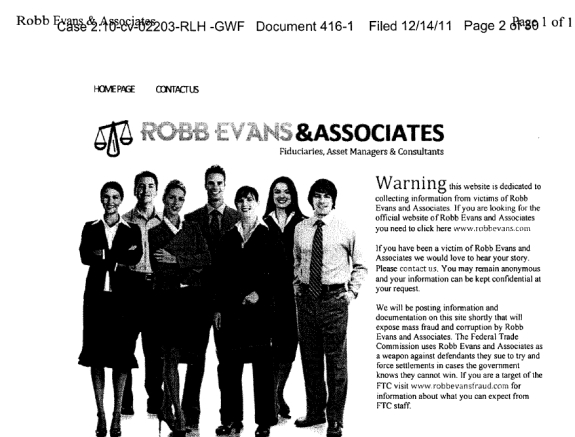
Screen shot from Dec. 14 evidence exhibit filed as part of an emergency motion in the Jeremy Johnson/IWorks fraud cause brought by the FTC. The site shown in the exhibit and described in the emergency motion by an attorney for the court-appointed receiver in the case is not the actual site of the receiver. Rather, it is an imposter site that uses the receiver’s name and is designed to intercept traffic and undermine the receivership estate, according to the emergency motion. The bogus site later was altered further and the words “Thieves,” “Lairs” (sic) and “Crooks” were placed near the top of the page, according to a separate evidence exhibit.
EDITOR’S NOTE: This story originally was published Dec. 22, 2011, 10:41 a.m. It was updated at 8:11 a.m. on Dec. 23, 2011. The PP Blog temporarily “unpublished” the story on March 23, 2012. Explanation of why it was taken offline temporarily is here. On March 23, 2012, the PP Blog’s security software recorded a “mass injection attack” as the Blog visited a domain styled CollotGuerard.com while researching matters pertaining to Jeremy Johnson. Collot Guerard is an attorney for the FTC and an alleged subject of harassment by Johnson or people close to Johnson because of the FTC actions against Johnson. The PPBlog is not revisiting the CollotGuerard.com domain and believes it is imprudent for readers to visit the domain.
Our Dec, 22, 2011, story is republished below. The republication date is Jan. 15, 2013 . . .
UPDATED 8:11 A.M. ET (DEC. 23, U.S.A.) Robb Evans, the court-appointed receiver in the Jeremy Johnson/IWorks Internet Marketing fraud case filed by the FTC a year ago, first came to national prominence as a liquidator in the Bank of Credit and Commerce International case in the 1990s. If the bank’s name alone doesn’t spark your memory, think of the acronym by which it was known: BCCI.
If you’re, say, over 40, images of BCCI and the spectacle it created perhaps are seared in your memory. The bank’s criminality and 1991 collapse created a scandal royale on both sides of the Atlantic and all over the world, including the Middle East. BCCI, the Wall Street Journal (Europe) wrote on Aug. 3, 2001 — a little more than a month before the 9/11 terrorist attacks — was a “renegade bank” that had relied on secrecy and had been designed to be “offshore everywhere” to evade regulatory scrutiny. The stunning collapse amid allegations of international money-laundering and a disguised takeover of U.S. banks initially put customers on the hook for $9 billion in losses.
BCCI, which allegedly conducted business with the terrorist Abu Nidal (died 2002) and the now-dead or imprisoned dictators of Iraq and Panama (Saddam Hussein [died 2006] and Manuel Noriega) — and also could not say no to the Medellin Cartel and Colombian narcotics traffickers — went on to become perhaps the most infamous acronym in the history of banking. Evans has testified before Congress on the subject of offshore banking, corruption and the war on terrorism. His bona fides and expertise in unraveling the affairs of companies implicated in complex fraud schemes are firmly established in the courts.
U.S. District Judge Joyce Hens Green of the District of Columbia once described Evans’ efforts as “remarkable.” In 1998, noting that she had presided over elements of the multibillion-dollar BCCI case for eight years and calling it the “longest-running forfeiture proceeding in the history of federal racketeering law,” the judge thanked Evans and others publicly for helping preserve $1.2 billion in U.S. assets for distribution to defrauded BCCI customers.
Evans is the namesake of Robb Evans & Associates LLC. What does the company do?
“What we do in my organization is we trace money, and we try and recover it for the victims of fraud, and we do it mostly on behalf of the United States Government,” Evans told the House Subcommittee on Oversight and Investigations in 2006.
Despite his bona fides — despite his record as a court-appointed receiver in numerous cases and his testimony before the U.S. Congress on critical matters of U.S. and international financial security — someone with a Google AdWords account and perhaps some knowledge about SEO planted the seed earlier this month that Evans was presiding over a fraudulent company, according to new federal court filings in the Johnson/IWorks case.
For a yet-to-be-determined period of time, the names of Evans and his company were pushed down in Google search results and replaced at the top of the rankings by a domain styled RobbEvansFraud.com — with a paid AdWords ad to the right of the No. 1 search result driving traffic to the faux Evans site, according to an evidence exhibit filed in federal court on Dec. 14.
The faux site planted the seed that Robb Evans & Associates consisted of “Thieves,” “Lairs” (sic) and “Crooks,” according to to an emergency motion filed by an attorney for Evans.
“Warning,” the first sentence on the faux site blared, “this website is dedicated to collecting information from victims of Robb Evans and Associates.”
In June, Johnson, 35, was arrested at the Phoenix airport at which federal agents allegedly found him in possession of $26,400 in cash and a one-way ticket to Costa Rica. He asserts his innocence to both the criminal and civil charges brought in the case. Johnson now is free on bond.
Stop The Madness
The FTC moved against Johnson, IWorks and other companies in December 2010, alleging an Internet-fueled fraud involving hundreds of millions of dollars. Evans was appointed receiver by a federal judge in Nevada, the venue from which the action was brought. The agency alleged that at least 51 shell companies were set up to dupe banks and to carry out the fraud, which resulted in “hundreds of thousands” of chargebacks and threats to consumers who filed chargebacks.
FBI Director Robert Mueller III warned Congress in March 2010 and again a month later about the dangers of shadowy banking practices, noting that that shell companies often play a role in disguising fraudulent proceeds.
“Money laundering allows criminals to infuse illegal money into the stream of commerce, thus manipulating financial institutions to facilitate the concealing of criminal proceeds; this provides the criminals with unwarranted economic power,” Mueller said.
IWorks operated out of an office at 249 E. Tabernacle St. in St. George, Utah. The street intersects with nearby South Main, home of the historic St. George Tabernacle. The Tabernacle opened in 1876. The city of St. George is famous for its geology, its climate and for its historic ties to Brigham Young and The Church of Jesus Christ of Latter-day Saints.
The city, unfortunately, also is becoming increasingly known as the town from which Johnson allegedly carried out a fraud involving hundreds of millions of dollars, in part by manipulating the banking system through dozens of shell companies in Nevada and other states.
In the emergency motion, an attorney for Evans now says that Johnson and perhaps others are seeking to interfere with the courts and the receivership estate by using the Internet to slime Evans, the FTC and Collot Guerard, an attorney for the FTC. The FTC has filed its own emergency motion.
Despite Hunt’s order, Johnson sued Evans in Utah state court. On Dec. 7, Hunt ordered the Utah state action brought by Johnson dismissed.
Johnson also asked Hunt to order the FTC to pay the legal fees of corporate defendants. The judge refused.
Of all the troubling developments, perhaps the most troubling is the allegation that Johnson and perhaps others have weaponized the Internet to interfere with the administration of justice. The site that attacks Guerard — a career civil servant — clams she has been “accused of fraud and corruption.” The site was created on Oct. 7, 2011, months after Hunt issued the preliminary injunction and order not to interfere. The site appears to operate from servers in Utah, with the registration hidden behind a proxy.
“[W]e are collecting information related to any wrongdoing on her part,” the site informs visitors.
The attack on Guerard is just the latest in a string of attacks or veiled threats against law enforcement. AdSurfDaily figure Kenneth Wayne Leaming, for example, is jailed near Seattle on federal charges he filed bogus liens against public officials in the ASD Ponzi case, including a federal judge, three federal prosecutors and a special agent of the U.S. Secret Service.
Vincent McCrudden, meanwhile, was arrested and jailed in January 2011 amid allegations he threatened to kill 47 regulators and government officials while using a website and emails to terrorize public servants. Just last week, federal prosecutors in Virginia said that Roger Charles Day Jr., who endangered the U.S. military and others in an offshore scam and was sentenced to 105 years in federal prison, had “filed hundreds of billions of dollars of fraudulent default judgments against more than 100 people who Day claimed had prosecuted him unfairly.”
The Day procurement scheme involved at least 18 companies, prosecutors said. When the scheme was exposed, Day simply “directed his conspirators to discontinue bidding through those companies and instead form and use new companies,” the Justice Department said.
In the new filings by the attorney for Evans in the FTC’s case against Johnson and IWorks, is is alleged that Johnson had a role in the posting of “false and scurrilous” material on the Internet in a bid to hamstring the administration of the receivership estate.
Among other things, one of the websites tied to Johnson “makes false allegations concerning ‘mass fraud and corruption by Robb Evans and Associates,’” according to the attorney’s emergency motion to disable the site.
Gmail addresses using the names of Evans and Guerard were created and were designed to “impersonate and/or interfere” with the receiver and others associated with the case, according to the emergency motion.
Johnson and others created other websites — including EvilFTC, FTCTactics and a site in Guerard’s name — to further undermine the legal process, according to the receiver’s emergency filing. Two other sites in the names of other FTC attorneys also were created, according to the receiver’s emergency motion.
Those sites, according to records, both were created on Dec. 1. Like the site in Guerard’s name, the servers appear to be based in Utah.
When the receiver’s attorney contacted Johnson to demand the site targeted at Evans be taken offline, Johnson claimed he did not own, host or control the site while insisting that “the domain has not been used for anything deceptive.”
“It is a constitutional right to be able to speak freely even if your client does not like it,” Johnson informed the receiver’s attorney in an email, according to an exhibit attached to the receiver’s emergency motion.
We’re midway through December and are facing the challenge of carving out a tolerable existence and the costs of keeping the PP Blog going into the new year. The cupboard is bare, and today we’re once again asking for your help.
Today began as do so many days: A quick look in our queue to see how relentless the spammers were overnight, followed by a quick look at our email for the purposes of pruning spam and finding the notes readers submit. The spammers have been particularly relentless lately. The Blog received 13,167 spams in November alone. It has received 8,787 so far this month, a pace that promises to top the November standard.
Sifting through the mess creates an additional maintenance chore during these lean times. The situation places a demand on labor and time. There are very few short days at the PP Blog.
It has struck me recently how bizarre certain fraud cases continue to be; it’s as though there is no ceiling to the absurdity and that no human being is off-limits. In Illinois, for example, a man scammed a woman — now 85 — who survived a Nazi labor camp.
At the moment, this question cannot be answered: How low will they go.
Longtime readers probably have noticed we’ve also been covering more and more stories involving purported “sovereign citizens.” Navigating that thicket is important because it shows Ponzi and fraud madness sometimes are symptoms of a larger madness. In any event, the universe that emerges is one in which the adjectives contradict the nouns. It is worrisome because the crimes are borderless, which is to say the madness can spread electronically from state to state and even country to country.
EDITOR’S NOTE: Any number of ventures have tied themselves to claims of remarkable returns made possible by purchasing “advertising” products and services or agreeing to watch or receive “advertisements” in a closed environment. Longtime readers will recall that AdViewGlobal (AVG) came out of the gate in late 2008 and early 2009 by claiming what it did was the equivalent of what the NBC television network does. The claim was pure hogwash.
Here is a story about more pure hogwash involving a purported “advertising” opportunity . . .
An investment scheme involving claims about outsized returns from a purported “advertising” business gathered $6.2 million and has resulted in the guilty plea of its operator, federal prosecutors in Maryland said.
Edward J. Lawson, 67, of Silver Spring, Md., pleaded guilty last week to wire fraud after an investigation by the FBI and IRS uncovered evidence that Lawson was running a scam through companies known as Automated Revenue Creation LLC and Guaranteed Results Advertising LLC (GRA), prosecutors said.
Lawson and the firms purported to be in the business of beaming “Narrow Cast television commercials” to LCD television monitors at gas stations and convenience stores. The scheme operated at least between May 2006 and September 2008, prosecutors said.
“Edward J. Lawson’s promises of ‘automatic revenue’ and ‘guaranteed results’ were entirely fraudulent,” said U.S. Attorney Rod J. Rosenstein of the District of Maryland.
“In financial fraud schemes the promoter eventually runs out of other people’s money and the scheme collapses like a house of cards,” added Jeannine Hammett, acting special agent in charge of the IRS Criminal Investigations Unit in Washington, D.C.
Lawson positioned himself as an entrepreneur with 30 years’ experience, encouraged GRA investors to roll over their purported earnings amid assertions the screens were generating “so much revenue” and explained checks had bounced “due to conditions beyond [his] control,” prosecutors said.
At least 60 investors plowed money into the scheme, initially lured by claims that a screen purchased for $15,800 would lead to “a monthly return over a 10 year period that began at $3,000 and escalated to approximately $30,000 after 15 months,” prosecutors said.
As the scheme advanced, the price of the screens kept going up and the purported returns they’d fetch kept changing, prosecutors said.
“Later in the scheme,” prosecutors said, “an investor who purchased a screen for $23,800 was guaranteed a monthly return of $3,000 and escalated to approximately $15,000 after 12 months. In GRA’s final phase, an investor who purchased a screen for $89,800 was guaranteed a monthly return of $13,950 over a five or 10 year period.”
Lawson pitched the scheme from metro Washington hotels and at GRA’s office in Rockville, Md., prosecutors said.
U.S. District Judge Roger W. Titus scheduled sentencing for April 6 , 2012.
Various investment schemes involving “advertising” have been on the radar screens of federal investigators.
Andy Bowdoin, 77, the president of Florida-based AdSurfDaily, was arrested by the U.S. Secret Service a year ago this month and is awaiting trial. Prosecutors said Bowdoin positioned himself as a successful entrepreneur and was at the helm of an “autosurf” advertising fraud that had gathered at least $110 million by operating as a Ponzi scheme and dangling suggestions of huge returns.
ASD and AVG had promoters and members in common, according to online promos. Among the bizarre claims associated with AVG was that members who advertised in AVG’s closed system with about 20,000 members would achieve a conversion rate of 37 percent of their sales copy didn’t “totally suck.”
Based on the claim, a member who advertised a doughnut for free and a doughnut priced at $10,000 each would achieve the same conversion rate of 37 percent, an utterly preposterous assertion.
The rate would be achieved within the same closed universe of prospects, according to the claim.
UPDATE: On Dec. 1, 2010, AdSurfDaily President Andy Bowdoin was arrested on charges of wire fraud, securities fraud and selling unregistered securities. Sixteen days later — on Dec. 17, 2010 — federal prosecutors filed a forfeiture complaint against certain ASD-related bank accounts, including an account in Bowdoin’s name and accounts allegedly controlled by ASD members Erma Seabaugh of Missouri and Robyn Lynne Stevenson of Florida.
In the December 2010 forfeiture case, Bowdoin filed a claim for nearly $500,000 in assets he allegedly controlled. But Seabaugh and Stevenson did not, and federal prosecutors in the District of Columbia filed motions for default judgments in August 2011, according to court records.
The motions for default against more than $153,000 allegedly controlled by Seabaugh and more than $96,000 allegedly controlled by Stevenson are pending.
Seabaugh, Florida-based ASD’s purported “Web Room Lady,” is listed in Oregon records as the operator of a purported Missouri-based “religious” nonprofit firm known as Carpe Diem.
Stevenson operated a company known as Robyn Lynn LLC, according to court filings.
Bowdoin, 77, is free on bail. His criminal trial is scheduled for September 2012.
Separately, ASD figure and purported “sovereign citizen” Kenneth Wayne Leaming remains jailed near Seattle. The FBI accused him last month of filing false liens against five public officials involved in the ASD case, including U.S. District Judge Rosemary Collyer.
Collyer is presiding over the forfeiture case against money in the bank accounts allegedly controlled by Seabaugh and Stevenson. Collyer also is presiding over Bowdoin’s criminal trial and two related forfeiture cases involving ASD assets. Those cases were filed in August 2008 and December 2008.
The portion of the December 2010 forfeiture case involving assets allegedly controlled by Bowdoin has been placed on hold because of the criminal trial, but the cases against the assets allegedly controlled by Seabaugh and Stevenson are active.
Prosecutors have scored a clean sweep in ASD forfeiture-related litigation, with Bowdoin losing appeals to funds seized in the August 2008 and December 2008 cases. The U.S. Secret Service brought all of the ASD-related forfeiture cases.
The December 2010 case involving Bowdoin, Seabaugh and Stevenson traces its roots to February 2009, when Bowdoin — who’d initially submitted to the August 2008 forfeiture a month earlier — sought to undo his forfeiture decision and reenter the case as a pro se litigant. The AdViewGlobal (AVG) autosurf, which came to life after the August 2008 and December 2009 forfeiture cases were filed and after Bowdoin was sued by members amid allegations he had engaged in racketeering, was morphing into a so-called “private association” as Bowdoin was morphing into a pro se litigant, according to records.
AVG, which members said had close ASD ties, purportedly operated from Uruguay. Members positioned it as an offshore, safe alternative to the post-seizure ASD, but AVG appears to have gone belly-up in June 2009, less than a year after the first sound of seizures began in the ASD case.
NWITimes.com is reporting that Christopher H. Cannon, a purported “sovereign citizen,” has been found guilty in federal court in the Northern District of Indiana of using counterfeit currency to pay for big-screen TVs.
The TVs were purchased at Sears, according to the NWITimes report.
On Nov. 4, the IndyChannel.com reported that a purported Indiana “sovereign citizen” who described himself as a “free man” was found to be driving an unregistered motorcycle and in possession of an identification card that purported he was a diplomat.
“Sovereign citizens” in Indiana and other states have been known to assert diplomatic immunity from prosecution.
In federal court in Washington state yesterday, purported “sovereign citizen” Kenneth Wayne Leaming was denied bail on charges he filed bogus liens against federal officials involved in the AdSurfDaily Ponzi case in the District of Columbia.
Meanwhile, Bob Paudert, the retired police chief of West Memphis, Ark., gave a training speech at the Wiregrass Law Enforcement Seminar in Alabama yesterday on the “sovereign citizen” movement, the Dothan Eagle is reporting.
Paudert’s son, a police officer, was killed last year during a traffic stop involving a “sovereign citizen.” Another officer died in the same hail of gunfire.
Ret. Chief Paudert is featured in this video by the “60 Minutes” program produced by CBS News.
BULLETIN: Purported “sovereign citizen” and AdSurfDaily figure Kenneth Wayne Leaming will remain jailed after a judge at a bail hearing today found that Leaming was a flight risk and a danger to the community, the office of U.S. Attorney Jenny A. Durkan of the Western District of Washington said this evening.
Leaming, 55, of Spanaway, Wash., was arrested last month on charges of filing false liens against public officials involved in the ASD Ponzi scheme case in the District of Columbia. The liens allegedly were filed in Pierce County in Washington state.
In advance of today’s 3 p.m. PT hearing, Leaming argued in court filings that he should be freed pending trial. U.S. Magistrate Judge J. Richard Creatura disagreed at today’s hearing, which was held in Tacoma.
Leaming has been detained at the Sea Tac Federal Detention Center near Seattle since his Nov. 22 arrest. Prosecutors said last week that firearms were found at the Leaming arrest scene.
At a proceeding last month, Creatura preliminarily found that Leaming had no adequate residence and that “no condition or combination of conditions which defendant can meet will reasonably assure the appearance of the defendant as required and/or the safety of any other person and the community.”
Creatura specifically found at the first proceeding that Leaming’s history included a “failure to comply with Court orders and terms of supervision” in a previous case in which he was charged with piloting an airplane without a license.
On one of the occasions in which he violated his probation in the aircraft-piloting case, Leaming claimed he had “diplomatic status or immunity.” On another occasion, he filed a “vexatious lawsuit lien or retaliatory complaint,” according to the FBI.
Records show that Leaming tried to overturn his conviction in the aircraft-piloting case by making the strange assertion that the court hearing the case was a “BANK.”
URGENT >> BULLETIN >> MOVING: Matthew J. Gagnon, an alleged online pitchman for the Legisi HYIP Ponzi scheme, has been named in a criminal complaint filed by the U.S. Secret Service.
Gagnon, 42, of Portland Ore., and Weslaco, Texas, was accused civilly by the SEC in 2010 of being “a danger to the investing public,” amid allegations he promoted multiple fraud schemes — including Legisi — on his Mazu.com website.
He is accused in a Secret Service affidavit filed Nov. 28 in the Eastern District of Michigan of not disclosing $1.7 million in payments from Legisi while he was touting it to “the investing public” between January 2006 and May 2007.
Legisi, the Secret Service said in the affidavit, was a “massive Ponzi scheme” that gathered about $72 million from more than 3,000 investors before the fraud was exposed.
Among the allegations against Gagnon is that he promoted Legisi’s unregistered offering as exempt from registration requirements and “literally the greatest” program he had “ever seen. ” (The complaint includes several specific allegations about how Gagnon promoted Legisi. One promo attributed to Gagnon by the Secret Service shows that Gagnon used six exclamation points in a single paragraph consisting of about 66 words.)
Like Florida-based AdSurfDaily, Legisi has been linked to E-Bullion, the shuttered California payment processor operated by James Fayed. Fayed, 48, was formally sentenced to the death penalty last month for arranging the brutal contract slaying of Pamela Fayed, his estranged wife and a potential witness against him before she was slashed 13 times in a greater Los Angeles parking garage in July 2008.
Legisi also was promoted on Ponzi boards such as TalkGold and MoneyMakerGroup. The Legisi Terms of Service, according to federal court filings, included language that made members avow they were not an “informant, nor associated with any informant” of the IRS, FBI, CIA and the SEC, among others.
UPDATE:Andrew Isaac Chance, the Maryland man accused last year of filing a false lien against a federal prosecutor, has been convicted. Sentencing by U.S. District Judge Alexander Williams Jr. is set for Feb. 15, the Justice Department announced in a news release last month.
Chance, a recidivist who filed the lien while on probation for his 2007 conviction for making a false claim for in income-tax refund in 2005, targeted the prosecutor “[s]hortly after” Chance was released from prison in the tax case.
Federal prison records say Chance is 65.
The lien came in the firm of a UCC financing statement that claimed the prosecutor owed him $1.313 billion, the Justice Department said.
Chance was charged in December 2010 with violating 18 U.S.C. § 1521: Retaliating against a Federal judge or Federal law enforcement officer by false claim or slander of title.
AdSurfDaily figure Kenneth Wayne Leaming was charged by the FBI last month with violating the same statute, amid allegations he filed false liens against at least five public officials involved in the ASD Ponzi case. Leaming, 55, of Spanaway, Wash., is jailed at a federal detention center near Seattle.
In December 2010, Chance also was charged with filing three false claims that sought $900,000 in income-tax refunds. He was convicted last month on those counts, as well, prosecutors said.
“This verdict is a clear message that filing false retaliatory liens against federal officials, including federal prosecutors who are simply doing their jobs, is illegal and will be punished,” said Deputy Assistant Attorney General Ronald A. Cimino of the Justice Department’s Tax Division.
Prosecutors said Chance faces a maximum term of 25 years in federal prison and a fine of up to $ 1 million. He admitted filing the bogus lien against the federal prosecutor, explaining that the prosecutor had “done him wrong,” the Justice Department said.
Chance, though, did not limit his lien escapades to the federal prosecutor, the Justice Department said.
“The evidence showed that Chance filed a similar lien against a Maryland state prosecutor for her role in prosecuting him for crimes relating to his attempts to cash the fraudulently obtained U.S. Treasury check for the 2005 tax return,” the Justice Department said.
 EDITOR’S NOTE: If you’re keeping a Bubba Blue notebook on how to have a Ponzi scheme as opposed to shrimp, here is an entry: an alleged “merchant portfolio” Ponzi scheme.