 MLM pitchmen and AdSurfDaily figures Todd Disner and Dwight Owen Schweitzer — both of whom went on to become promoters of the alleged Zeek Rewards Ponzi scheme — have accused a federal judge of “sophistry.”
Sophistry, according to Dictionary.com, means “a subtle, tricky, superficially plausible, but generally fallacious method of reasoning.”
Disner turned to MLM after his days as a founder of the Quiznos sandwhich franchise. Schweitzer is a former attorney whose license was suspended in Connecticut. Both men live in southern Florida.
The curious assertion by Disner and Schweitzer against U.S. District Judge Rosemary Collyer appeared on Collyer’s court docket in the District of Columbia on Sept. 17, one month to the day after the SEC alleged in the western District of North Carolina that the Zeek Rewards MLM “program” was a $600 million Ponzi scheme and pyramid fraud that potentially had affected more than 1 million people.
Senior U.S. District Judge Graham C. Mullen of the western District of North Carolina is presiding over the Zeek case. Kenneth D. Bell is the court-appointed receiver.
Zeek and ASD are known to have members in common.
The ASD Ponzi scheme, which collapsed in 2008, affected at least 97,000 people and created at least 9,000 victims, federal prosecutors said.
Disner and Schweitzer also were pitchmen for ASD, which federal prosecutors in the District of Columbia have described as a $119 million Ponzi scheme marketed MLM-style. The ASD duo sued the United States in November 2011, claiming their records in ASD’s database were private and thus unlawfully seized and accusing federal prosecutors and a U.S. Secret Service agent of presenting a “tissue of lies” when bringing the civil- forfeiture case against $65.8 million in the bank accounts of ASD President Andy Bowdoin in August 2008.
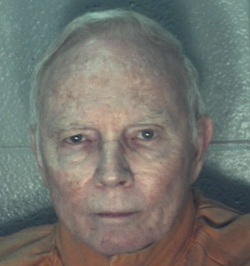
On Aug. 29, Collyer sentenced Bowdoin to 78 months in federal prison. Bowdoin, 77, pleaded guilty to wire fraud in May 2012, admitting in a statement of offense that ASD was a Ponzi scheme and that his business never operated lawfully from its inception in 2006.
Collyer dismissed the Disner/Schweitzer complaint on the same day she sentenced Bowdoin.
But Disner and Schweitzer now claim Bowdoin’s admission “was a necessary part of his plea bargain” with the government. They further assert that Bowdoin’s admission was the “coerced confession of an 80 year old man.”
In court filings in May, however, Bowdoin said this:
“I have read this Plea Agreement and discussed it with my attorneys, Michael McDonnell, Esq. and Charles Murray, Esq. I fully understand this Plea Agreement and agree to it without reservation. I do this voluntarily and of my own free will, intending to be legally bound. No threats have been made against me nor am I under the influence of anything that could impede my ability to understand this Plea Agreement fully. I am pleading guilty because I am in fact guilty of the offense(s) identified in this Plea Agreement.” (Italics/bolding added by PP Blog.)
In the filing docketed Sept. 17, Disner and Schweitzer claim the Secret Service “manufactured” events to ensure that the ASD case was heard by Collyer. Earlier, Disner and Schweitzer advanced a theory that undercover agents who joined ASD in 2008 had a duty to identify themselves to ASD management.
Even after Bowdoin pleaded guilty in May, Disner and Schweitzer contended that the government’s case was a “house of cards,” according to court filings.
Disner and Schweitzer now have asked for their lawsuit to be reopened and to have Collyer removed from the case. In ASD-related litigation, Collyer has ordered the forfeiture of more than $80 million.
The bid by Disner and Schweitzer to have Collyer removed from ASD-related litigation is at least the third. In 2009, purported “sovereign” being Curtis Richmond unsuccessfully sought to have Collyer removed. So did Bowdoin.
Disner is now involved with purported Zeek Rewards consultant Robert Craddock in an effort to raise money to challenge either the SEC or the court-appointed receiver in the Zeek case.
Among the early theories advanced by Craddock was that Mullen — the judge in the Zeek case — was playing politics by appointing Bell’s firm as the receiver to enable the firm to gorge itself on fees.
Both ASD and Zeek were accused of selling unregistered securities as investment contracts. The U.S. Secret Service brought the ASD case, with the SEC bringing the Zeek case.
The Secret Service confirmed on Aug. 17 that it also was investigating Zeek. The SEC said that, since January 2011, Zeek had “raised more than $600 million from approximately 1 million investors nationwide and overseas by making unregistered offers and sales of
securities through the ZeekRewards website in the form of Premium Subscriptions
and VIP Bids.”
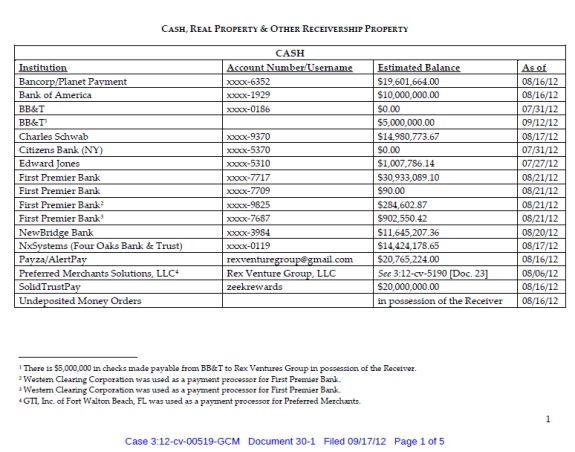
Zeek was an arm of North Carolina-based Rex Venture Group LLC and was operated by Paul R. Burks, the SEC said.
In their filing accusing Collyer of sophistry, Disner and Schweitzer appear to suggest that Collyer needs a lesson in MLM from purported MLM expert Keith Laggos and MLM attorney Gerald Nehra.
Laggos, an SEC defendant in a 2004 case that alleged he issued laudatory press releases without disclosing he was being compensated, is listed in court records as a Zeek consultant. Laggos settled the 2004 SEC case without admitting or denying liability but agreeing to pay more than $30,000, including a $19,500 civil penalty.
Laggos once opined that ASD was not a Ponzi scheme. Nehra also opined that ASD was not a Ponzi scheme. Richard W. Waak, Nehra’s law partner, is listed in court filings by Zeek as an attorney for the firm.
Read the Disner/Schweitzer motion to remove Collyer.