(UPDATED 10:13 A.M. EDT APRIL 30 U.S.A.) Back in October 2012, two California members of the collapsed Zeek Rewards MLM “program” filed a self-written pleading with the federal judge presiding over the Zeek Ponzi- and pyramid case in North Carolina.
Just two months earlier — in August 2012 — the U.S. Securities and Exchange Commission had filed an emergency complaint against Zeek to halt its operations. At the time, the SEC described Zeek as a scam that had gathered about $600 million. Over time, the number swelled to about $850 million.
One of the core allegations in the Zeek case was that Zeek’s “advertising” component in which members spammed ads all over the Internet was a sham to help mask Zeek’s massive fraud scheme and the sale of unregistered securities. The 2008 AdSurfDaily Ponzi scheme ($119 million) had a similar “advertising” component and a daily payout rate somewhat on par with Zeek, which duped members into believing they’d receive an average return of about 1.5 percent a day.
The California Zeek members advised Senior U.S. District Judge Graham C. Mullen that Zeek had left them “on the verge of financial devastation.”
They were lured into the scheme based on suggestions it was legal and that members were accumulating wealth, according to the pleading. And the former Zeek members claimed that Zeek pitchman Tom More had acquired “over a million VIP points.”
In March 2014, Zeek receiver Kenneth D. Bell sued alleged Zeek winners and insiders based in the United States, alleging their gains had come from Zeek victims. The complaint against the named winners includes “a Defendant Class of Net Winners” who effectively are being sued in a prospective class action.
Listed as one of the thousands of “Net Winners Who Received $1,000.00 or More” from Zeek was Thomas A. More of Newport Beach, Calif.
In July 2013, Newport Beach became a staging ground for the alleged TelexFree Ponzi- and pyramid scheme, which the Massachusetts Securities Division (MSD) alleged had gathered more than $1.2 billion and told members they were getting paid for posting ads on the Internet. MSD filed an action against TelexFree two weeks ago today. So did the SEC.
When the SEC went to federal court in Massachusetts on April 15 to file a Zeek-like emergency complaint against TelexFree, the agency pointed to the Newport Beach TelexFree rah-rah session. There is a video of the event titled “TelexFree Corporate Speakers at Newport Beach Extravanganza.”
The video includes “comments” by TelexFree co-owners or executives James Merrill, Carlos Wanzeler and Steve Labriola, according to the SEC complaint.
One of Merrill’s comments, according to the video, was to thank “Tom” for putting together the “fabulous” July 2013 Newport Beach event, which occurred about a month after a court in Brazil froze TelexFree-related assets in that country and imposed a registration ban.
Among Merrill’s other comments, according to the video, was that “large corporations” for which he once provided services “squeeze you . . . until there’s nothing left.”
“They squeeze the employees until there’s nothing left,” Merrill said. “They use you up.”
Although the precise context of a follow-up remark by Merrill was unclear, the Zeek executive suggested that the government of Colombia “feared” network marketers and the “freedom” they represented.
Merrill next set his sights on the U.S. government.
Indeed, he went on to quiz an audience member (“Jay”) about whether Jay could “help the U.S. government with their credit, ’cause I don’t think anybody else . . .” Merrill’s remark appears to be related to a credit-repair service TelexFree had in the offing before it filed for bankruptcy April 13 in Nevada..
“No, he doesn’t want their business,” Merrill said at the Newport Beach “extravaganza,” answering his own question months ahead of the bankruptcy filing. He then suggested that the U.S. government, like the Colombian government, “feared” TelexFree and members of its MLM.
He added, “Those corporations fear your success because they can no longer squeeze you, they can no longer squeeze your wallet.”
JSS/JBP offered a return (precompounding) of 730 percent a year — more than Zeek, more than AdSurfDaily, more than TelexFree. In TelexFree, members said, $289 returned $1,040 in a year, $1,375 returned $5,200 and $15,125 returned $57,200.
Regulators have been warning for years that HYIPs switch forms and put on new disguises. The core scam, however, remains largely the same: claims that average people will become rich by posting ads or clicking on them or by doing nothing at all because visionary business leaders are running the “program.”
The Internet has opened the door to all sorts of viral scams, but electronic virality is not the only concern. Hotel conventions for MLM HYIPs are held in city after city. Madrid, Boston, Newport Beach and other cities were on the TelexFree tour. Certain pitchmen were taped in individual cameos.
TelexFree California organizer Tom More, late of Zeek, had such a cameo.
Here is part of what he said: “Bust and move on this now. Run, don’t walk. Get started today.”
TelexFree appears to have supplanted Zeek as the largest HYIP scam in U.S. history. It likely is the largest in world history.
(3nd Update 9:16 A.M. EDT, May 11, 2014 U.S.A.) When contacted by the U.S. Securities and Exchange Commission April 17 by phone, alleged TelexFree promoter and securities swindler Faith Sloan shot back, “Why are you picking on me? There are bigger promoters than me.”
The assertion is contained in new SEC filings dated yesterday in the agency’s Ponzi- and pyramid case against TelexFree, which filed for bankruptcy protection April 13 and was sued by state and federal regulators on April 15.
Sloan, whom the SEC says is 51 and lives in Chicago, is a former promoter of the Zeek Rewards “program” (1.5 percent a day, not including “compounding”), and Profitable Sunrise (up to 2.7 percent a day, not including “compounding”). She also promoted the collapsed Noobing HYIP scheme that became popular after the collapse of the AdSurfDaily HYIP Ponzi scheme (1 percent a day) in 2008.
In 2012, the SEC shut down Zeek, alleging a combined Ponzi- and pyramid scheme that had collected hundreds of millions of dollars and potentially had affected hundreds of thousands of people. In 2013, the SEC filed charges against Profitable Sunrise, effectively alleging it was being operated by a ghost from a “mail drop” in England and had used a pyramid scheme to defraud thousands of people potentially out of tens of millions of dollars. Money allegedly was diverted on a cross-continental basis, with investors left holding the bag.
The Federal Trade Commission (FTC) effectively shut down Noobing in 2009, after alleging a related firm under an umbrella company had orchestrated a government-grants swindle. Noobing in part was targeted at people with hearing impairments. The enterprise was based in Kansas, and had an offshoot in Nevis. [May 11, 2014, edit.]
Like TelexFree and other schemes, Noobing had a strong presence on YouTube. The SEC says in court filings that it has watched lots of TelexFree promos on YouTube.
Any number of HYIP fraud-scheme promoters wrongly have believed that no individual liability can attach as a result of their participation in such schemes. The TelexFree case — like the Legisi HYIP case before it — demonstrates the falsity of the belief. Legisi promoter Matthew John Gagnon first was sued by the SEC. He later was charged criminally by the U.S. Secret Service and federal prosecutors in Michigan.
Like the AdSurfDaily HYIP Ponzi case, the Legisi case was initiated in 2008 and began with an undercover probe in which government agents interacted with participants and kept notes of the contacts. Gagnon, who had a secret deal with Legisi’s operator to promote the scheme, was sentenced to five years in federal prison. Legisi operator Gregory McKnight was sentenced to 15 years.
It is known that there is a parallel criminal investigation into the activities of TelexFree. The mechanics of that probe and whether it dovetailed with state and federal civil investigations into TelexFree are unclear.
What is clear is that Sloan was not pleased when an SEC investigator informed her by phone on April 17 that she’d been charged with fraud, according to court filings by the SEC.
Sloan first wanted to know if the investigator was state [Massachusetts Securities Division] or federal [SEC]. When the investigator informed Sloan he was with the SEC, she responded that the agency was “picking on” her and implied it should go after bigger fish.
Eight TelexFree managers or promoters (including Sloan) have been sued, according to SEC filings.
“Sloan then asked where she could find the complaint,” the SEC investigator asserted in an affidavit. “I walked her through the SEC website and to the location of the press release and the complaint.”
Sloan then said, “I need to speak to my lawyers,” according to the affidavit.
The SEC investigator then asked Sloan if she had counsel. “Sloan did not respond” to the question, according to the affidavit.
Whether TelexFree will provide Sloan a lawyer is unclear. Any number of accused fraud promoters over the years have been left in the lurch by “management” or “corporate” when “programs” have been sued.
The SEC investigator asked Sloan for her home and email addresses, according to the affidavit. Sloan refused to provide them.
“You just sued me,” she responded, according to the affidavit. “You must know everything about me so you can figure it out.”
It remained unclear this morning whether Sloan had hired counsel or responded to the complaint, which charged her with securities fraud and selling unregistered securities.
But in the HYIP sphere, the small fish are what create the bigger fish — and “small” appears no longer to provide much cover in HYIP-related prosecutions and lawsuits.
Kenneth D. Bell, the court-appointed receiver in the Zeek case, has filed lawsuits against thousands of Zeek winners. The lawsuits are in the form of a class-action, with the threshold for being sued set at only $1,000, according to court filings.
From PonziTracker’s April 18 story (italics added):
. . . a casual read of the Motion makes clear that the company accused by regulators of being an “egregious” pyramid scheme seeks now to use the Bankruptcy Court’s power to eliminate the obligation to pay accrued compensation likely totaling hundreds of millions of dollars to “promoters” – under the theory that elimination of these obligations will allow the company to “ultimately prove successful and profitable.” Ironically, one of the chief concerns cited by TelexFree related to questions “raised as to whether the Original Comp Plan is compliant with law, which jeopardized the Debtors’ business.
On the same day, the PP Blog reported that TelexFree was the top story in Thursday’s infrastructure report by the Department of Homeland Security. Meanwhile, the Blog reported that TelexFree is calling the actions by Massachusetts and the SEC “precipitous and unnecessary.”
The Blog noted that some TelexFree members appear errantly to believe that the company already has been cleared of the Ponzi and pyramid charges. Uplines could be feeding them misinformation. Separately, BehindMLM.com reported that the federal judge in the SEC action has granted a Temporary Restraining Order against TelexFree.
As BehindMLM noted in its coverage, quoting the judge (italics added):
the Commission has shown that
1. It is reasonably likely to establish that TelexFree and the individual defendants James Merrill, Carlos Wanzeler, Steven Labriola, Joseph Craft, Sanderly Rodrigues de Vasconcelos, Santiago De La Rosa, Randy Crosby and Faith Sloan have directly or indirectly engaged in the violations alleged in the complaint . . .
At the moment, major civil litigation against TelexFree in the United States is occurring on at least two fronts. The number could rise, given that TelexFree allegedly operated in at least 20 U.S. states. And because the SEC has described a “search warrant” that was executed in Massachusetts, it is almost certain a criminal probe by at least two U.S. agencies is under way.
TelexFree also is under investigation in Brazil.
To hear some TelexFree members tell it, however, none of these things seem to matter or can be regarded as ordinary events.
At least two petition drives in support of TelexFree have started in recent hours. One of them asks a U.S. Bankruptcy Judge to “Bail out Telexfree.” Another appears not to petition a specific judicial officer. Rather, it appears to ask TelexFree members to support the firm’s bankruptcy filing because TelexFree “has meant a real opportunity to bring sustenance to each of our homes.”
Similar petitions popped up after the SEC alleged in 2012 that the Zeek Rewards “program” was a Ponzi- and pyramid scheme that had gathered $600 million. Further investigation now puts that number at between $845 and $897 million. In the interim, two Zeek insiders have been charged with federal crimes and the court-appointed receiver in the case is pursuing clawback claims from thousands of alleged Zeek winners.
In the 2008 AdSurfDaily MLM Ponzi-scheme case, petitions to support ASD also popped up. The Ponzi dollar figure in that case mushroomed from $53 million to $119 million over the course of the probe. Like Zeek, the ASD case started as a civil prosecution with a parallel criminal investigation. ASD President Andy Bowdoin has been in prison since mid-2012. He was sentenced to serve 78 months.
The Zeek and ASD proceeds combined total at least $969 million. If the $1.2 billion asserted in the Massachusetts complaint proves accurate, it means that TelexFree not only fetched more than Zeek and ASD combined, but also may end up holding the title of the largest MLM HYIP Ponzi- and pyramid scheme in history.
There is no doubt that Zeek and ASD members helped fuel the TelexFree machine.
(UPDATED 9:58 A.M. EDT U.S.A.) Agents from Homeland Security Investigations (HSI) have raided the TelexFree office in Marlborough, Mass., the MetroWest Daily News is reporting.
And the newspaper has published a photo showing federal agents and police officers inside the TelexFree office. The scene is similar to a scene at AdSurfDaily’s Florida headquarters in August 2008 in which the U.S. Secret Service and local sheriff’s deputies participated in a raid. ASD was a $119 million Ponzi scheme.
Here, in part, is how HSI describes itself (italics added):
HSI investigates immigration crime, human rights violations and human smuggling, smuggling of narcotics, weapons and other types of contraband, financial crimes, cybercrime and export enforcement issues. ICE special agents conduct investigations aimed at protecting critical infrastructure industries that are vulnerable to sabotage, attack or exploitation.
TelexFree’s website has been offline since yesterday.
The Massachusetts Securities Division alleged yesterday that TelexFree was a massive Ponzi and pyramid scheme that gathered more than $1 billion and targeted the Brazilian community.
UPDATED 4:50 P.M. EDT (U.S.A.) The TelexFree LLC branch of the TelexFree enterprise posted more than $691 million in “total income” last year, according to a filing with the Alabama Public Service Commission. (The PP Blog retrieved the filing today and saved it as TelexFreeAlabamaApplication.pdf. See link below.)
TelexFree asked that the document be “FILED UNDER SEAL.” Regardless, the document was published on Alabama’s website. The date-stamp reads March 20, 2014. Among other things, the document asserts that TelexFree LLC, a Nevada entity, was formed with three “initial” managers.
These include Brazil-based manager Carlos Costa (30 percent), Massachusetts-based manager Carlos N. Wanzeler (50 percent) and Massachusetts-based manager James M. Merrill (20 percent), according to the document.
TelexFree, a two-year-old MLM company, says it offers a VOIP telephony service and is expanding into services such as cell phones, apps, credit repair and financial advice.
Other filings in Alabama show that TelexFree requested a hearing scheduled April 10 to consider its application for “Resale Interexchange Authority” to be postponed “for a month” owing to unspecified “scheduling conflicts.” Alabama has reset the hearing for May 13.
A week ago TelexFree promoters jammed themselves into a small office in Massachusetts that is the base of another TelexFree enterprise — TelexFree Inc. The promoters claimed that recent changes to the TelexFree compensation plan eliminated or negated payments to them. Police responded to the office in Marlborough.
In its Alabama filings, TelexFree LLC asserted it incurred expenses last year of “[$]572,240,960.21” in a category dubbed “Agent Commission – paid through system.” It also incurred expenses of “[$]50,424,998.61” in a category dubbed “Agent Commission – paid through bank.” Other line-item expenses are listed in the document, which says the firm’s “net income” last year was more than $36.4 million.
The Alabama filing did not cover TelexFree LLC revenue and expenses year-to-date in 2014. Nor did it cover revenue and expenses for 2012 or revenue and expenses for related TelexFree enterprises. Some affiliates have said they believe TelexFree has gathered $1 billion or more since its inception in early 2012.
How much revenue TelexFree Inc. of Massachusetts has posted is unclear. In early 2013, affiliates said recruits could deposit money into a TelexFree Inc. bank account in the state. Those instructions closely resembled instructions given to members of the $119 million AdSurfDaily Ponzi scheme in 2008.
So-called “AdCentral” packages purchased for sums ranging from $289 to $1,375 might be (or might have been) TelexFree’s key revenue-generator. Affiliates have claimed that $289 sent to TelexFree returned $1,040 in a year and that $1,375 returned $5,200. On an annualized basis, the asserted returns equate to roughly 365 percent, fueling claims that TelexFree is a pyramid scheme, a Ponzi scheme — or both.
Under a scenario based on the assertions of TelexFree affiliates, BehindMLM.com estimates that TelexFree may have AdCentral-related liabilities of more than $4 billion. On March 24, the PP Blog reported that an ad offering 550 AdCentrals for $16,760 appeared online, leading to questions about whether some affiliates had created a black market for the AdCentrals and were trying to sell them in advance of a TelexFree payout suspension.
TelexFree is under investigation by the Massachusetts Securities Division. It’s also under investigation in Brazil, amid pyramid-scheme allegations. Among the concerns is that TelexFree’s VOIP telecommunications product is a front to mask an investment scheme. Certain TelexFree assets are frozen in Brazil.
In 2012, the SEC charged a “program” known as Zeek Rewards with operating a massive, international Ponzi- and pyramid scheme that had gathered more than $600 million in less than two years. TelexFree’s filings in Alabama assert that it gathered more than $691 million last year alone.
Filings by the SEC now suggest Zeek may have gathered $850 million or more. If claims by TelexFree affiliates that their “program” gathered more than $1 billion are true — and if TelexFree later is deemed a fraud scheme — it could surpass Zeek as the largest MLM HYIP Ponzi/pyramid scheme based on U.S. soil and reaching into other countries.
TelexFree has purported to have more than 1 million members in Brazil alone. There may be 50,000 or more TelexFree members in the United States.
The Alabama filing asserts that TelexFree LLC has a “parent company” known as “TelexFree Group Inc.” Where it is based is unclear. A provision of the TelexFree LLC “Operating Agreement” included in the Alabama application purports to permit TelexFree LLC “[t]o lend money upon terms acceptable to the Managers to any person or entity, and to enter into contracts and agreements which are not arms-length if they are consistent with the best interests of the Company.”
Based on filings in both Alabama and Washington state, TelexFree appears to have made loans totaling more than $6.6 million to other TelexFree enterprises. (See March 9, 2014, PP Blog story.)
Read the Alabama filing, parts of which appear to confuse Alabama with the state of South Carolina. (For example, the Alabama Public Service Commission is based in Montgomery, the state capital. TelexFree LLC’s Alabama application, however, appears to direct Alabama residents to contact the “Office of Regulatory Staff” in South Carolina’s capital of Columbia if a billing dispute arises.)
If there is a dispute, TelexFree LLC says, “the Customer may appeal to the Alabama Public Service Commission for its investigation at the following address and/or phone number:
“Office of Regulatory Staff
“Consumer Services Division
“1401 Main Street, Suite 900
Columbia, SC 29201”
In its role as a watchdog for consumers, the FTC has sued third-party companies and individuals who have published the logos of prominent news agencies and falsely traded on their trusted identities to sanitize a purported product or opportunity. (See screen shot of Evidence Exhibit from one FTC case below.)
In a new video promo announcing it somehow has gained 550,000 new American customers in less than a month during a probe into its business practices, TelexFree is publishing the logos of 18 prominent media firms, including logos of local-market affiliates of major American TV networks. In certain instances, the logos of the so-called “mother ships” — media parent firms or brand/content licensors of the local affiliates — appear in the TelexFree promo. This could prove to be an epic blunder.
The move by TelexFree occurs on heels of SEC allegations that a Ponzi/pyramid scam known as WCM777 traded on the names of famous brands outside of media.
On Feb. 28, the Massachusetts Securities Division confirmed it was investigating TelexFree. The agency earlier gave WCM777 the boot.
Hong Kong may be emerging as a hotbed of MLM fraud.
TelexFree goes to Hong Kong.
Does anyone in TelexFree’s MLM leadership have a clue — we mean, Freaking Clue One?
More . . .
__________________________________
UPDATED 10:51 A.M. EDT (U.S.A.) Be skeptical of “programs” that imply media ties or suggest media vetting or an endorsement by the media or a famous company in another discipline, including high finance. Brand-leeching “works,” which is why so many fraudulent companies adopt it as a strategy.
On the “we’ve-been-endorsed-by-the-media” fraud front, several instances of this have occurred. In both 2011 and 2012, the blood-sucking, $850 million Zeek Rewards Ponzi scheme pretended that puff pieces about it that appeared in Network Marketing Business Journal constituted real news. Zeek’s court-appointed receiver later auctioned off the puff pieces and the impressive-looking plaques to which they’d been attached.
Zeek and many of its affiliates preferred fantasy constructions. Put another way, they weren’t all that keen on paying attention to actual news occurring in the direct-sales sphere. In April 2011, for example, the Federal Trade Commission brought actions against several alleged scammers pushing acai weight-loss products and making deceptive claims. Among other things, the FTC alleged that the Internet-based hucksters created fake news sites and often used “the names and logos of major media outlets” such as “ABC, Fox News, CBS, CNN, USA Today, and Consumer Reports” to plant the seed the products had the backing of the brands and had been vetted approvingly by reporters.
As the PP Blog wrote in an Editor’s Note at the time (italics added): If this federal and state action doesn’t get the attention of the out-of-control, direct-sales crowd that divines itself the right to plant the seed that an “offer” is endorsed by famous companies and people, well, perhaps nothing will. Even as this story is being written, affiliates of Club Asteria, a purported “passive” investment company, are planting the seed that the firm is endorsed by Google, Yahoo, MSN and America Online. Club Asteria promoters also routinely trade on the name of the World Bank. Club Asteria is being pitched on forums populated by serial Ponzi scheme promoters.
Club Asteria, which had a presence on the Ponzi boards and purportedly had a satellite operation in Hong Kong, had roots in the cash-gifting fraud sphere and planted the seed it provided a return of at least 3 percent a week. It stopped making weekly interest payments to affiliate-investors before 2011 had come to a close.
Flash forward to April 2014, three years to the month after the FTC brought the acai fraud cases against direct-selling companies and individuals using the names and logos of famous media brands. Indeed, on April 5, a new pitch by the TelexFree MLM “program” began appearing in video form online.
And indeed it uses the logos of a whopping 18 media companies famous in local markets. And because some of those locally famous brands also incorporate the logos of their even more famous parent brands or licensors, TelexFree potentially could be risking the wrath of the upstream mother ships, too.
Like Club Asteria, TelexFree has an affiliate presence on the Ponzi boards. Also like Club Asteria, TelexFree has wildly enthusiastic pitchmen who claim the “program” provides preposterous, “passive” returns. (The TelexFree promo referenced in this report by the PP Blog first was noted by a TelexFree skeptic and reader of BehindMLM.com, a site that covers emerging MLM schemes.)
From YouTube. As TelexFree executive Steve Labriola narrates a video, the logos of prominent media companies roll in the background. Red highlight by PP Blog.
At approximately the 4:55 mark in the April 5 TelexFree video, the logos of local television stations — including affiliates of Fox, NBC, ABC and CBS — begin rolling on the screen. (The logo of the Las Vegas Review-Journal, the biggest newspaper in Nevada, also rolls on the screen.)
Says TelexFree executive Steve Labriola, while continuing to narrate the video after complaining about Bloggers who are negative on the company:
“But let me tell you what is out there that you haven’t quite seen yet: media that’s talking positive about us. There are articles. There are things out there that you’re gonna have in your back office that you can print, you can read, you can use as a tool within the next few days. These are all media articles that are talking great things about your company. So, we’re excited about that. We’re excited that you can be excited about that. It’s all good news. It’s all reprinted. And it’s all available for you.”
From an FTC evidence exhibit in a 2011 case that alleged pitchmen used the logos of media companies to sanitize an online fraud scheme. Red highlights by PP Blog.
What are these “media articles” to which Labriola refers while logos of local affiliates of the major broadcast networks and the logo of a major American newspaper roll in the background?
Well, unless the media firms published any other “great things” about TelexFree, they’re puff pieces TelexFree itself submitted via one or more PR wires. In instances we observed, several local broadcast affiliates of the major networks republished TelexFree-authored content — but not before slapping on a disclaimer. To see an example of the disclaimer we observed, visit the website of News9.com (KWTV-DT as a broadcast channel), a CBS affiliate in Oklahoma City. From the station’s website (italics added):
Information contained on this page is provided by an independent third-party content provider. WorldNow and this Station make no warranties or representations in connection therewith. If you have any questions or comments about this page please contact [deleted by PP Blog]
SOURCE TelexFREE
You’ll see the same disclaimer at KTEN.com, the website of an NBC affiliate in Denison, Texas, that covers parts of Oklahoma. (KTEN’s logo, which incorporates NBC’s famous “peacock,” is the first to roll in the TelexFree promo.)
In yet another example, a disclaimer appears at the website of KTRE, an ABC affiliate in Pollok, Texas. Other channels or newspapers that might have published TelexFree’s PR talking points also likely added disclaimers or attributions to TelexFree, so readers would make a distinction between actual news content and verbatim PR puff.
Labriola doesn’t mention the disclaimers as famous logos roll in the background. The audience easily could conclude that each of the news outlets whose logos are reproduced had published objective reports about TelexFree and championed the company.
With all things possible in the HYIP sphere, we’re wondering if TelexFree affiliates soon will start whipping those republished PR releases into endorsements of TelexFree by major media firms locally and nationally. After all, some TelexFree affiliates have planted the seed the “program” is endorsed by the SEC and is backed by President Obama.
Earlier in the video, Labriola claimed, “Since March 9, since our compensation plan has changed, we have 550,000 new customers in [the] U.S.A. alone. And remember, we’re a global business.”
Whether those talking points later will end up in videos or print material that displays the logos of well-known media companies is, for now, unknown. The stage nevertheless has been set for disingenuous MLM constructions of all sorts, including hypothetical (as of now) constructions such as this one: “according to [Famous Media Company A], TelexFree is in a stunning growth phase that has seen more than 550,000 new American small-business customers enlist since March 9 alone. Because TelexFree is a worldwide phenomenon, tens of millions of customers are destined soon to be in the fold.”
And what about proof? Well, just wrap the logo of a famous media brand around the claim.
This won’t go well if this is TelexFree’s new media strategy.
Branding concerns aside, the practical reality remains that how TelexFree is defining “customers,” like Zeek before it, is far from clear. Beyond that, current TelexFree affiliates are complaining publicly about not getting paid after the company changed its compensation system.
Hong Kong
In the video promo with the media logos, Labriola goes on to note that “I just came back from a Hong Kong trip.” Whether that trip had anything to do with an asserted March 26 TelexFree “conference” in Hong Kong wasn’t explained.
Hong Kong may be emerging as a hotbed of MLM HYIP fraud. For instance, it is a venue in which Club Asteria claimed a presence and also a venue in which a “program” known as “Better-Living Global Marketing” purportedly conducts business. (See reference and related links here.)
In addition, Hong Kong is referenced in the SEC’s Ponzi- and pyramid case last month against WCM777, an alleged $65 million fraud scheme. Hong Kong also is referenced in the SEC’s fraud complaint last month against an entity known as “Mutual Wealth.”
In October 2013, the SEC alleged that enterprises known as CKB and CKB168 were “at the center” of a worldwide pyramid scheme that allegedly featured a purported office in Hong Kong and operations in Canada, the British Virgin Islands and the United States.
TelexFree, alleged in Brazil to be a pyramid scheme, is under investigation by the Massachusetts Securities Division. Some affiliates are deeply concerned about changes in the TelexFree compensation scheme that appear to have dried up or negated payments to them. These affiliates packed themselves like sardines into the “program’s” office in Greater Boston last week. Police were called to the scene.
Just four days after TelexFree affiliates jammed the TelexFree office, the Labriola video with rolling media logos, claims of hundreds of thousands of new customers and the reference to Hong Kong appeared on YouTube. Whether TelexFree has opened new can of worms remains to be seen.
What’s been clear for months is that TelexFree has no cohesive message and throws just about anything against the wall, including rants at prosecutors by a Brazil-based executive while investigations in that country are under way.
A maxim sometimes attributed to Mark Twain and often cited by PR companies and politicians goes like this: “Don’t pick fights with people who buy ink by the barrel.”
To that, we’ll add that it’s also not prudent to tempt fate with media companies that buy bandwidth by the terabyte and employ note-taking reporters and editors and videographers who take spectacularly detailed footage.
This Blog has grave doubts that any of the media firms whose logos appear in the TelexFree promo will be pleased. Their own names could be sullied. If those logos start appearing on marketing materials and plaques, well, hang on to them. They could become the same type of souvenirs the Zeek receiver sold to raise money for victims.
One of the issues in the SEC’s case against WCM777, of course, was the alleged republication of famous logos (nonmedia) and the namedropping of famous companies (nonmedia) to sanitize the alleged WCM777 fraud scheme.
Is any famous company, be it nonmedia or media, safe from MLM hucksters on the Internet? The answer is probably no, given that the vultures apparently think nothing of swiping the brands of government agencies and even of the President of the United States to advance their schemes.
Why TelexFree has ventured down the minefield-laden path of publishing logos of locally or nationally famous brands is truly baffling, especially given the nature of the allegations in the WCM777 case and the fact TelexFree itself already is under investigation.
This circumstance reminded us not only of the Zeek debacle and the SEC’s WCM777 case and the FTC’s acai-berry cases, but also of efforts by the AdViewGlobal Ponzi schemers in 2009 to use an in-house puff piece distributed on PR wires to plant the seed the 1-percent-a-day “program” was endorsed by Forbes magazine, the Washington Business Journal and The Business Review.
Prior to the filing of the SEC’s fraud complaint against WCM777, some apparent cheerleaders for the firm tried to plant the seed that the “program” had been vetted favorably by Yahoo Finance and the Wall Street Journal. One individual tried to drop both famous names at BehindMLM.com, a site that covers emerging MLM schemes.
BehindMLM’s negative coverage of WCM777 was “real non-sense,” the critic asserted on Oct. 11, 2013, pointing to a purported favorable story on WCM777 in the Wall Street Journal. That “story” proved to be a PR puff piece republished with a disclaimer at WSJ.com.
“The Wall Street Journal news department was not involved in the creation of this content,” the disclaimer read.
But with the purported Wall Street Journal “story” in his hip pocket, the WCM777 “supporter” and BehindMLM critic asserted, “I will make the most of it to my enemies’ disgust!” (See this story and Comments thread at BehindMLM.com.)
The SEC was in federal court about five months later, alleging that WCM777 had targeted a massive fraud scheme at Asians and Latinos and had caused the logos of famous brands to be republished as part of a bid to sanitize the $65 million scam.
Honestly, does anyone in TelexFree’s MLM leadership these days have a clue — we mean, Freaking Clue One?
Worried members wedge themselves into TelexFree’s broom closet in Marlborough, Mass, Tuesday. Source: YouTube.
UPDATED 12:15 P.M. EDT (U.S.A.) The Boston Red Sox were at the White House Tuesday to receive recognition for winning the 2013 World Series. There were plenty of smiling faces, perhaps particularly when slugger David Ortiz, the MVP of the series, posed for a selfie with President Obama.
But back home in Massachusetts, particularly in Marlborough, specifically in the stylized broom closet the MLM delusion merchants call TelexFree “corporate” as part of a long-running linguistic conspiracy to sanitize HYIP Ponzi cesspits, smiles were absent. In fact, the police were dispatched to prevent things from getting out of hand.
That’s because too many unhappy and confused TelexFree members who appear to believe they’ve been duped by the firm and its stable of serial delusion merchants wedged themselves into the broom closet to demand answers about why TelexFree either wasn’t paying them or why only certain members were getting paid.
But TelexFree — whom some affiliates say is a $1 billion company with a VOIP product — has only seven employees at its Marlborough office, according to regulatory filings in Tennessee. These employees work in “administration, sales and marketing, accounting, and operations positions.”
Our guess is that they work in staggered shifts, given the size of the office. All seven showing up at one time would appear to create sardine conditions.
According to the Tennessee filings, TelexFree’s two corporate officers are James Merrill and Carlos Wanzeler, who also own something called “Clarity Communications.” It’s unclear whether TelexFree’s seven employees also work for Clarity and several other firms associated with TelexFree.
Merrill is in charge of the money at TelexFree and has the ability to “motivate and instill trust in a company,” according to the Tennessee filings.
So, a company affiliates say has global reach, has gathered $1 billion and has the responsibility to pay hundreds of thousands of affiliates, does it all with just seven workers and owns another company called Clarity and several other firms. And when unhappy affiliates show up in the broom closet to demand answers . . . well, there isn’t a whole lot of wiggle room to begin with.
Filings in Tennessee confirm that TelexFree lacks its own underlying telephony infrastructure. Indeed, according to the filings, TelexFree “will resell or utilize the services of existing facilities-based national interexchange carriers in Tennessee, including the services offered by incumbent local exchange carriers.”
The issue here is almost certainly about margins — not only in Tennessee, but in other states — and whether TelexFree can squeeze any profits after it pays for everything else. This question leads to questions about why so many TelexFree affiliates seem to believe they’ll prosper through TelexFree. To put this in context, imagine that any presumptive TelexFree telephony competitor in a low-margin business had put additional pressures on itself by suggesting that $289 sent to the firm would return $1,040 in a year and that $15,125 would return $57,200.
Next imagine that these payouts were “guaranteed.”
This is an epic problem for TelexFree. For starters, the returns are absurd on their face and bring issues such as Ponzi scheme, pyramid scheme, the sale of unregistered securities and securities fraud into play. Moreover, TelexFree relies on banks to conduct business. And yet no legitimate bank ever would assert that a deposit account would provide such a whopping return. Even so, TelexFree affiliates effectively say the company outperforms its own banking vendors by orders of magnitude.
The same company now mysteriously says it is branching out into credit repair, something that potentially makes it a nemesis of the same banks its uses as vendors — while affiliates claim banks are laggards when it comes to producing income, a proposition that leads to questions about why banks haven’t followed TelexFree’s lead in recruiting affiliates and guaranteeing returns that would make Bernard Madoff blush.
At the same time, filings in Washington state show that TelexFree LLC, a Nevada entity, had made intracompany loans to other TelexFree businesses — and had more than $18 million parked at Fidelity Investment. Why does TelexFree have any money parked at Fidelity when, according to affiliates, it can earn 347 percent in a year “guaranteed” by investing in itself?
Where did affiliates get these ideas? Well, from TelexFree itself. In a “Be our promoter” pitch that once appeared on its own website, TelexFree told the troops to send in $299 (the sum also has been reported as $289) and start receiving $20 a week for a year. Meanwhile, TelexFree had an in-house scheme in which it entitled itself to 20 percent of affiliates’ earnings at the end of a year, something that became the subject of affiliate complaints.
As the PP Blog reported on Nov. 17, 2013, at least some TelexFree affiliates were told at a company event in Orlando that the 20 percent payback requirement had been waived. But the requirement appears not to have been lifted. The logistics of collecting 20 percent from each affiliate on a worldwide basis raises questions about whether some TelexFree rainmakers received secret deals that included no payback requirement (or payback discounts) and whether the company structured transactions or relied on a hidden money-moving system to evade bank-reporting requirements when policing up cash from affiliates, whether they received a waiver/discount or not.
Here we’ll point out that the Zeek Rewards MLM Ponzi scheme ($850 million) and the AdSurfDaily MLM Ponzi scheme ($119 million) both made sweetheart deals with insiders. Like Zeek, TelexFree has a purported “advertising” component in which members purportedly get paid for posting ads online. At 1.5 percent a day, Zeek promised to pay the most. On an annualized basis, TelexFree and ASD are in the same ballpark.
Zeek and TelexFree members purportedly get (or got) paid for posting ads. ASD members purportedly got paid for clicking on ads. The concern with TelexFree — as was the concern with Zeek and ASD before it — is that its “product” is just a front to mask an investment scheme.
Maximum Incongruity
As this Blog has pointed out many times, HYIPs are all about incongruity. Tuesday, however, set a new standard for irreconcilable images: cops and citizens potentially in harm’s way in an MLM HYIP broom closet.
Officers appear not to have known that TelexFree is under investigation by the Massachusetts Securities Division. Nor do they appear to have known that TelexFree is under investigation in Brazil and that a judge and a prosecutor reportedly have been threatened with death. Nor do they appear to have known that TelexFree affiliates in Brazil have staged protests in support of the company, something that was the exact opposite of what occurred in Massachusetts on Tuesday.
Our conclusion from observing videos of the broom-closet debacle is that TelexFree, now fueling tensions in the United States and creating worries about economic security after gorging itself nonstop at the 24/7/365 Portuguese and Spanish buffet it created and potentially hoping to establish an Asian smorgasbord, poses a risk to public safety.
Today we call for the Massachusetts Securities Division to brief police. And we call on TelexFree affiliates in Greater Boston and the whole of the state to remain calm and to steer clear of the broom closet occupied by a company that might have put $1 billion on the table. As righteous as your anger is, your answers are not there.
Rather, they are within the part of you that knows an annual return that beats Madoff on the order of 30 to one is too good to be true, that knows the videos and artwork online that suggest TelexFree is much bigger than a broom closet were deliberately designed to deceive, that the “private jet” and monster SUV and other shiny props were cynically calculated to reinforce your dream before cruelly destroying it.
Police did a good job of easing Tuesday’s tensions. And videos made by TelexFree affiliates suggest that reason was the order, not the exception. So, hats off to both the police and duped affiliates for exercising restraint.
We urge affiliates to see TelexFree “corporate” for what it is: the stylized broom closet used by a company that is not paying you after renting ornate hotel accommodations in Madrid, staging the entrance of limousines, posing with giant SUVs, shuttling top recruiters around on a “private jet,” dangerously pandering to the masses in Brazil and Portugal and even sponsoring a professional soccer team in South America.
Steve Labriola, another TelexFree executive, now pathetically calls the HYIP firm alleged in Brazil to be using a VOIP product as a front, a “customer-acquisition company.”
Say no. Avoid TelexFree “corporate” and any fellow member who calls it that. If you are concerned, call the FBI. Call the SEC. Call the Massachusetts Securities Division. Republican or Democrat, right, left or in between, write to President Obama and tell him his 2009 message about domestic and offshore frauds and corporate broom closets was slow to sink in — but that now you understand it because you’ve encountered one up close and personally. In fact, some of you were in the TelexFree broom closet — with police.
In closing, find joy in your Red Sox! May you and they always be “Boston strong.”
UPDATED 12:21 P.M. EDT (MARCH 28, U.S.A.) Whack-A-Mole. Here’s the latest disturbing incarnation: On March 20, the Autorité des marchés financiers (AMF) published a warning on a gold “program” known as Karatbars International GmbH. BehindMLM.com spotlighted the warning yesterday.
From the AMF warning (bolding added): “With the company’s ‘Affiliates’ program, investors can make Internet-based purchases through Karatbars plans and they are encouraged to recruit two other Affiliates. These Affiliates are in turn encouraged to recruit two other Affiliates each, and so on. Affiliates are lured by the possibility of earning large payouts, in particular through a percentage of amounts collected from the Karatbars plans and gold products purchased by referrals.”
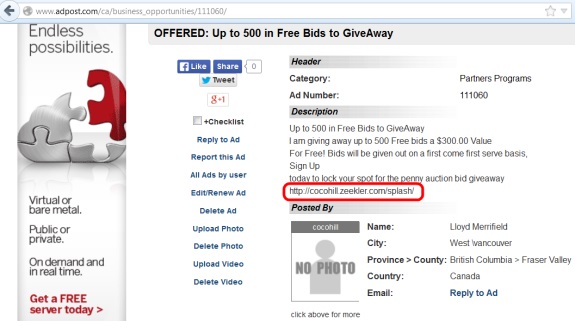
These things apparently meant little to former Zeek Rewards’ pitchman Lloyd Merrifield, who “defended” Karatbars International on BehindMLM. Zeek was an international Ponzi scheme that gathered at least $850 million, according to court records.
AdViewGlobal was an international Ponzi scheme that gathered an unknown sum before vanishing mysteriously in 2009. U.S. federal prosecutors linked it to ASD in April 2012.
Merrifield also was a pitchman for Ad-Ventures4u (ADV4U), an ASD-like HYIP scam tied to shiny-object scam known as “TradingGold4Cash.” And why not Tazoodle, a search-engine “program” whose “board” consisted of former ASD members who had the big idea they were going to unseat Google? Yep. Merrifield was there, too.
Along with ADV4U and Tazoodle, Merrifield pitched something called “20Clicks” as part of an overall package known as “The Golden Eggs.” (In 2009, the 20 Clicks website said it was “Powered by USHBB.com.” USHBB later was associated with the Zeek Rewards Ponzi scheme and is listed as a “winner” in a document assembled by the court-appointed receiver in the Zeek Ponzi/pyramid case.)
At least one HYIP pitchfest site that describes Merrifield as a “featured speaker” for Karatbars International has led cheers for “programs” such as AdHitProfits and MyFunLife and BannersBroker — and an emerging darling known as FlexKom. The site also has pushed “ProfitClicking,” one of the JSSTripler/JustBeenPaid reload scams linked to former ASD pitchman Frederick Mann.
Mann, among other things, may have ties to the “sovereign citizens” movement.
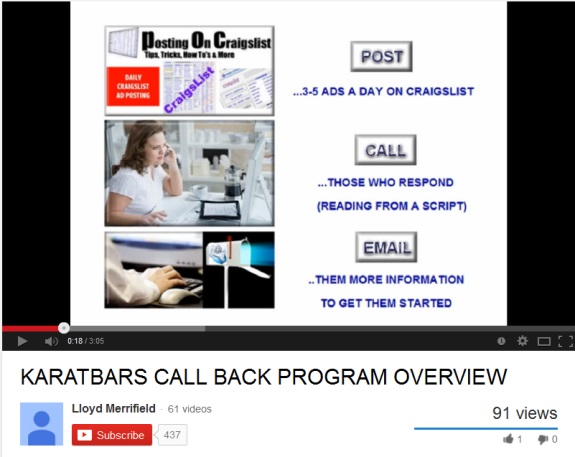
Merrifield, perhaps ignoring this 2010 FINRA warning on HYIP schemes and social media, pitches Karatbars International on YouTube and coaches viewers to line up recruits via craigslist.
Source: YouTube
On BehindMLM, Merrifield says he’s been “in the Investment Banking industry for over 35 years.”
As always, HYIP “programs” and similar ventures that may lack licensing in individual jurisdictions across the world raise the prospect that banks and payment processors are coming into possession of funds tainted by fraud. In some cases, those funds have circulated between and among various schemes.
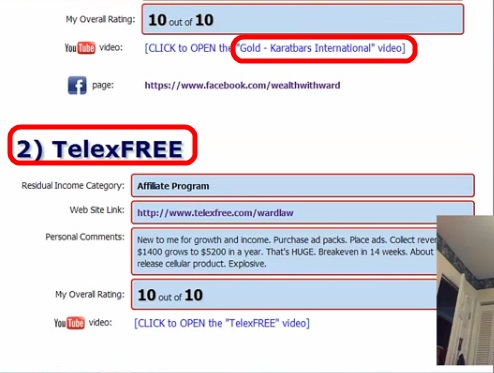
A quick Google search shows that some pitchmen are promoting Karatbars International alongside TelexFree, a “program” under investigation in North America, South America and Africa. TelexFree also has been promoted in concert with the WCM777 MLM scam.
From a video pitch that simultaneously pushes Karatbars International and TelexFree.
California-based WCM777, an MLM “program,” got booted out of Massachusetts in November 2013, amid allegations of securities fraud and affinity fraud targeted at the Brazilian community through hotel pitchfests. WCM777, purportedly operated by Ming Xu and recruiting affiliates to conduct business over the Internet, later got booted out of California. In addition to the Brazilian community, WCM777 targeted people who speak Spanish and people who speak Chinese, perhaps Christians in particular.
Massachusetts launched a probe into TelexFree, another MLM “program” associated with hotel pitchfests and affiliate recruitment over the Internet, at least by Feb. 28 of this year — probably sooner, given the nature of WCM777. TelexFree largely is targeting speakers of Portuguese and Spanish, perhaps Christians in particular. It also has an affiliate presence in India and Africa (at least).
Although the schemes do not appear to have common ownership, both WCM777 and TelexFree offered plans that encouraged recruits to buy in at higher levels to get higher “earnings.” Affiliates of each scheme appear to have engineered subschemes in which their recruits could buy in at higher levels than the “programs” themselves advertised, potentially introducing a second layer of fraud.
What this means, in essence, is that neither TelexFree nor WCM777 may know their real bottom lines and that the firms created an environment that encouraged back-alley, illegal sales of securities and secret deal-making among individual promoters. Individuals ostensibly acting as brokers for TelexFree and WCM777 could be cherry-picking cash and not even sending it to the “program” operators. In short, certain people could be creating personal and organizational underground economies and fleecing TelexFree and WCM777 even as they fleece their own marks and recruits.
Hidden members of both “programs” may be getting paid in cash by their upline sponsors or ostensible brokers, with no record of their participation — even if they supplied cash or an equivalent to join the “programs.”
The only safe assumption in HYIP Ponzi Land is that any system that can be abused will be abused. That’s why these “programs” necessarily must be viewed through the lens of national security.
Presented below are some screen shots that demonstrate promotional ties between TelexFree and WCM777. In certain instances, the websites pictured below are promoting not only TelexFree and WCM777, but also other “programs.” One of them, for instance, is promoting the almost indescribably insidious and bizarre Banners Broker “program.”
As always is the case in HYIP investigations, the concern is that banks locally, regionally, nationally and internationally are being used by corporate scammers first as warehouses to store illicit proceeds — and later, by individual promoters at potentially thousands and thousands of locations, as virtual ATMs that provide the service of offloading the “earnings” of the promoters.
The interconnectivity of these schemes endangers local, regional, state, provincial and national economies. In many cases, promoters engage in willful blindness and simply move to another MLM HYIP scam when the current “hot” one encounters regulatory intervention or craters on its own.
It’s often the case that promoters plant the seed that a scheme has been endorsed by a government or that a corporate registration is surefire “proof” that no scam exists. Social media invariably is used to help a scheme proliferate or achieve Internet virality.
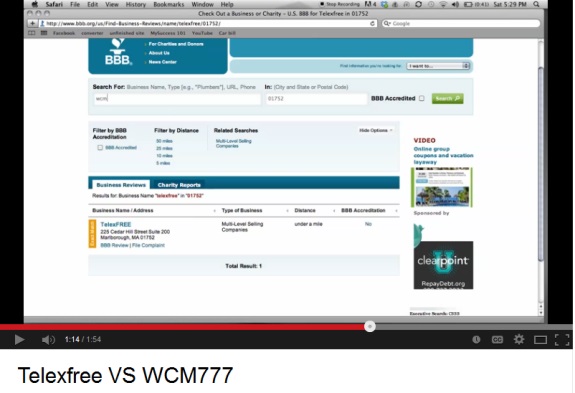
One of the shots below is from a YouTube video in which a TelexFree promoter seeks to plant the seed that TelexFree is backed by the Better Business Bureau. The narrator’s words in the video suggest he sought to plant the same seed about WCM777 but had to backtrack when he discovered a BBB listing that referred to WCM777 as a Ponzi scheme.
“Today we’re going to compare two of the most dynamic companies out there taking over right now,” the narrator said.
After recording a search of the BBB site for a TelexFree listing and finding one, the narrator suggested that the listing alone was proof that TelexFree was not a scam. He thereafter performed a search for WCM777 and found a Ponzi reference, thus triggering what appeared to be backtracking from his earlier claims that TelexFree and WCM777 were “dynamic companies.”
It also could be the case, we suppose, that he already knew about the WCM777 Ponzi listing before performing the search and that the design all along was to get people to go with TelexFree because WCM777 was a scam. Even under that interpretation, however, the video still demonstrates the underhandedness within the HYIP sphere.
The HYIP sphere always screams incongruity. Keeping that in mind, we’ll point out that one of the screen shots below shows TelexFree executive James Merrill in the same affiliate-manufactured frame as Massachusetts Commonwealth Secretary William Galvin. It was a clear bid to suggest that because TelexFree was registered as a corporation in Massachusetts, the “program” couldn’t possibly be a scam.
That is hogwash, of course. Galvin did not endorse TelexFree when his office approved a corporate registration. Besides, Galvin — as Commonwealth Secretary — oversees both the Massachusetts Corporations Division and the Securities Division. The Securities Division is probing TelexFree and possibly can rely on various documents in the Corporations Division to help investigators connect dots.
Beyond that, the website from which the screen shot promoting TelexFree by marrying images of Merrill and Galvin was taken also is promoting WCM777. Also shown below is an image from the same site in which Merrill is shown posing beside a giant SUV. Contrast that image against the image of Merrill posing in front of a large Massachusetts building as though TelexFree were its only occupant. TelexFree promoters have used the same approach, planting that seed that TelexFree owns the building and has a large physical presence in the United States.
That’s hogwash, too. TelexFree was an occupant of Suite 200 at a Regus center in Marlborough, along with dozens of other companies.
Finally, before observing the shots below, recognize that MLM itself — never a stranger to scandal — may be on the verge of experiencing a PR and legal crisis of unprecedented proportions.
People have harshly criticized hedge-fund manager Bill Ackman for attacking Herbalife. Among his contentions is that Herbalife is a pyramid scheme that targets vulnerable populations. Say what you will about Ackman’s Herbalife claims, but it is crystal clear that affinity fraud and the viral looting of impoverished/disadvantaged people have existed in the MLM realm for a long time and continues to be seen. One might even be inclined to say a market-making fraud blueprint exists within MLM: mow down one affinity cluster or population group and then move to another.
At a minimum, “programs” such as TelexFree and WCM777, which clearly have positioned themselves as wealth recipes for immigrants and vulnerable populations, can help Ackman shape and inform his Herbalife hypothesis.
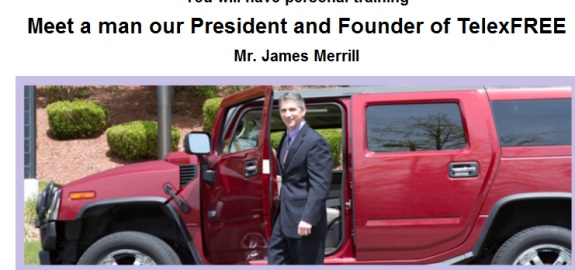
James Merrill is TelexFree’s president and thus an MLM executive. TelexFree and Merrill, to date, have played into virtually every MLM stereotype that exists — everything from private jets, monster SUVs and stretch limos to business registrations and mail drops in Nevada.
Most disturbingly, though, Merrill represents an American MLM company that has been banned in Rwanda, an African nation that is trying to reverse poverty and receives aid from the World Bank. It’s hard to conceive that MLM — particularly American MLM — could card a worse PR disaster. Regardless, one could be in the offing.
Picture Story
1.
A TelexFree promoter who also promoted WCM777 extends the myth that TelexFree has a large physical presence in the United States and plants the seed that Massachusetts Commonwealth Secretary William Galvin endorsed TelexFree. Galvin’s office is investigating TelexFree after previously booting WCM777 from the state.
2.
A promoter simultaneously pitches TelexFree and WCM777. This shot is from the same site described in the photo above. The site may be based in Ecuador.
3.
This shot is from the same two sites described in the captions above — and features TelexFree President James Merrill posing with a giant SUV.
4.
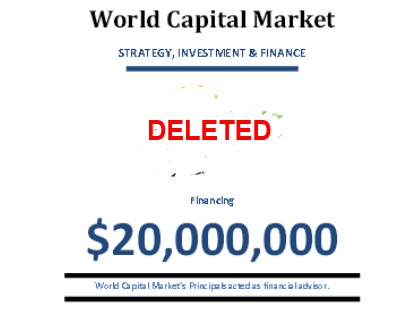
This shot was taken on the same site described in the three preceding captions above. In this fourth shot, a person promoting both TelexFree and WCM777 claims that the purported parent company of WCM777 provided a loan of $20 million to a restaurant chain that sells Mexican food. The PP Blog has deleted an image of the chain’s logo that appears in the WCM777 promo. The same site plants the seed that WCM has provided hundreds of millions of dollars in loans to jewels of American business.
5.
This site features promos for various purported “opportunities,” including TelexFree and WCM777. Though not shown in the photo, the site also is promoting the uber-bizarre Banners Broker “program.” The site may be based in Italy.
6.
This site also is simultaneously promoting TelexFree and WCM777.
7.
This YouTube site describes TelexFree and WCM777 as “dynamic companies” and plants the seed that TelexFree is endorsed by the Better Business Bureau.
URGENT >> BULLETIN >> MOVING: (8th Update 2:40 p.m. ET March 4, U.S.A.) The court-appointed receiver in the Zeek Rewards Ponzi- and pyramid-scheme case has sued alleged insiders and net winners, including members of the 2008 AdSurfDaily Ponzi scheme.
Parts of the complaint read like a re-living of the ASD scheme, with Zeek Receiver Kenneth D. Bell alleging Zeek’s penny-auction arm (Zeekler) was in trouble early on and that Zeek operator Paul Burks borrowed money from another insider to keep things going. The fraud later expanded massively, Bell alleged.
At one point, according to Bell, former Zeek COO Dawn Wright-Olivares “excitedly” told Burks, “I think we can blow this OUT together — we’ve already attracted a great many big fishes.”
But the insiders “were aware that the payouts to Affiliates would be funded by new participants rather than retail profits from the penny auctions,” Bell alleged.
Named defendant “insiders” were Burks of Lexington, N.C.; Wright-Olivares of Clarksville, Ark.; Daniel Olivares of Clarksville, Ark.; the estate of the late Roger Anthony Plyler of Charlotte; Alexandre “Alex” de Brantes, the husband of Wright-Olivares and a resident of Clarksville, Ark.; and Darryle Douglas of Orange, Calif.
Burks, the receiver alleged, received “in excess” of $10 million from Zeek; Wright-Olivares received more than $7.8 million; Daniel Olivares received more than $3.1 million; Plyler, who once lent money to Burks, received more than $2.3 million; Douglas received more than $1.975 million. An amount was not listed for de Brantes.
Named winners were former AdSurfDaily member Todd Disner of Miami (more than $1.875 million); former ASD member Jerry Napier of Owosso, Mich. (more than $1.745 million); Trudy Gilmond of St. Albans, Vt. (more than $1.75 million); Durant Brockett of Las Vegas (more than $1.72 million); Darren Miller of Coeur d’Alene, Idaho (more than $1.635 million); Rhonda Gates of Nashville (more than $1.425 million); Michael Van Leeuwen, also known as “Coach Van” of Fayetteville, N.C. (more than $1.4 million); David Sorrells of Scottsdale, Az. (more than $1 million); T. Le Mont Silver Sr. of Orlando, Fla. (more than $773,000 under at least two user names, and more than $943,000 through a Florida shell entity known as Global Internet Formula Inc. with one or more Zeek user names).
One of Silver’s usernames was “mentor,” Bell alleged.
Also named winners were Karen Silver, Silver’s wife (more than $600,000); veteran HYIP pitch team Aaron and Shara Andrews of Lake Worth, Fla. (more than $1 million through a Florida shell entity known as Innovation Marketing); David and Mary Kettner of Peoria, Az. (more than $930,000 via one or more user names and shell companies known as Desert Oasis International Marketing LLC and Kettner & Associates LLC); Lori Jean Weber of Land O’Lakes, Fla. (more than $1.94 million through a shell company known as P.A.W.S. Capital Management LLC).
Bell also sued a “Net Winner Class” of as many as 9,000 U.S. residents or entities who allegedly harvested illicit gains of $1,000 or more from Zeek. Lawsuits against international winners will come later, Bell said.
In December 2013, Wright-Olivares and Olivares were charged criminally. They pleaded guilty last month for their roles in the scheme and are liable for more than $11.4 million in restitution and penalties, the SEC said.
As the SEC previously alleged, Zeek relied on a so-called “80/20” program to sustain the Ponzi deception. Bell today built on that theme. From the complaint against insiders (italics added/spacing modified):
Dawn Wright-Olivares explained and promoted the plan in a Skype chat as follows:
Here’s a scenario here where you could be receiving $3,000 per month RESIDUALLY. Let’s use a 1% daily cash-back figure in this example (Please note: This is only an example and the actual amount will vary day to day).
When you reach 50,000 points in your account, then you could start doing an 80/20 cash-out plan. Pay close attention? When you hit 50,000 points in your account, if the daily cash-back percentage is 1%, ZeekRewards will be awarding you with $500.00 each day. First of all, did you catch that? … you’re making $500 per day … it’s your money! Ok, the 80/20 plan works like this, take 80% of that $500 (or $400) and purchase more VIP bids to give away to new customers as samples to continue growing your points balance.
Then, keep doing what you’ve been doing every day, which primarily consists of giving free bids away as samples and placing one free ad per day for Zeekler.com’s penny auctions and submitting into your ZeekRewards back office. Then, pull out 20% of the $500 (or $100) and request a check weekly. That’s $700 per week, or about $3,000 per month in residual income! And keep in mind, these amounts can continue to grow day after day and month after month.
HYIP schemes, including ASD and Zeek, often implement deceptions such as 80/20 programs as part of a bid to reduce cashout amounts to let the scheme continue to live. Insiders and veteran Ponzi pushers typically know they’re a crock.
Daniel Olivares, Bell said, has a Zeek user name of “dcolive.”
On June 14, 2012, about two months prior to the collapse of Zeek, RealScam.com moderator and PP Blog poster “Glim Dropper” posted a link on the PP Blog that established a tie between Zeek promoters and ASD promoters. ASD was a $119 million Ponzi scheme operated by now-jailed operator Andy Bowdoin.
RealScam.com is an antiscam forum.
The link “Glim Dropper” posted was at a URL styled “dcolive.com.”
From “Glim Dropper’s” observations at the time (italics added):
I’d draw your attention to about five minutes into the call when Dawn recalls a conversation with Jerry Napier. Jerry was quoted as loving ZR and never wanting to have to build another organization with another program and mentioned a previous program and the litigation it was still facing and he mentioned “similarities” between ZR and that previous program.
It is common in the HYIP sphere for promoters to move from one fraud scheme to another.
Napier’s exposure to ASD is unknown. But the Zeek receiver now says Napier received illicit gains of more than $1.745 million. The alleged illicit Zeek gains of former fellow ASD member Todd Disner are even higher: $1.875 million.
Precisely how many ASD members went on to join Zeek is unclear. What is clear is that both firms used similar business models and sweetened the deal for certain members.
Bell alleged today that Zeek had a “Sweet 16” deal in which participants paid $999 to mine even more “passive” gains.
“The Sweet 16 was another means by which [Rex Venture Group] made payments on a passive investment,” Bell alleged. “It did not involve the sale of a product, nor did it require a member to recruit other participants into the program.”
Disner once filed suit against the United States, alleging its ASD Ponzi case was a “tissue of lies” and a “house of cards.” A federal judge tossed the lawsuit, after Bowdoin pleaded guilty to wire fraud and admitted ASD was a Ponzi scheme.
A giant human hand puts the top piece on a golden pyramid. Source: Global-Unity website.
Updated 6:24 p.m ET (U.S.A.) Members of the WCM777 scam, which morphed into Kingdom777 after regulatory actions were filed, have been informed by a “program” upline that the venture now is operating as Global-Unity, a source told the PP Blog today.
Parts of the Global-Unity website appear to be under construction. The “News” tab, for instance, includes no releases.
Strangely, though, it does include a photo of a giant human hand placing what appears to be the top piece on a giant golden pyramid. Whether the photo was designed as a taunt to regulators was not immediately clear.
WCM777 is the subject of regulatory actions or Investor Alerts in the United States, Canada and Peru. TelexFree is the subject of a pyramid probe in Brazil.
HYIP scammers have been known to taunt regulators. Frederick Mann, the purported operator of the JSSTripler/JustBeenPaid HYIP scam, once claimed that government workers were “part of a criminal gang of robbers, thieves, murderers, liars, imposters.”
JSSTripler/JustBeenPaid purported to pay 2 percent a day (precompounding). The original scam changed names at least twice after the Zeek Rewards’ Ponzi action by the United States in 2012. Zeek was a scam designed to make investors believe they’d received an average payout of 1.5 percent a day, the SEC said.
JSS/JBP’s Mann was a former AdSurfDaily Ponzi-scheme pitchman and appears to have had sympathies for “sovereign citizen” political extremists in the United States, including convicted “militia” man Francis Schaeffer Cox.
A scam known as “Profitable Sunrise” that became the subject of state and federal regulatory actions in the United States last year once promoted a 2.7-percent-a-day investment “plan” known as the “Long Haul.” The Long Haul payout purportedly was due April 1, 2013 — April Fool’s Day and the day after Easter.
At least one Profitable Sunrise supporter taunted North Carolina regulators after the state filed a Cease and Desist order against the “program.” (See Comments thread below this story.)
Profitable Sunrise, like both WCM777 and TelexFree, was targeted at Christians. Both the “Long Haul” name and the purported payout dates could have been taunts.
In promos, TelexFree, WCM777 and Profitable Sunrise each used an image of the Christ the Redeemer statue in Brazil.